Showing posts with label Star Wars Legends. Show all posts

Friday, December 25, 2015

Star Wars: The Old Republic: Jedi Knight storyline review


 Warning: Some spoilers for the Jedi Knight storyline.

    I’m way behind on my reviews for this but I figured I might as well finish them up so I can get around to reviewing Knights of a Fallen Empire. Better late than never, am I right? Ironically, I managed to complete the Sith storylines without ever stopping to do the Republic ones and that was probably a mistake on my part as they’ve proven to be far more interesting than I gave them credit for. I suppose after thirty-years about reading about the good guys trouncing the bad guys, I was interested in seeing things from the Dark Side.

    Even if I always played Light Side.
A true Jedi never uses the Force for attack.

    The first place to start with my journey across the Republic side of things was, of course, the Jedi Knight. It's the obvious starting point for anyone who wants to begin in the Old Republic setting and a great deal of effort has obviously been spent to make it feel like the Original Trilogy. It's a series of fighting super-weapons, saving the day, redeeming Dark Siders, and going directly against the Ultimate EvilTM.

    Indeed, if there was any single character class which can be said to be the "hero" of the Old Republic game then it would be the Jedi Knight. Which is a bit troubling when you think about it since there shouldn't be any main hero of the game. Still, it's entertaining and has a lot going for it even if it sometimes verges on being a trifle "been there, done that."

    The premise of the Jedi Knight storyline is you are the strongest padawan the Jedi Academy on Tython has produced in centuries. Recruited by your master, who might as well have a 'Dead Master Walking' sign around his neck, you soon find yourself promoted to Jedi Knight before stopping the destruction of Coruscant. Accidentally ticking off a powerful Sith Lord, they stop their campaign of revenge before discovering something terrible about one of their companions. This results in them being set on a direct campaign against the Sith Emperor.

Oh Kira, you are my teenage Mara Jade crush brought to life.
    As mentioned, the biggest flaw of the storyline is it's designed to make you the biggest and baddest thing in the Old Republic setting. This isn't necessarily a bad thing since a lot of people definitely want to play the role of Luke Skywalker or Anakin Skywalker but it seems very specifically designed to be played a Light Side male in a romance with companion Kira Carsen. This isn't, necessarily, a bad thing but Knights of the Old Republic had interesting variations from the standard LS male playthrough with Carth Onasi and a Female Protagonist as well as an appeal to the Dark Side.

    About the only real part of the storyline which was surprising was when your character is defeated during a Second Act confrontation with the Sith Emperor and brainwashed into being their puppet. Unfortunately, we don't really get a sense of what happened during this time and I think they could have done something more with this section. For example, a playable assault on the Jedi Temple or an assassination attempt on Satele Shan. Instead, it seems like you're hanging around the Emperor's Palace for a month sorting through his mail and torturing the occasional prisoner.

Poor Lord Scourge and the LS Jedi Knight.
    I will say that I think Kira Carsen is an incredibly likable character and her romance with the Jedi Knight is probably the best in the baseline game. She's witty, entertaining, and if you like redheads then she's one of the most attractive companion characters.

    I also love how they handle the issue of Jedi romance and it does add a little spice to an otherwise perfectly arranged relationship. I would have liked more insight into the issue of Kira being a Sith by birth but I suppose there's only so much you can do with that.

    Instead, the character I most enjoy from the Jedi Knight storyline is Lord Scourge. The former Emperor's Wrath, he's decided the Sith Emperor is too crazy to serve even though he remains loyal to both to both the Empire as well as Sith. I really enjoyed the conversations the Jedi Knight had with him on subjects like love as well as the hypocrisy of the Jedi. He's an honorable opponent and it's interesting to see a Sith Lord who can walk and chew bubblegum at the same time without being a goody-two-shoes.

     I can't say I felt much more for the other companions. T7 is a cute character, it's true but it's not like you're going to get much interaction out of an astromech droid programmed to like you. Doc is entertaining but I wasn't exactly blown away by him either (and he seems like a far less interesting love interest than Kira Carsen). Sergeant Rusk bringing his gung-ho warmongering mentality to the crew keeps things from being a little too sacharine but I would have liked for them to go further.


The Sith Emperor being defeated by the power of lightsaber is kind of underwhelming.
    I quite liked the depiction of the Jedi Order in the storyline. Rather than portraying them as hopelessly flawed and corrupt or perfect, the Jedi Order is depicted as a well-meaning organization with severe dogma issues which haven't quite blinded them the same way they have the Prequel Jedi. The Jedi of this time have a sanctimonious self-certainty which makes them unable to relate to most people even as they try to do their best. You meet plenty of Jedi who want to love and be open with affection but risk censure or disbarment for that most human of emotions (whether they're human or not). Likewise, the Jedi have issues with hubris as none of them seriously entertain the idea the Sith Emperor is batting in a different weight class than them.

    The villains of the storyline are something of a disappointment as all of them are variants on the "evil" Sith Lord with the sole exception of a renegade padawan. It would have been nice to shake up things with a Grand Moff or crime lord. The Sith Emperor is also at his most one-note-ness with a plan to wipe out the entire universe in order to ascend to become a god. Really, I found it more interesting to see Sith interested in supporting him due to their belief they would ascend to a kind of Sith Lord heaven in reward for it.

    There's quite a few fun supporting characters in the storyline despite its generic-ness. I also love the plotline regarding trying to help Kira Carsen overcome her status as one of the Sith Emperor's children. As mentioned, it works best for a male Jedi Knight romancing her but a good plotline is a good plotline. Indeed, it is the good characters and sidequests of the Jedi Knight which elevate their storyline more than the actual main quest. Indeed, I had a lot more fun with General Var Suthra and Leeha Narezz than I ever did worrying about the Emperor destroying everything.

A Dark Side Jedi Knight plot would have elevated the material considerably.
    In conclusion, I recommend the Jedi Knight questline with some reservations. There's a lot of good moments even if the whole is kind of eh. It tries so hard to be big and awesome it misses the little beats the other sections succeed in. I think it would have been better if they'd taken more risks like the revelation of Darth Revan's identity in the original Knights of the Old Republic. For example, instead of Kira Carsen being one of the Emperor's Children, it would have been better to have the Jedi Knight be one.

9/10

Monday, May 18, 2015

Star Wars: Legacy (hardcover) volume 3 review


    The third volume in the Star Wars: Legacy omnibuses is is the end of all the major plots from the beginning of the series. The original series managed to get up to fifty-issues before being abruptly cancelled but Dark Horse comics was kind enough to allow the creators to have an extra six-issue miniseries, entitled Star Wars: Legacy: War, in order to wrap up its outstanding plot threads. The fact they would eventually revive the series afterward before losing their license to Marvel comics makes this decision quite curious but that is neither here nor there. Volume 3 includes all of the remaining issues up to and including War which gives it a complete, if rushed, epic finale.

    In retrospect, it was clear they were laying the groundwork for the grand finale of the series from the very beginning. While Cade Skywalker remains as obstinate as ever, the alliance between the Empire/Jedi/Galactic Alliance is coming together in the background while the Sith have a new leader in Darth Wyrrlok. I'm a big fan of Darth Wyrrlok because he's a much more intelligent-seeming antagonist than Darth Krayt. The fact he has the ambition to convert the entire galaxy to the Sith way is both brilliant as well as insane. While it's no spoiler that Darth Krayt eventually returns for War, due to being on the cover and all, it's kind of a shame because Wyrrlok outshines him in virtually all respects.

    Much of the volume before the War portion of the book deals with the aftermath of Dac's poisoning by a Sith mad scientist named Vul Isen. The Mon Calamari have been a mainstay of the Star Wars Expanded Universe since Return of the Jedi so watching them forced to flee their homes is a heartbreaking development. Cade decides to split the difference between actually doing something with his life and pursuing the very high bounty on Vul Isen's head. I suppose if you're going to continue being a complete waste of space, then the best thing to do is do that while hunting Space Nazi war criminals.

The art is, as always, masterful.
    Darth Maladi intervenes during this period and we get some insight into her character as she tries to hunt down Cade Skywalker for her (new) master. On the Imperial side of things, Marasiah Fel is threatened (again) and it falls to Ganner to find out whether his loyalty is to her or his master. I could have done without that bit of story recycling since I was hoping Marasiah Fel would prove more competent than she's proven to be. She's less Leia and more Padme in this series.

    Really, though, most of these plot developments are just counting down for the grand finale. Darth Krayt's return, his revelation of a new group of Sith entirely loyal to him, and his genocidal plans for the galaxy. With the destruction of everything threatened by the One Sith, can everyone put aside their differences to defeat the Dark Lord? Can Cade Skywalker prove himself great enough to save the universe?

    Of course. This is Star Wars, not Warhammer 40K.

     I can't say I'm very pleased with Darth Krayt's transformation from a well-intentioned extremist who believed he was reformer the Sith to be less prone to infighting into a literal omnicidal maniac. He was always a genocidal monster but I was hoping he might keep some depths until the end of his journey. Likewise, neither Darth Nihl or Darth Talon ever get much character development. We also see a reverse of Darth Vader's rise from grace with the increasing instability and insanity of Roan Fel. His fall to the Dark Side had been telegraphed from the very beginning but was still disappointing in the end.

    The Jedi's role in the conflict was also minimized, keeping the focus squarely on Cade Skywalker's ability to defeat the Dark Lord. When I first heard about the Sith's return, I was hoping that we would get regular battles between the Jedi and their counterparts ala The Old Republic. Instead, they have ever remained the perpetual victims in this volume with the exception of Wolf and Shado. This was disappointing but not entirely unexpected. I have the feeling they wanted to tell a story about the Jedi Knighthood near-extinction but were forced by fan reaction or simply the sheer number of Sith to back down.

    One thing I appreciate in the story is its focus on redemption: both Nyna Calixte's and Cade Skywalker's. Both individuals have been hovering on the Dark Side for some time and it's a good thing to see them realize that's not where they wanted to be. I would have preferred seeing a truly evil character come back from the brink but that's just quibbling over details. The finale of the series gives everyone a chance to shine and there's plenty of other good stories spread throughout the volume.

     The art is, as always, very beautiful. It manages to capture the newly-healed Darth Krayt in a way which is both menacing and understated. I also like the fabulous renderings of characters whether they're in space, in jungles, on spaceships, or in cities. Dialogue is crisp and well-written with none of the franchise's usual clunkers.

Darth Krayt's new visual design is stunning.
    So what did I think of Legacy in the end? Mostly, I think it was a successful experiment. We got to tell a slightly darker, more-adult version of the franchise's story. Not everything was successful as the repetition of the Jedi Purge, Cade Skywalker's unearned status as the hero, and the sidelining of Marasiah Fel hurt the narrative.

    A story about a drug-addicted Skywalker who comes to terms with his unwanted destiny to become a better man seems like it would make a better novel than a comic. Also, it would have been better appreciated if the entire galaxy wasn't at stake. Given it's shown that Cade could have killed Darth Krayt at any given time, it's kind of underwhelming when he finally has his fatal confrontation with the man. As a certain President once said, "the only thing to fear is fear itself." Never was that more true with a Sith Lord who regularly got his butt handed to him by Cade.

    Ultimately, Volume 3 is a satisfying, if not spectacular, ending to the Legacy saga. I would have preferred if they hadn't gone with the very obvious direction they had with Cade Skywalker's journey or sped it up, either way, but it's still an appropriate ending. I also give props to Dark Horse comics for coming up with a fifty-six issue epic. It wasn't always hits but it was rarely misses and what other comic can say that, consistently?

    Only a few.

9/10

Friday, April 24, 2015

Star Wars: Legacy (hardcover) volume 2 review


    Star Wars: Legacy is no longer canon thanks to the old Expanded Universe being removed from continuity. It's still one of the more coherent and well-crafted stories of the Legends universe, however, which means I heartily recommend it to people who are looking for an enjoyable alternate continuity Star Wars tale. I see no reason why you can't enjoy the Star Wars Legends stories anymore than the Marvel Ultimates series.

    The premise of Star Wars: Legacy is the Sith have returned one-hundred-and-twenty-years after the death of Emperor Palpatine. Led by the diabolical Darth Krayt, they have managed to seize control over the galaxy and install a ruthless draconian dictatorship over the whole of the universe once more. As before, a Skywalker may be the universe's last hope, but Cade Skywalker is the only one left alive and he's a drug-addicted bounty hunter who wants nothing to do with heroism.

The attack on Dac is the first real victory of the new Rebellion.
    In my review of the first hardcover, I mentioned how I wasn't very fond of Cade Skywalker asa a concept. I've never been a great fan of Chosen Ones in fiction and Cade is kind of an insult to his forebearers. Luke Skywalker wasn't a hero because of his high midiclorian count, he was a hero because he wanted to fight the Empire and make the galaxy a better place. The fact the central premise of Legacy is that Cade Skywalker is the only person capable of defeating Darth Krayt caused me extreme distress.

    Thankfully, this volume makes up for it in numerous ways.

    Cade Skywalker gets plenty of development, don't get me wrong, but the series takes a moment to step away from him by giving some focus to other characters. Whereas Cade Skywalker wants nothing to do with being the galaxy's savior, there are plenty of other people who do.

    My favorite of these characters is Gar Stazi, a Duros Admiral of the fallen Galactic Alliance, who is waging a never-ending campaign of resistance against the Sith-controlled Galactic Empire. Gar Stazi is an unquestionably heroic character and contrasts strongly with morally ambiguous characters like our current protagonist.

Darth Krayt proves himself a true monster, equal to Palpatine in evil, if not skill.
    Another character I liked was Cade's uncle, Nat, another Skywalker who has chosen to abandon the Jedi way. Unlike Cade, he hasn't allowed himself to sink into debauchery and depravity. A committed family man, he's a far more admirable figure even if he's decided saving the universe isn't for him. Still, I would have been much happier if there were Skywalkers who were interested in saving the universe.

    That would defeat the need for Cade, though.

    A third character I came to enjoy was Azlyn Rae, Cade Skywalker's former lover and a Jedi padawan who left their order to become an Imperial Knight. She is a reminder of the better times of Cade's life while also a person who inspires him to be better. The fact she's a strong female character who chooses to do what's right over what's practical also helps cement her place in my fanboy's heart.

    Plus she's a ginger and they're a superior species (at least according to my wife).

    Hehe.

    The moments spent between Cade and his uncle are some of the best in the series, in my humble opinion, and go a long way to humanizing our antihero protagonist. Nat gives him firm but practical advice about his situation as well as directs him away from the Dark Side without being condescending. Cade is never more likable than when dealing with his uncle and we get some hints as to how he became the way he did. Cade, much like Anakin, simply wishes people to live and his struggle to keep his loved ones from leaving is his greatest flaw rather than his drug use. I'm never going to like Cade but, after this volume, I understood him.

Azlyn Rae is awesome. What happens to her? Well, you'll just have to see but her story goes in surprising directions.
     We also get the set-up for the central conflict of the Legacy stories in the massacre of the Mon Calamari. Long champions of freedom and democracy, they badly underestimate how deep Darth Krayt's madness goes. When the Mon Calamari population is set for genocide, the rest of the galaxy can only look on in horror at the pure evil on display. As with Alderaan, the event galvanizes Darth Krayt's enemies to unite against him too. Some of my favorite moments from this volume are centered around the Mon Calamari defense, like watching Imperial Knight Treis Sinde choose his loyalty to the Force over his service to Emperor Fel.

    In conclusion, Star Wars: Legacy volume 2 is an excellent continuation of a great series. While I don't much care for its lead, the setting is evocative, the art is beautiful, and the characters are fascinating. While the storyline can be a trifle depressing, I think anyone who likes their Star Wars a bit edgy will enjoy this.

9.5/10

Buy at Amazon.com

Wednesday, April 22, 2015

Star Wars: The Old Republic: Bounty Hunter storyline review


    No disintegations.

    Okay, maybe some disintegrations.

    These guys are jerks, after all.

    Boba Fett remains one of the most popular characters in the history of cinema for his relatively tiny appearance in the Empire Strikes Back and later Return of the Jedi (where he was utterly humiliated). The idea of an independent mercenary Darth Vader respected enough to take seriously and capable enough to capture Han Solo captured the imagination of young boys (and some girls) everywhere. So, really, it's no surprise there's a campaign for them on the side of the Empire.

    So what is it like?

Mako is one of the best companions in the game.
    Quite good, actually! It manages to take a concept which I wasn't really all that interested in and play it to the hilt. A Bounty Hunter, by nature, is not going to be someone necessarily interested in the Republic vs. Sith Empire Cold War so it was good they chose to treat it as an independent storyline which occasionally ties into the larger conflict.

    The bounty hunter begins his journey as a gifted newcomer to the world of hunting who wants to win the Great Hunt. The Great Hunt is hosted by Mandalore every year to seek out the greatest bounty-hunters in the universe and offer them a place at the big boy's table, so to speak. Whoever wins it will receive everlasting fame and fortune.

    This is my favorite part of the Bounty Hunter's story as your rival in the Great Hunter, Tarro Blood, is a delightfully hateable scumbag. A cowardly Mandalorian with the right connections, pedigree, and an inexhaustible supply of credits--he is going to buy his way to victory in the Great Hunt. It may seem strange that your initial archenemy is basically Draco Malfoy but I had a great deal of fun fighting him.

Being a bounty hunter is, in a word, fun. That's all there is to it.
    The final mission of the Great Hunt results in a satisfying ending for Tarro Blood but also creates all the problems which will hound the Bounty Hunter for the rest of the series. You are given a mission to bring down a Jedi Master for the "crime" of killing dozens of Mandalorians during a battle.

    This event goes horribly wrong thanks to Tarro Blood with the Jedi Master killed and a Republic cruiser destroyed. If you had Sith sympathies before, this is the crowning moment of your early career, but if you had plans of staying off the Jedi and Republic's radar--well, that's out the window now. Subsequent missions follow your attempts to deal with the Republic's frame-up job, the resulting scrutiny, and how a Sith Lord has become "impressed" with their abilities. My favorite part of the game is the Alderaan mission where you have to deal with a noble family's spoiled heirs who all want to use you to become head of their house.

Tarro Blood is a deliciously hateable villain. The perfect foil for the Bounty Hunter.
    The Light and Dark choices of the Bounty Hunter are better than most as they seem to be coming from the same sort of person. A Dark Side Bounty Hunter is a hired killer, nothing more or less, and is only in it for the money. A Light Side Bounty Hunter has scruples and dislikes it when he's treated as a monster rather than a professional lawman with flexible ethics. The ending is one of the best choices in the game as you can choose to become a Sith Lord's personal hatchet-man or show why no one, not even a Darth, should mess with you.

    The Bounty Hunter's companions are some of my favorite in the group. Most of this is due to Mako, who is just plain awesome. She reminds me strongly of Tali from Mass Effect, basically being your plucky Girl Friday. Sadly, the Bounty Hunter is also stuck with the character of Skadge who is, hands-down, the WORST companion in the whole of The Old Republic. This is made up for, though, by the fact you have a Jawa with a flame-thrower.

    Jawa.with.a.flame.thrower.

Blizz is awesome. BOOM!
    *thumbs up*

    The storyline gives player characters the opportunity to become Mandalorians but I always choose to turn down the opportunity. I'm not a big fan of the Mandalorians and I felt the Bounty Hunter was a more interesting character when he chose to handle things his way rather than through the codex of an ancient warrior race. Plus, turning down Mandalore's offer to join their society to his face at your initiation banquet is HILARIOUS.

    In conclusion, I heartily recommend the Bounty Hunter storyline as it feels very much like Star Wars. Which is hard to get from the "bad guy." Whereas the Sith Warrior, Sith Inquisitor, and Imperial Agents all gave you perspectives on being the villain (even when you're a Lightsider), the Bounty Hunter is a grayer character and I appreciated that. The fact you can choose to play a complete good guy at the end or a heinous villain also gives the storyline a satisfying emotional climax.

10/10

Friday, August 22, 2014

Star Wars: The Old Republic: Imperial Agent Storyline review


   I short of fell off of these and I'm sorry for that since I intended to review all of the main character quests but ended up only doing the Sith Inquisitor and Sith Warrior. I actually finished the Imperial Agent awhile back but didn't find time to review it until now.

   I need to get around to playing the Republic side sometime but I'm troubled by the fact I seem to be on the side of evil in this MMORPG.

    Which is weird because I play Light Side Sith.

    It's like I'm not satisfied being a rebel against tradition, I have to be a double-sized rebel  

    Anywho, is the Imperial Agent storyline worth completing?

    You betcha. 

    The Imperial Agent storyline is a strong contrast to the Sith Warrior and Sith Inquisitor's because you're not one of the Sith's ruling class but one of the Empire's citizens. Unlike the Bounty Hunter plotline, where you're wholly out of the power structure, this means you often have to deal with arrogant Dark Side wizards. Thankfully, you're allowed to behave more like Grand Moff Tarkin than Admiral Motti.

For those of you reading this who are not Star Wars trivia nerds, Admiral Motti is the guy Vader force choked in the first movie for disrespecting the Force.
    The premise of the Imperial Agent is you're James Bond (or Jane Bond if you prefer). The smooth-talking, elegant, and hyper-dangerous Cipher Nine is in the employ of one of the few civilian-controlled branches of the Empire's military left. 

   As expected of a group living in a police-state controlled by evil wizards, they're ridiculously paranoid and don't use their real names even when dealing with each other. Morale is low in Imperial Intelligence, as to be expected when you're under the command of people who can execute you at will. 

   Despite this, the agent of Imperial Intelligence believe the Empire is worth defending and even if most of them don't like the Sith (not that they'd ever admit to it in public). They carry on in hopes of protecting the Empire's citizenry. I appreciated this viewpoint because it's entirely rationale and reflects a lot of RL dictatorships. The folk at Imperial Intelligence aren't even villains per se but people determined to keep the casualties on their side at a minimum.
 

    Which is hard when so many Sith are so ****ing STUPID (a fact backed up by the Sith Warrior and Sith Inquisitor storylines--those two are, quite possibly, the only two capable Sith Lords in the entire Empire). The Imperial Inquisitor spends a great deal of time cleaning up after the Dark Lords, to the point it becomes an incredible relief when you're finally in a position to start showing the spoon-benders that Muggles can do it better.
 
The SNARK of the Imperial Inquisitor almost rivals the Sith Inquisitor.
    Interestingly, while the Imperial Agent is quite capable of killing lesser Sith and even Sith Masters, the game makes it clear this is a very rare skill. Likewise, the Sith Inquisitor is required to make use of puzzle elements in order to face against more powerful Dark Lords. I liked this as it helped demonstrate the most dangerous element of the Imperial Agent is their mind. By the end of the main quest, the Imperial Agent will have left a high enough body count that any Sith Lord who doesn't respect them as an equal is a fool

    The romance options for the Imperial Agent are some of the best in the entire game, at least the parts I've played, giving you numerous opportunities to seduce or befriend NPCs in the game. I actually liked my characters flirtatious romance with Watcher-2 (pretty Imperial professional) more than I did with my Companion romance options. Admittedly, one of them is a bit creepy as the "Voss" romance can end horrifically, but otherwise it's easy to say the Imperial Agent is the sexiest guy/girl in the galaxy.


I'm a sucker for a girl in uniform.
     I think the part I liked most about the Imperial Agent story was the Voss infiltration mission, where you are forced to impersonate a member of an alien species. The fact you have to get close to a family of reasonably nice sentients (who one of your colleagues murdered the father of in order to impersonate) gives a real sense of spy-work absent from most espionage media let alone video games.

    Villains for the Imperial agent include the delightfully hateable Darth Jadus, a figure you can choose to ally with if you're feeling particularly psychotic. Darth Jadus is a great little bit of War on Terror satire as he's a figure who thinks terrorism is a great way of galvanizing the populace for military action against the Republic. I'm also fond of his daughter who is a completely incompetent Sith Lord as well as utterly crazy. The conspiracy at the end is something I'm iffier about as they don't have nearly the same level of presence as Darth Jadus, but serve as decent-enough antagonists to oppose our anti-hero.

    In conclusion, I think the Imperial Agent is one of the more fun storylines I've played in Star Wars: The Old Republic. I think fans aching for something different will find there's a lot to enjoy about being the Sith Empire's clean-up crew. I didn't much care for a plotline involving brainwashing in middle but the ending more than makes up for it.

9/10

Friday, July 18, 2014

The People vs. George Lucas


    I love zombies, don't get me wrong, but aside from finishing What Zombies Fear I'm a little zombied out. So, instead, I decided to watch a movie about a bunch of people shambling along and moaning--about Star Wars.

    Okay, that's unfair.

    The People vs. George Lucas is going to be one of my rare negative reviews, sadly. I applaud the filmmaker's skill, the fact they made a film about a subject which was near to my heart, and the obvious love of the franchise built into the work. Unfortunately, the movie's relentless negativity really dampened my mood.

    The People vs. George Lucas is more or less an hour and a half about why Star Wars fans really-really hated the Special Editions and prequels. It shows the infectious raw enthusiasm of countless fans enjoying the movies from their release in theaters to the long drought until the prequels being released. The rest of the documentary has an almost message-board-like quality of everyone in the film explaining why the movies sucked and/or ruined their childhood.

    They specifically say, "raped" their childhood. A comparison which they utilize several hundred times and even make a couple of musical cues regarding--which I found to be both tasteless and problematic for a work about Star Wars. The People vs. George Lucas includes the footage from the South Park episode where Indiana Jones is sexually assaulted by Stephen Spielberg and George Lucas too--which, again, I didn't particularly like either.

    Nor did my wife.

    Listen, I've been a Star Wars fan since I was three-years-old and until the New Jedi Order followed by the Legacy of the Force novels, I was as obsessed with it as anyone else. I know something about fandom rage. I was there when the backlash against the Star Wars Prequels began, continued, and I'd say ended but that would imply there's still not people talking about the subject.

    The Star Wars Prequels were disappointing to me as well. They were empty spectacles with bad writing, bad acting, and a lot of exposition which got in the way of any sort of character development. George Lucas really needed a script editor or someone to write the script for him.

    George should stuck to using his vast knowledge of visual film-making to make the prequels the eye-candy they needed to be (and were--if nothing else). He  could have hired anyone in the world for the writing, Neil Gaiman showed up on this documentary for crying out loud, which makes it a double missed opportunity.

    However, I got over the prequels being a disappointment.

    Years ago.

    The really annoying thing about this movie is there's so much interesting stuff inside it. They talk about fandom films (showing scenes from some truly epic ones), people's personal memorabilia collections, and a few stories about what Star Wars meant to people. Star Wars helped develop my moral sensibility as well. All this gets ignored to focus on the immense sense of 'betrayal' fans have from George Lucas making movies they didn't like.

    They also do a few segments about what sort of responsibility filmmakers have to preserving their original work versus tinkering with it. Any of these would make a better subject for this documentary than people's sense of betrayal about the fact George Lucas made some mediocre movies. There's some really cute segments in this film too, including someone remaking Misery with George Lucas and a particularly obsessive fan. I actually want to check that one out because I really liked the girl's acting.

    But seriously, the movie's point seems to be about displaying the obsessive nerd rage of a large number of my people. I got to live it the first time and it wasn't that much fun in the first place. Its one-sided too with no real attempt to present the opinions of those who thought the prequels had merit (albeit one small merits). The documentary barely touched on the Star Wars Expanded Universe too, which annoyed me since it was pretty huge even if followed by only a fraction of the total fandom.

    In the end, my advice regarding this movie is this--if you want to watch a movie about people complaining about Star Wars for two hours then this is it.

    I don't.

4/10

Buy at Amazon.com

Friday, July 4, 2014

Star Wars: Legacy (hardcover) volume 1


    Star Wars: Legacy is one of the few grand experiments in the Star Wars Expanded Universe. A fifty-six issue comic book series with an ongoing sequel series, it was one of the rare attempts to do something original. Set a century and a half after the events of A New Hope, it followed the adventures of antihero Cade Skywalker as a new Sith Empire had risen to take over the galaxy.

    The problem is there's already some issues with this premise. The Sith returning after George Lucas made such a very big deal of the "Rule of Two" and their order being extinguished rang false. Likewise, I'm not sure any fans wanted to see a drug-addicted PTSD-suffering bounty hunter and occasional pirate version of Luke Skywalker.

    Much like Superman, Luke Skywalker is one of those incorruptible symbols of purity in modern mythology. Seeing Luke's "heir" as such a wreck of a human being while the galaxy was once more under the sway of a tyrannical regime couldn't help but cause me to feel like his quote-unquote legacy was being tarnished.


    The issue is further troubled by the fact Cade Skywalker has no interest in being either a Jedi Knight or studying the Force. The refusal of the call is a basic part of Campbellian mythology but it's usually resolved quickly. Watching the entire galaxy suffer while Cade talks about how hard it is to deal with the death of his father is hard to take seriously. Not to diminish his loss but a lot of people are losing their fathers during this time period and the fact Jedi Master Kol Skywalker was killed by the Sith should make Cade more determined to oppose them.

    The first third of this three volume collection of omnibuses mostly centers around Cade's series of false stops and starts along his road to (maybe?) getting his act together. Unfortunately, any number of events which would normally convince a hero to take up the fight against the Sith and their Imperial minions gets ignored by Cade. Quite simply, Jon Ostrander and Jan Duursema seem more interested in Cade's angst than I, the reader, am.

    Despite this, I maintain the series still has much to go on it. The writers have taken a great deal of time to plot out the backstory of the characters they've created. Darth Krayt is a great villain, even if he's got a bit too many similarities to Anakin Skywalker (and visually resembles Mortal Kombat villain Shao-Khan). Likewise, I love the concept of the Imperial Knights (Jedi who serve the Emperor-in-Exile Roan Fel) and the entire Fel family.

    The art is incredible. Every scene is like a painting come to life and while it's a much darker world than the original trilogy, the world is both vibrant and realistic. I love the look of characters like Marasiah Fel, Roan Fel, Rav, and even Cade himself. The action scenes leap off the page and if the One Sith are a bit generic--I never get tired of seeing them sliced up by lightsabers.

The interrelationships and tie-ins between characters can be overwhelming but I like it.
    Much of this volume exists to set up the extremely complicated universe and its backstory. We find out how the One Sith took over the galaxy, what people are happy with the Sith Emperor, who prefer the "good" Emperor Roan Fel, and why Darth Krayt needs Cade Skywalker so badly. The situation is extremely well set up but I almost feel like the story might be better if it followed some of the supporting characters more than Cade.

    One thing I don't like is the attempt to do a more "gritty" version of Star Wars. Cade Skywalker is a drug-addicted bounty-hunter who turns a Jedi over to the Sith due to not wanting to 'out' himself as a Jedi. While he recants of this decision, it doesn't make up for the very negative first impression I have of the character. Luke Skywalker's Jedi spirit attempts to coax him out of his fugue state but even this ends in Cade threatening suicide over trying to do something for the galaxy as a whole. Watching Jedi knights Wolf and Shado talk about how Cade is their last hope is just depressing.

    I'm also not a big fan of the Imperial Remnant and the Imperial Knights being heroes this time around. While a lot of fans are excited about "good" Imperials, they come at the expense of those who might still believe democracy and the Jedi way are worth fighting for. Despite this, I'm quite fond of the characters and hope they'll remain as supporting cast. I just hope the series creators remember there's a reason we liked the Jedi and Rebel Alliance. Darker and edgier does not mean better.

    And that's me saying that.

Luke really deserved better than this Joker.
    Much of the early story is designed around setting up Cade to confront his demons but the expected "Road to Damacus" moment never happens. Cade becomes a slightly less awful person but he never quite manages to make the turn-around to full hero. The fact Cade is able to defeat Darth Krayt, his chief enforcer, and anything less despite not being a fully-trained Jedi also makes the conflict between them somewhat questionable. It's hard to root for a hero who can easily overpower the villain if they get within a few feet of each other. I would have preferred Darth Krayt to be more powerful than Cade, if only because of experience.

    The Sith are visually interested even if they're all rather one-dimensionally evil as many seem to think the Dark Lords should be. Despite the fact they're ostensibly supposed to be loyal to each other, they come off as the same level of scheming backstabbing Sith as before. I would have preferred a bit more camaraderie and love between them as even evil ones can have family. I'm also intrigued by third-side characters like Morlish Veed and Nyna Calixte who seem more on their side than Fel or Emperor Krayt's.

     Star Wars: Legacy Volume 1 is a rather small book, larger than a standard paperback but not by much. It is very reasonably priced, being only about twenty-dollars for four-hundred pages of color comics. If you're interested in an epic storyline, albeit one marred by an attempt to be "gritty" in the least gritty setting in fiction outside of My Little Pony, then you might enjoy picking up this volume.

8/10

Buy at Amazon.com

Saturday, May 24, 2014

Star Wars: Empire and Rebellion: Razor's Edge


 *warning-lengthy rant ahead*

    Princess Leia has not gotten a novel until now.

    This is something which should irritate me and does, but it comes with the realization the Star Wars Expanded Universe is coming to an end anyway so I really shouldn't be overly concerned. Still, I just realized how marginalized Princess Leia Organa (later Solo) has been throughout the course of the Star Wars Expanded universe.

    At the risk of spoiling dozens of novels and retro-history, the storyline of Princess Leia after Return of the Jedi has her marry Han Solo and go on to become President of the Galaxy. Which, you'd think, would not be something that marginalizes you. Unfortunately, it is. Princess Leia was always doing something political and very rarely got to do much of the action which made her famous in the first movie.

    This is no clearer than in the Leia's treatment as a Jedi Knight--or more precisely, her complete inability to become one. As the Daughter of Skywalker, Luke's twin no less, Princess Leia possesses the same godlike potential as her male relatives but never gets handled as a Jedi of note. Yes, she eventually is knighted in the Corellian Trilogy but it's a GED-equivalent where Luke says, "Yeah, you're never going to be as awesome as me but I'm going to give you this pity gold star and a red lightsaber for trying."

    No, seriously, the scene is where Luke says Leia is a Jedi Knight but not one like him who completed his training the proper way. This from a man who studied for three weeks on a swamp world with a muppet. You're telling me Leia couldn't find three weeks to study to be a Jedi Knight in the entire history of her flying around the Falcon to and from the Outer Rim territories? I'm calling nerf poodoo on that.

    The only time Princess Leia was treated as a Jedi Knight in the history of the Star Wars Expanded Universe was in Dark Empire--where she still doesn't get the opportunity to kick Emperor Palpatine's ass but certainly HELPS. I can't put this down entirely to sexism, we have the characters of Mara Jade and Jaina Solo after all, but it seemed the writers coudn't imagine more than one butt-kicking female in the series at a time.

    One of the big missed opportunities was in the fall of Jacen Solo, itself a giant clusterkark, but one conspicuously lacking in Princess Leia attempting to redeem or put down her wayward child. A lightsaber duel was even foreshadowed between them but do we get the steel of a woman who survived her planet's destruction and willing to do the things Luke can't? No, it falls to Jaina Solo to stop her brother--which, bluntly, just confuses me because she's always been more of a pilot than a duelist.

    So, after all this time, what is the first Leia novel about?

    Not that much.

    Yeah, that's the most disappointing aspect of this novel. We have a novel by an author who understands diversity--there's a bunch of Earth ethnicities, women in prominent roles, and even aliens across this book--but who puts our plucky princess in a story which isn't all that interesting. Leia finds some expatriate Alderaanian survivors have turned pirate and decides to recruit them for the Alliance. That's it. Nevermind the odd question as to why they have an Alderaanian patrol vessel they're using for piracy when the planet had no weapons--it's a serviceable enough B-plot. The problem is it's the A-plot.

    Actually, the only plot.

    Leia's marginalization occurred over time and was invisible to fans for the most part because our heroine was still doing stuff. She was never inactive. Even during the Black Fleet Crisis where she's the POTR (President of the Republic), she made inspiring speeches. So it's not like she was shuffled offstage. It's just that Leia stuff was never allowed to be as cool as the Luke and Han stuff. The couple of major villains she destroyed were a Hutt Dark Jedi (don't ask) and Kueller, a Darth Vader wannabe she cheap-shotted. Here, for me, the plot just seems to be not BIG enough for Star Wars.

    The story is entertaining enough but even in a story about the Heroes of Yavin versus pirates, everything seems a little too down-to-Earth. In the words of Casablanca (paraphrased), "The problem of a bunch of Alderaanian survivors don't matter a hill of beans in this Galactic Civil War." Even the villain is surprisingly sedate for someone who has their own gladiator arena of DOOM. It feels more like the build-up to a novel or a B-plot than an independent work. It doesn't even get that much into Leia's head.

    Still, I can't be too hard on this novel. The novel brings into sharp relief that we've desperately needed greater diversity in the "casting" of Star Wars novels as well as Leia-centric fiction. It's well-written and I can't say I disliked any of the characters. I just wish Martha Wells had been more ambitious in the scope of her storytelling. I'd love for her to write one of the hardbacks and give us a really epic sort of Star Wars adventure. I think she'd do an excellent job. She also has a good grasp of not only Leia but Han Solo. The one in this novel is not quite sure why he's sticking with the Rebellion after A New Hope but is pretty sure it has to do with the galaxy's feistiest princess.

    I give this novel a 7 out of 10.

Saturday, September 28, 2013

Star Wars: The Last Jedi


    Star Wars: The Last Jedi feels like a Star Wars MMORPG novel. This is a curious statement because we have had lots of Star Wars MMORPG novels and none of them felt like this. The Old Republic tie-in fiction is more or less identical to regular Star Wars fiction with the caveat it is rare that it's allowed to finish its story.

    The Ruins of Dantooine, made for the Galaxies MMORPG, is widely considered to be one of the worst Star Wars novels of all time. The Last Jedi, by contrast, is a very fun novel but it feels more like Galaxies and The Old Republic than any of the other novels ever did.

    Indeed, I'd argue it's not necessarily an online role-playing game that The Last Jedi feels like. Instead, it feels like a roleplaying-game period. I played literally hundreds of hours of Star Wars: The Roleplaying Game as well as its sequel, Star Wars SAGA without the benefit of computers. A more or less typical party of characters would consist of a guy wanting to be a Jedi, smugglers, droids, and the obligatory Twilek love-interest.

    Our heroes would tool around the galaxy, conduct various raids against the Empire on behalf of the Rebel Alliance, and do their very best to avoid the attentions of Lord Vader. Because Darth Vader couldn't be killed due to the movies, or so fanboy logic went, he was depicted as an invincible juggernaut of destruction.

    You could thwart his schemes and plans but not actually stop the villain himself. When you wanted your Jedi Knight to face a Dark Jedi, you sent them up against the Imperial Inquisition. The Imperial Inquisitors, created by West End Games, were Darth Vader-lite types who were omnipresent Dark Siders after your heroes.
   
    In a weird way, The Last Jedi is also a throwback to the Pre-Prequels Star Wars universe. There's no hints of the emotionally unstable Anakin beneath Darth Vader's mask. Instead, he's treated as an unstoppable force of nature akin to his handling in A New Hope and The Empire Strikes Back. The Empire is all-pervasive and tyrannical with freedom-loving people across the galaxy desiring to overthrow it. The Rebel Alliance doesn't exist yet but our heroes work with miniature versions of it on numerous worlds.

    The Star Wars RPG universe had ample room for other heroes than Luke, Han, and Leia with dozens of low-level or wannabe Jedi Knights tooling around. Jax Pavan isn't really a threat to the supremacy of the Dark Lord like, say, Starkiller because despite being a fully trained Jedi--he's ridiculously outclassed by Vader. Were Luke Skywalker and Jax to ever meet up, it's likely untrained Luke would be more powerful than him. That's how the RPG worked too, with Rebellion-Era Luke possessing ridiculously high Force stats despite his untrained nature.

    This "classic" of the Star Wars universe is important to bring up because I suspect whether you like RPGs or not will determine what you think of this novel. It feels very much like someone novelizing a campaign. There's a bunch of Maguffins, exotic locations, rescue missions, guest-stars, and temptations for Player Characters to hang themselves with (also known as the "Deck of Many Things" ploy). Jax Pavan goes to Topwara, Dathomir, Coruscant, Mandalore, and Darth Vader's secret fortress. He meets with Prince Xizor, Lord Vader, and members of the Singing Mountain clan. Even the mission, rescue an important Rebel General, is the kind of thing West End Games used to put in their adventure modules.

    Overall, I really enjoyed The Last Jedi but I have complaints. One of them is the death of Laranth. There's a phenomenon in comics known as "Women in Refrigerators" and this is an example of that. Basically, Laranth's death exists solely so Jax Pavan can have some character development by having him react to her death. Given Laranth was an interesting character in her own right, being a Jedi Gunslinger, this only makes it more troublesome. Her death also comes off as somewhat perfunctory as if she didn't warrant something suitably epic.

    I also think the rescue of Whiplash's leader is too low-stakes for a 400+ page novel. Whiplash is a Rebel Cell, not the Rebel Alliance and I would have preferred something more epic like Jax Pavan wanting to blow up a Star Destroyer or the Inquisition's base. Some members do want to achieve something huge but well, we know what happens with this plan the moment someone describes what the objective is.

    Curiously, despite its old school feel, the book ties together the "modern" EU with The Clone Wars Animated series in a way which feels seamless. Mandalore is under the control of Death Watch and selling its citizens as slaves, the Dathomir have large number of Zabrak-Human hybrids even in the Singing Mountain clan, and there's no sign of any real continuity hiccups. It makes me want Michael Reaves to have Jax hook up with the Mareks on Kashyyyk or jump ahead to the point Starkiller can hang out with Pavan.

    In conclusion, I really liked The Last Jedi but it's crunchy genre fiction at its crunchiest. You won't miss out on anything by not reading this book but it's enjoyable enough if you want something Star Warsy for your diet. I hope they make another couple of books in the series as I have no objections to the character or his continuing adventures.

8/10

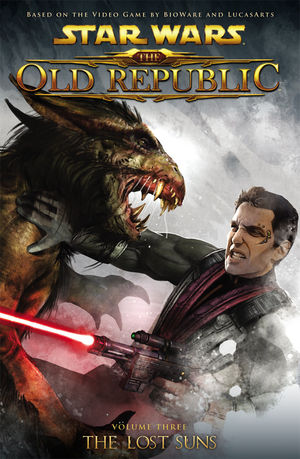
Star Wars: The Old Republic: The Lost Suns review


    I am of two minds about Star Wars: The Old Republic: The Lost Suns. On one hand, it is a perfectly serviceable Star Wars story. There's the Sith, they've built a nasty superweapon, and we have a hero with an interesting problem out to stop it. Unfortunately, the story is so dreadfully conventional I'm not sure I can rate it highly.

    What do I mean about conventional? Part of the appeal of The Old Republic is the fact the lines are a bit blurrier than normal. The Sith Empire has individuals who are motivated by the fact the Republic attempted to commit genocide against them millennia ago and believe they would do the same again given half the chance (they're right).

    The Republic includes people who believe there's no method too horrible for opposing the Sith. Yet, at the end of the day, the Sith are a "might makes right" dictatorship while the Republic is a democracy. It's genuine moral ambiguity without being contrived.

    Unfortunately, that moral ambiguity is completely absent from The Lost Suns. Jedi and Republic=Good. Sith and Empire=Evil. The Sith are building a bunch of superweapons and our heroes have to stop them. This isn't a bad story, really, but it is such a well-trod story that I find myself disappointed. Both The Threat of Peace and Blood of the Empire managed to nicely display the moral ambiguity of the setting without diluting either the Jedi and Sith's well-established roles.

    I perhaps am being too harsh on this particular point but even if the Sith and Imperials are evil, the least they could be is interesting evil. Darth Mekhis is a wicked Sith who wants to build a bunch of evil stuff and that's the extent of her characterization. Oh and she's a member of the Dark Council. I love the fact there's a Sith female main villain, I do. It's part of why I liked Kreia. However, that is not a substitute for personality.

    The only real meat to the story lies in the character of Theron Shan. The son of Jedi Grandmaster Satele Shan, he was raised as a Jedi Knight from birth only to discover as an adult he was insensitive to the Force. In short, his entire childhood was essentially wasted.

    We get a sense of Theron's determination in the fact he decided to become a Republic SIS (their CIA-equivalent) instead but that's about the extent of Theron's characterization. It's not so much that Theron is a flat-character but he keeps to himself enough that we never really bond with him the way we've done with other characters.

    Oddly, my favorite character in the book is Jedi Master Ngani Zho. I enjoyed him consistently throughout the book and wished he would appear in other stories. Even then, there was a disconnect as the book depicted a Jedi Master living as a homeless person bumming rides from one side of the galaxy to the next as something we're supposed to find disturbing. Except, well, Jedi Masters do that sort of stuff all the time. Up until the halfway point of the novel I wasn't aware there was a problem with Master Zho's behavior.

    My least favorite character from the book, however, was undoubtedly Teff'ith. I can't point to anything specific about her but I have never wanted a Star Wars character to die in a manner as horribly as I did her. Everything about her set my teeth on edge and while I have disliked characters before, her sheer unnecessary-ness to the narrative made me despise her. These feelings were not improved by a likable character being removed in favor of her. In a very real way, Teff'ith is my Jar Jar or Ken Palpatine.

    Even the ending felt emotionally unsatisfying. We have a chance to have Theron confront the person who set him on his life's path, the person who shaped his entire existence, and devoted about ninety-percent of his existence to a cause which wasn't his own. He has absolutely nothing to say to this person. This is meant to be meaningful and profound but, frankly, isn't very good drama.

    The Lost Suns isn't bad but it sure as hell isn't good. It's quite possibly the most generic Star Wars story ever told. Even the relatively original idea of being the non-Force Sensitive son of an extremely powerful Jedi gets glossed over. Any angst Theron might have experienced about the subject he's outgrown years ago. It's just not very dramatic and everyone feels like they're characters in a paint-by-the-numbers Star Wars story. The only thing we're missing is some droid comic relief and that would have actually made the story better.

5/10

Wednesday, September 25, 2013

Star Wars: Agent of the Empire: Hard Targets review


    Jahan Cross is the best thing to happen to the Star Wars Expanded Universe in years. A relatively simple concept: James Bond in Space, he has adventures that don't feel like anything else in Star Wars but feel perfectly appropriate for the setting. Much like the X-wing books, the Agent of the Empire comics feel like stories that expand on the universe while not losing the specific flavor of the galaxy far-far away.

    The premise of Hard Targets is that Jahan Cross has been assigned to kill the new Count of Serenno. This is actually a minor spoiler for the first book but it's a fake-out which works just as well knowing what's going to happen. A minor relative of Count Dooku's, the noble is being courted by Bail Organa in hopes of bringing him into the Rebellion. Jahan Cross makes sure that doesn't happen.

    Permanently.

    The rest of the comic book deals with the fallout of this act. Jahan Cross has no objections to murder, he's a bit of a sociopath like that (much like Fleming's creation), but he likes his murders to be justified. Finding out that the Empire's intelligence network may have accepted a bribe to bring about the Count's death bothers him. There's also the issue of the Count's son, a defenseless boy Jahan Cross feels some small obligation to. Mostly because he's just murdered the kid's father.

    Throw in the fact that Jahan Cross' father is an Alderaanian rebel sympathizer and Jahan's next assignment takes him to Serenno then hit and presto! You have one of the most consistently entertaining titles in the Star Wars comic mythos.

    Unfortunately, it seems very likely that Hard Targets will be the last of Jahan Cross' adventures. The Force (and sales) are not with the agent of the Empire. This is an unfortunate side effect of a declining comics market, the lack of any movie-characters in a starring role, and the fact the economy sucks. I, myself, was stupid enough not to buy this when it first came out and only recently picked it up in TPB format.

    I think the chief appeal of Jahan Cross is his moral ambiguity. Much like James Bond, he's an agent of the state and a hired killer but with a certain degree of morality. He's not a complete monster like Tarkin or Ysanne Isard but lacks the kind of moral fiber which would allow him to rebel. Given he willingly breaks out a fugitive, it's also fairly clear he's not motivated by love of country either. At least, solely.

    The book has an interesting relationship with the female gender as well. Jahan Cross, at times, feels like a sexist pig. There's even a scene where he teases Leia and Winter in a manner which can only be described as flirtatious (despite the fact they're teenagers). He also hits on the loyal bodyguard of a man he just murdered while courting another woman. Yet, the book itself, isn't sexist. The women are incredibly capable and forceful with Jahan Cross just happening to have a serious blind spot regarding them.

    The action is excellent in this book, as always, and the writers know not to oversell Cross. Boba Fett and Jahan Cross have a couple of showdowns, only for the latter to get his ass kicked. Not only does this make sense, Boba being the most dangerous non-Force User in the Star Wars galaxy, but losing gracefully makes Cross that much more of a badass. The fact he survived is proof-enough he's tough. Besides, it would be ridiculous for Jahan Cross to defeat Boba Fett while the latter is covered in Mandalorian armor while the former is, well, not.

    I approve of the art in this volume as well. Serenno is beautifully realized, as is Alderaan. These are worlds which have received little attention in Star Wars so watching them get expanded on is delightful. While I don't think we'll see another Agent of the Empire volume, I'd absolutely love to see one.

10/10

Tuesday, September 24, 2013

Star Wars: Book of Sith review


"Fear attracts the fearful…
the strong…
the weak…
the innocent…
the corrupt. 

Fear. Fear is my ally."
―Darth Maul.

     The Book of Sith is the companion piece to the Jedi Path sourcebook I reviewed here. As the Jedi Path discussed what made up the Jedi Order with scribbled-in notes from various movie and EU characters, so does Book of Sith do the same with their opposite number. Supposedly, this volume would unlock the secrets of the Dark Side just as the previous one did the same for the Light.

    It doesn't.

    Not really. The problem with Book of Sith boils down to the fact it's all over the place with its Expanded Universe references. It also doesn't really give us any real details into their philosophy. There's some stuff about their techniques but nothing really meaty on what makes the Sith the Sith.

    I question a lot of their choices in the book and think it would have been better to have a tighter focus on its subject. For a book about the Jedi Knighthood's dark reflection, a substantial number of pages are spent discussing the Nightsisters and midiclorians. Even the choice of margin commentators is a trifle off with Yoda, Luke Skywalker, Mace Windu, and Quinlan Vos joining the ranks of various Dark Side practitioners from the SWEU. I mean, would it have killed the author to cut down the Jedi to one or two? Also, why isn't Starkiller, Cadeus, or Darth Krayt here? They're some of the few actual post-ROTS Sith Lords.

    My least favorite part of the book is the section devoted to Darth Malgus discussing one of his military campaigns. Aside from telling us that Darth Malgus was a badass, which we knew, and a military strategist, ditto, no new insights are given to either him or the Sith Empire. The only part of it I liked was Darth Vader wondering how his relationship with Eleena the Twilelk ended. It's kind of tragic knowing, for readers of Deceived, that Malgus ended up killing her like Vader did Padme.

     The Nightsisters section elaborates on the religion of the Dathomir witches, showing they worship spirits and anthropomorphize nature. This is all fascinating but wholly irrelevant to the Sith, even if Darth Maul hails from their territories. On the plus side, it does confirm that Ventress was a Nightsister first then sold to Rattataki slavers. About the only thing interesting about this section is the idea Mother Talzin and other Force-users have met the Celestials from The Clone Wars "Mortis" arc before.

     Another part which doesn't work is Darth Plagueis' lengthy treatise on the scientific nature of the Force. After a promising beginning, it devolves into explaining why there's an afterlife and the Force works like magic. It rather undermines Plagueis as a character since he can't process what is plainly true in the Star Wars universe while distracting from what is the "orthodox" Sith view on the Force (i.e. the Force functions like magic). About the only thing I liked was the discussion there's no difference between the Netherworld (Heaven) and Chaos (Hell) but the mindset of the wielder.

     About the only parts of the book I enjoyed are the margin notes and its discussion of Sith techniques. The margin notes are hilarious, showing the vastly different perspectives of the Dark Side a collection of different characters have. While there are too many Jedi, I can't say I'm displeased with the comments. I just wish they'd made the majority of commentators to be actual Sith.

     The author manages to get everyone's "voice" right and I am particularly pleased with how they handle Luke Skywalker. He sounds like a wise and noble Jedi Master for 90% of the work but there's just enough of the Farmboy bush pilot leftover to make sure you know whose talking.

     The notes on Sith techniques are not particularly interesting but are informative. We get a number of Sith fighting styles, weapons, and abilities which all have previously shown up in the Star Wars EU. My only disappointment with this section was the discussion of Sith lightsaber techniques. Apparently, the Sith practice only three techniques versus the Jedi's seven. It's rather disappointing and makes me think the book could have expanded that considerably.

     In conclusion, I find the Book of Sith to be disappointing. It's all well-written but the relevant content regarding the Sith is miniscule. Too much time is wasted on the Nightsisters, Darth Plagueis' treatise, and Darth Malgus' military campaigns. If you want a detailed guide to the Sith, this is not the book for you. There's just too much random stuff without much relevance to the book's ostensible subject matter.

5/10

Saturday, September 21, 2013

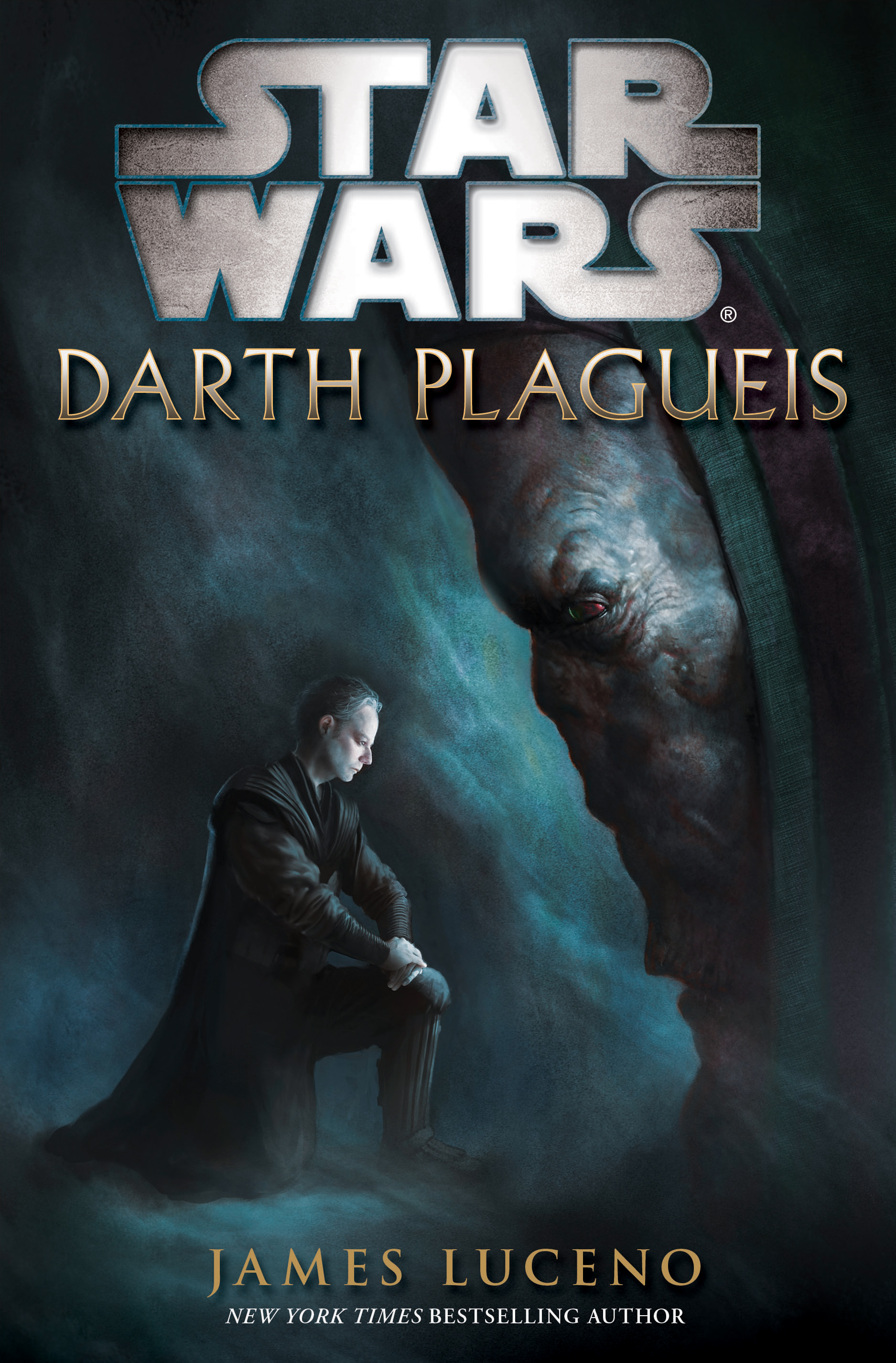
Star Wars: Darth Plagueis review


    "Darth Plagueis was a Dark Lord of the Sith so powerful and so wise, he could use the Force to influence the midi-chlorians to create life. He had such a knowledge of the dark side, he could even keep the ones he cared about from dying."
    ―Palpatine.

    This mysterious reference made during Revenge of the Sith is the basis for the novel which I just finished. Despite the title, however, the novel isn't really about Darth Plagueis. It's, instead, as close as we're going to get for an Emperor Palpatine biography. It tells us where he came from, what his goals were, and how he became corrupted to the Dark Side.

    As always, James Luceno is a master of interweaving the Star Wars Expanded Universe into the narrative in such a way as to not overwhelm new readers. Someone who has never picked up a Star Wars book in their life could read and enjoy Darth Plagueis.

    One element I liked is Darth Plagueis continues to exist alongside Palpatine long after you'd think the later would have killed him. Indeed, at the risk of spoilers, Plagueis' fate as revealed in Revenge of the Sith doesn't occur until right before the beginning of the movies. This means Darth Maul existed very clearly in violation of the Rule of Two. The book addresses this but not in a manner I like. I'll cover more on that later.

    Overall, I liked this novel. It's interesting to get into the heads of other Sith and it's nice to meet one who isn't pure malevolence all the time. James Luceno does an excellent job of making Darth Plagueis evil while making it clear he's not nearly in the same league of evil as his apprentice. Indeed, Darth Plagueis has the dream of ending the Rule of Two because he thinks it's idiotic and wasteful.

    Palpatine, by contrast, is pretty much what I imagine what Damien Thorne from the Omen movies would be if he grew up in the Star Wars universe. He's a high-functioning psychopath who Darth Plagueis nurtures and molds into something infinitely more dangerous than himself. There's references to the Sith'ari prophecy too. I'm inclined to believe that while Darth Bane destroyed the Sith to make them stronger, it was Darth Sidious who transcended all limits.

    The treatment of Darth Maul is one I'm not fond of, however. James Luceno has an obvious disdain for the Dark Lord and the book refers to him as a False Apprentice. Darth Maul is repeatedly criticized by Sidious and Plagueis as being a mindless brute with no subtlety. There's even an enormous take-that at his previous appearance in Darth Maul: Shadow Hunter. It's kind of shocking after The Clone Wars depicts Maul as every bit as intelligent as a Sith Lord should be and twice as manipulative. I think I prefer The Clone Wars version, to be honest.

    I'm also not too fond of Count Dooku's depiction in Darth Plagueis. Contrary to the idea he was a good Jedi knight and political idealist corrupted to the Dark Side by Darth Sidious, Dooku more or less corrupts himself. He's eager to learn about the Dark Side, dismissive of its dangers, and all-too-eager to tear down the Republic with war. His comments about the newly-found Chosen One are particularly dismissive but reference an obscure bit of lore found in the Star Wars D20 tabletop game.

    The meat of the books is the Old Republic's politics and Darth Sidious' manipulations. Plagueis is no slouch in this department but I give kudos to Luceno for showing the difference in skill level between two masters. Darth Sidious' finest moment is when he's causally having lunch with a colleague only to watch him discover his entire family has been killed. All just so Sidious could gain a minor boost to his plans.

    I also appreciated how Darth Sidious and Plagueis were retconned into being responsible for a number of the more questionable aspects of the Prequel's storytelling. How does a Jedi Master get enough money to pay for a clone army? How does a fourteen-year-old girl get to be elected head of a planetary government? Luceno also makes the issue of trade taxation and how they relate to blockading Naboo crystal clear.

    Darth Plagueis' experiments with the midiclorians encompass a reasonable part of the book, though Luceno takes time to separate them from the Force's mysticism. We also get a semi-answer as to the nature of Anakin Skywalker's divine birth, which I won't spoil here. I'll call it satisfying and leave it at that. There's only so much you can do with a premise which is, simply put, deeply flawed.

    In conclusion, I really liked Darth Plagueis and recommend Star Wars fans pick it up. Sadly, I'll say that the book is a little dry at times and watching the villains pull puppet strings can be a little boring. I'm pleased with my purchase, though, and think any diehard Star Wars fans will love it.

9.5/10