Showing posts with label Halo Video Games. Show all posts

Thursday, May 5, 2022

Halo: Infinite review


    HALO: INFINITE is a game that I was extremely reluctant to get into. HALO 5 was not just a disappointing game to me but I felt it derailed the entirety of my investment into the Halo franchise. Which is a shame because I'd played and beaten every other Halo game as well as read a bunch of its novels. It wasn't my favorite sci-fi franchise (Star Trek, Star Wars, Babylon Five, and Mass Effect all beat it) but it was in the top five.

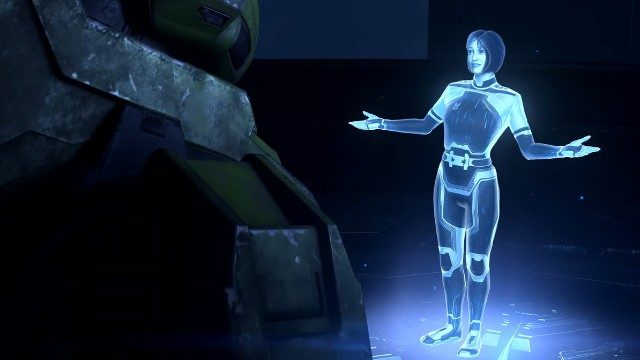
    Basically, I'm willing to overlook a lot of gameplay issues but the characters have to remain intact and the problem of Halo 5 was that it derailed Cortana as well as established a status quo that wasn't very interesting. The key components of a good Halo story are humanity is on the ropes, the Master Chief as the only possible salvation, and the relationship between him and Cortana.

    Halo: Infinite manages to redeem most of the problems with Halo 5 by wrapping up the "evil" Cortana plot off-camera. While some people may think this is a disappointment, I think the plot was better assigned to the dust bin of gaming history rather than trying to repair a fundamentally flawed concept. Here, the Banished, the villains from Halo Wars 2, have seized Halo Zeta as well as defeated the entire UNSC military. Worse, Master Chief is defeated by their leader, Atriox, in hand-to-hand combat.

    Having the best of humanity's forces defeated by the Banished, a group of pirates and raiders, helps reinforce that mankind is still centuries if not millennia behind the rest of the Covenant races. It was only luck as well as the Arbiter's revolt that resulted in humanity not being exterminated. Having them act like they're a superpower after their "victory" was always a mistake in the post-Halo 3 Expanded Universe.


    This is a nice reminder that we're a little fish in a big pond with the exception of the Master Chief. Well, Master Chief somehow survives for six months by going into stasis and floating in deep space. A Pelican pilot finds him and revives him, only to be bemused by the fact Master Chief believes it is his mission to continue the war against the Banished. Atriox is apparently dead (yeah, right) and Cortana deleted but a new Brute chieftain has taken control over the Ring. Given a Halo can destroy all life in the galaxy, stopping him is Master Chief's new priority.

    Halo: Infinite is, as is, a very small open-world RPG that still has most of the appeal from the original three games plus a few new things that are awesome.  It also is lacking the Forge and Multiplayer in the base game but "Season Two" is already fixing most of these problems. The best new addition is definitely the grappling hook and having Master Chief move around like Batman in Arkham City increases the game's appeal significantly.

    Mostly, the game players like Halo. You fight Grunts, Brutes, Elites, Jackals, and Hunters in various arenas. The open-world elements have you rescue Marines, assault fortresses, and take down high-value targets. The actual campaign is about twelve or fourteen hours long, which is about a typical Halo-game's length. There's some bullet sponge-y bosses but even those I didn't dislike that much due to the addition of the grappling hook adding some new combat options.


    The best part of the game is the relationship with Master Chief, Weapon, and the Pilot. They are simple characters but doesn't mean they're shallow characters. The villain, as played by Clancy Brown, is serviceable but a bit stereotypical. Even so, there's enough character development that I actually was invested in seeing how it all shook out. I'm not sure who the "Endless" are but they seem a decent set up for sequels, unlike the Prometheans.

    Overall, my opinion of Halo: Infinite is extremely positive but it's a game that shoots for the moon rather than the stars. There's very much a "return to basics" feel to the game and a casting aside a lot of what didn't work in the previous sequels. The storyline is good and I am satisfied with it ending but it certainly doesn't have the same epic level as the original games. It feels very much like it's waiting for more installments to finish off the story.

8.5/10

Sunday, April 10, 2016

Halo 4 review


    The passing of the torch from Bungie to 343 Industries was something which changed the nature of the Halo games as well as called in serious questions as to what would be the future of the franchise. Halo: Reach was an excellent game but the central storyline is and always would be built around the character of Master Chief. Could they really bring back the character and tell a new story which would launch the franchise into a new trilogy?

    Eh, kind of?

Some beautiful visuals in this game but that's just standard.
    The game opens with Doctor Halsey, creator of the SPARTAN program, being arrested by ONI for her war crimes. This is ironic due to the fact ONI is the person who facilitated her performing all of those aforementioned crimes. It's also confusing because said arrest plays almost no role in this plot and only shows up in the Multiplayer Spartan Ops campaign.

    From there, the campaign switches to Master Chief awakening in the middle of nowhere with a Covenant armada nearby. Despite the treaty with the Covenant, these forces are extremely hostile and Master Chief swiftly disposes of them only to find himself on a Forerunner "shield" world which is home to an ancient evil he helps unwittingly unleash. Things go from bad to worse with the revelation Cortana has reached the end of her seven-year-lifespan and is suffering a horrific degenerative brain-death via rampancy.

Cortana and Master Chief's relationship is the emotional heart of Halo 4.
    So, yeah, a perfectly serviceable story tied to an impressive emotional core between Master Chief and Cortana. In truth, it reminds me a great deal of Max Payne 2 where the shooting was less important than the relationship between our hero and Mona Sax. In a game series about shooting up small pig-like aliens and snake-men, it's strange one of the most affecting parts is dealing with the loss of the person you care about the most to a disease you have no ability to fight.

    Even then, I can't give the game full points because so much of what makes the Cortana and Chief relationship so important is the previous three games worth of interaction they've had. It's also a rather cheap emotional gut punch to use despite its effectiveness. The game holds out hope for her survival but dangles it like a carrot before a starving rabbit. I will say the actors for both Master Chief and Cortana knock it out of the park with their interactions.

The Didact is basically just Darkseid but  that's as good a villain concept as any.
    The Forerunner robot army isn't quite as entertaining to fight as the Covenant forces with the machines being too overpowered and hard to hit to really be enjoyable in battling. Despite this, the concept for them is fundamentally sound and they're a nice visual and gameplay change of pace from killing Elites as well as Grunts.

    Their leader in the Didact is also a character who is a trifle two-dimensional but one which serves his purpose. He's effectively Darkseid in that he's a Galactic Conqueror with pretensions of godhood, an army of cyborgs, and a quest for an artifact which will allow him to remove all of the free will from the universe. Oh, and he's got a boatload of family issues with the good members of his family too. A two-bit Darkseid knock-off is better than what we could have gotten and I expect to see him again in future installments (then again, I expect to see Gravemind too).

The misty jungles are a neat touch when fighting robot armies.
    The game attempts to create a supporting cast for Master Chief in Sarah Palmer (Jennifer Hale), Commander Lasky (Darren O'Hare) and the crew of the Infinity. Unfortunately, we don't get to spend enough time with the Spartan-IVs or Infinity crew to really get to know them. The newcomers lack the over-the-topness necessary to make them as memorable as Sergeant Johnson, Captain Keyes, or Miranda Keyes. The absence of the Arbiter is also confusing as you'd think he'd come up in a renewed Covenant-Earth war. All of this is explained in the Expanded Universe but that doesn't really count as the game should include enough to fill in the blanks.

    Lore-wise, the game incorporates many elements from the Forerunners novels including the appearance of the Forerunners, the conflict between their leaders, and what they were like as a culture. We also get insight into the idea they were once enemies with a prehistorical space-faring humanity. The anthropologists among Halo fans will be made to cry because of this backstory but I didn't have too much trouble with it. Sadly, I think they would have been better off making the Forerunners humans themselves if they were going to punch evolution in the face.

The Infinity's crew just don't endear themselves quite the way the game expects them to.
    Gameplay-wise, the fighting isn't quite as enjoyable as previous installments. Fighting the Covenant is fine but the Forerunner robots, as mentioned, are a bit of a time sink to kill and hit. There's some more needless control changes. On the plus side, I liked the changes to the equipment with the armor abilities from Reach expanded to be outright superpowers here. I had a lot of fun blocking laser blasts and explosions. New weapons include Forerunner holographic light-rifles and cannons which are really just analogues to UNSC equipment but still a lot of fun.

    The shield world of Requiem isn't a terribly memorable location, being another mixture of ruins and jungle but I enjoyed fighting in the interior of a UNSC starship. Furthermore, the game has a couple of segments where you fight inside a Gundam-esque mecha which I really enjoyed and are probably the most entertaining new innovation to the game. A starfighter sequence is an homage to Star Wars and while I don't really think being an ace pilot is in Master Chief's bailiwick, was still pretty damn fun.

The X-wing-esque trench-run of the game was a welcome surprise.
    I do have one major disappointment and that's the ending of the game. Halo isn't a game which has much in the way of boss fights and virtually all of its enemies can be taken down without much difference from regular mooks (Hunters aside). The Didact seemed the perfect opportunity to avert this since he's possessed of super-technology which would make him a wonderful enemy to fight mano-a-mano. Unfortunately, the climax of the game is resolved in a cutscene which, while leaving room for future games, felt like an enormous anticlimax.

    Surprisingly, I can actually comment on the multiplayer element here with Spartan Ops. being a story-based section you can do solo. Sadly, doing it solo is a long and arduous slog through hundreds of enemies with no level scaling. The least the game could have done was provide some A.I. partners for it. Spartan Ops story-mode didn't work on my Xbox One edition of The Master Chief Collection either. The story is fairly straightforward but has a number of interesting twists which I recommend players to check out on Youtube if nothing else.

Poor Cortana really gets put through the ringer here.
    In conclusion, Halo 4 isn't really all that great. It's a serviceable game but it feels like 343 is composed of fans more interested in showing what they want to happen in the setting than organically adding to it. The storyline, except for the Cortana/Master Chief bits, are a mess and there's glaring plot holes which are only filled in if you read the novels. In short, it's an above-average game but nothing akin to the home run many were hoping for.

8/10

Wednesday, April 6, 2016

Halo: Reach review


    Having gone through the original Halo trilogy, we've gotten to enjoy a huge amount of Bungie's output and I'm pleased to say they knocked it out of the park. I wasn't a big fan of Halo: ODST, though, so I came with somewhat mixed feelings toward  Reach. The Master Chief and Cortana are such an integral part of the saga I didn't know if it was impossible to really care about someone else in the primary character role(s).
    Reach had another strike against it in that it was a prequel to the main story, taking place on the planet where Earth suffered its greatest defeat during the war. Barring massive retconning, there was nothing our new protagonist could do in order to avert the catastrophe coming to humanity. The fact you'd have a customizable character also bothered me as while the Master Chief didn't have much in the way of characterization, he did have some and losing that would be a real shame.

Noble Team is a great bunch of characters.
    Still, this was the swan song of Bungie for the Halo franchise. Despite being responsible for the previous four entries into the series, they were moving on to other projects like Destiny and this was their final love-letter to the universe. While not a big fan of prequels in general, I was willing to give them the benefit of the doubt and see what they'd come up with before moving onto the sequels by 343 Industries.

    So, was it good?

    Mostly, yes.

Kat is my favorite of Noble Team.
    I didn't have quite the same feeling of triumph and kickassery as the original Halo trilogy provided me but I enjoyed it a great deal more than ODST. As expected, the characterization suffered for the fact the main character is a faceless and genderless protagonist. The only thing we learn about Noble Six is they've done a lot of spy work for the Office of Naval Intelligence, which is appropriate given all of the Spartans are ONI projects.

    The other characters on Noble Team are underdeveloped but colorful enough at least some of them are memorable. They're about as memorable as your average Call of Duty protagonist with Emile being a stand-in for Modern Warfare's Ghost. I think they could have easily doubled the amount of time being spent on showing their personalities and interactions without even scratching the surface of who they are. My favorite of the six was probably Kat, who is the brains of the group and pulls numerous crazy plans from her ass throughout.

The graphics are absolutely gorgeous, even by Microsoft standards.
    The premise, for those unfamiliar with Halo canon, is Reach is the most heavily-defended human planet save Earth itself. A beautiful pastoral world, the planet falls under the attack of the theocractic aliens known as the Covenant who intend to do nothing less than reduce the entire planet to glass. Noble-Six, a customized male or female Spartan-III, is sent to join Noble Team which is composed of other Spartans. Their mission is to make as much havoc as possible until either the Covenant withdraws or they can evacuate the planetary population.

The game is full of great map designs.
    The game does something clever by starting it off as a "hoo-ray" military shooter with the planet Reach being beautiful, green, and everyone gung-ho to fight the Covenant. While you know the planet is doomed from Halo canon and the ominous loading screen with your main characters helmet shattered on a wasteland, the narrative convinces you it's possible to defeat the Covenant. Only mid-way through the game do they pull out the rug from you with the game revealing there's no way to save Reach and the Covenant truly is overwhelming as well as unstoppable. It becomes a game about saving as many of Reach's citizens as possible before the world is completely destroyed.

Combat is fun and vigorous.
    Noble Team is mostly undeveloped with the only characters receiving any real characterization being Kat, Jorge, and Emile. Noble-Six doesn't get much development and only exists to say yes or no throughout the game. Despite this, I can't help but say I felt moved the handling of the team in the game.

    It's not a spoiler to say not all of them make it through the gave and not all of them die heroically either. I like this, as David Weber explained, " Military fiction in which only bad people -- the ones the readers want to die -- die and the heroes don't suffer agonizing personal losses isn't military fiction: it's military pornography."

    One element I really enjoyed wad finally moving Doctor Halsey, creator of the Spartan program, from the Expanded Universe to the mainstream games. I've always been fond of her character and see her show up here was really appreciated. Sadly, the character's paperback journal which comes with the special edition of the game hasn't been made available separately yet.

Doctor Halsey finally makes her first appearance in-game.
    Graphics-wise, I think this may well be one of the most beautiful Halo games. The maps are huge and intricately detailed. We have lush farmland, jagged cliffs, the interior of spaceships, deep space, a futuristic city, a Japanese hotel, a nightclub, and a ship's graveyard as just some of the locations you get to explore. I also like the design of the character with Kat and Doctor Halsey being especially good designs. I played this game on Xbox One and recommend it there but it's still beautiful on Xbox 360.

    Gameplay, things are still pretty similar to the mainstream Halo games with the biggest change being the special-armor abilities. You're capable of generating shields, rocket-packs, locking yourself down, and other items which I didn't actually use all that much. The biggest change is the addition of a starfighter you use in a memorable segment blasting Covenant ships in orbit around Reach. Starfighter combat isn't something I've experienced before in a Halo game and it's actually quite entertaining.

The starfighter section was an unexpected but welcome bonus.
    Sadly, there's some definite bugs with the Xbox One version. Unfortunately, I wasn't able to get any Achievements for completing the game and I ran into some other minor gameplay issues as well. While I'm not upset about the latter, I've got to say the former was a huge bug and one which diminished my enjoyment of the game considerably.

    In conclusion, Halo: Reach is a good-good game but could have been better. I think they could have expanded the characters and their personal interaction and made what could have been an immensely personal game. Instead, it's just really-really good and entertaining throughout. It's a pretty game but not a moving game. Nevertheless, I'd recommend this to any fans of the Halo series as Bungie's last entry into the franchise.

9/10

Monday, April 4, 2016

Halo 3: ODST review


    Halo 3: ODST is one of my favorite types of video games. Specifically, it's a game which takes an already popular and successful video game like Halo 3 and then simply makes more content for it with a different story. These are known as "Mission Pack Sequels" and form the basis for a lot of really good games like the Elder Scrolls series or Assassins Creed. I'm not a great believer that you need to reinvent the wheel to make an entertaining video game and think some of the best are built on a preexisting solid foundation.

    Halo 3: ODST was a game which was strongly recommended to me by my fellow Halo fans, an entire community I was apart from until recently, which left me coming into this with very high expectations. It's believed by many to be one of the best Halo games. Honestly, I'm sorry to say I disagree as it's probably my least favorite of the franchise so far. This isn't to say it's a bad game but it's comparing some of the best shooters I've ever played to something which feels a good deal more tepid.

My biggest question is "Why am I not playing Nathan Fillon's character during this entire game?"
    The premise is a group of Orbital Drop Shock Troopers, basically Marines who do Halo jumps (pun intended no doubt) from space, have been assigned a mission by the Office of Naval Intelligence (ONI) during the invasion of New Mombasa during the events of Halo 2. The mission goes pear-shaped from the very beginning with a voiceless character named the Rookie getting knocked out and waking up at night with no sign of his cohorts. The Rookie must track down his fellow soldiers and learn their stories one-by-one as we follow a series of flashbacks which detail the aborted mission.

    The cast for ODST is top-notch with Nathan Fillon playing Sergeant Buck, Tricia Helfer playing ONI agent Veronica Dare, and Adam Baldwin as one of the other ODST Troopers. Indeed, part of the game's problem is I had no interest in playing the personality-less Rookie versus playing Halo's version of Malcolm Reynolds. Switching between the characters during their missions also undermined my ability to get attached to them as the majority of their stories lack the kind of emotional gut-punches which make Modern Warfare's use of the trope so interesting.

The game is about shooting aliens with some AI-controlled buddies. Nothing more or less.
    The game is tonally awkward too. The Rookie sections are framed like a Noir detective mystery as you wander the deserted streets of New Mombasa, trying to piece together what happened to mournful saxophone music. This is a sharp contrast to the rest of the ODST soldiers who have big epic war sequences where they slaughter hundreds of Covenant troops to rousing military fair. There's supposed to be a romance between Buck and Veronica but it never rises beyond sitcom fair as we don't spend enough time with them to have that develop. Which is a shame because Fillon and Helfer have good chemistry.

    Gameplay is pretty good, being almost identical to Halo 3 with some minor changes like the fact you don't have shields but "Stamina" (which functions identically to shields) and being able to sprint. There's also the curious fact you can run with the repeating cannons which Master Chief is slowed down by the weight of despite the fact the Spartan-IIs have super-strength. Dual-wielding is impossible, though, but I don't really miss it since I felt it nerfed single weapons.

The parts wandering the dark streets at night to mournful saxophone music can be quite effective.
    The level-design is hit or miss with the best levels being new locations like a massive underground computer facility, a rooftop-to-rooftop firefight which ends in a stand-off against a dozen Banshees, an air battle across the city, and a stand-off at a ONI facility. Unfortunately, other levels like a wildlife preserve and the fights through New Mombasa's streets aren't terribly interesting. As a result, the game feels terribly uneven in places with really good spots occurring before really tepid ones.

    Enemy innovation is limited to the creation of the Engineers who basically float around and repair the shields of the Covenant before exploding if you get too close to them. Given they're adorable and make the game slightly more challenging, I feel no need to kill them and question how much they really benefit the gameplay. ODST also introduces a Horde mode mechanic to the series which I much prefer to Multiplayer.

Shooting Brutes never gets old.
    One element which is just confusing is there's a lengthy number of Terminals containing the story of a New Mombasa citizen trying to flee from a corrupt Police Chief during the invasion which has absolutely nothing to do with the plot. It's a very good story and very well-written, fleshing out New Mombasa and its people but is a failure from the standpoint of being a distraction from the main plot. The fact the plot of the game only becomes clear during the final few levels also makes it clear this game was designed with no clear vision other than, "shoot more Covenant."

    Indeed, if you take a step back, there's a lot of very strange narrative choices in the game and I don't just mean constantly switching perspectives in the game between characters who are mostly identical. There's no villain in the game despite a large number of the audible terminals being devoted to making the Police Chief of New Mombasa a complete monster. A character you never meet and who meets his fate offscreen.

I like Captain Dare but she disappears from the game for 2/3rds of the narrative.
    There's no clear objective in the game once you discover your team is alive since reuniting with them doesn't seem like a big deal once you realize they're all alive.  It's ironic that the initial mission of destroying the Covenant flagship, while derided by ONI, is at least a goal which has the potential to do meaningful damage to the enemy. There's a bit at the end about getting a Covenant race to defect but even this is undermined by the fact the war will canonically end about a week from now when the Master Chief returns from High Charity.

    It should be noted Halo: ODST doesn't come with Halo: The Master Chief Collection but is a DLC purchasable for about five dollars. This is more than my money's worth on the game even if I don't think of this as anywhere near my favorite Halo game.  The game is playable from the main game and incorporated as an expansion to Halo 3, though, which makes sense from multiple perspectives.

Sergeant Johnson needed to be in this game more.
    Ultimately, I think this is a game which is quite fun to play but has no idea what to do itself. At times it tries to be a mystery, at others a war epic, and other times still a tragedy. I never got to know any of the characters very well and I can't help but think the game would have been improved 200% if I was playing Nathan Fillon's character Buck the entire time. Which is perhaps the only time in history I'll admit to wanting to play a character named Buck. There's just not much here and it seems like a waste of the talent involved. The primary reason you should play this game is because you want to play more Halo, not because there's something compelling about the narrative.

7.5/10

Sunday, April 3, 2016

Halo 3 review


    Halo month continues with my experiencing the third of the Halo series on the Master Chief Collection, which is a steal at 30 bucks right now. Halo 3 isn't the sort of game you should play without having done the previous two entries in the series as it is a direct continuation of their plotlines. It's a testament to Microsoft they were willing to release their first major Xbox 360 release based on the build-up from two (admittedly ungawdly successful) Xbox games. I think more video games should be trilogies, even if it lessens the pick-up value since it favors deeper storytelling and characters.

    There is, unfortunately, a downside to this as it becomes impossible to separate the individual game from the larger series. I'm playing Halo 3 as part of The Master Chief Collection so the near-incoherent plotlines of 2 as well as its massive cliffhanger doesn't bother me the way it did gamers in 2007. Taken as a whole, the trilogy presented is a 10 out of 10 work and one of the best collections of video games ever made but it is more than the sum of its parts.

    Individually, I'm not sure how good 2 and 3 are as they actually feel like two halves of the same game. Newcomers are, of course, going to be able to buy both at once but I feel like I should clarify this before the rest of the review. If I'd reviewed the games back when they first came out, I suspect I'd have been far more critical but they really do compliment each other immensely. 

A return of old friends does automatically buy the same some slack.
    The premise, for those unfamiliar with my previous reviews or the series, is a cybernetically enhanced supersoldier called the Master Chief is teamed up with an A.I. named Cortana and they represent humanity's last best hope against the alien Covenant. Having successfully destroyed the galaxy-destroying Halo and denied the Covenant another one, they must journey to a super-structure called the Ark to prevent all of them from being activated at once. Unfortunately, Cortana is presently under the control of the eldritch abomination known as Gravemind and Earth is being invaded by not only the Covenant but the sentient fungus zombie-plague known as the Flood.

    The game makes very little attempt to catch up readers on the preexisting plot with the summary of events being, "The Covenant are attacking Earth. They're looking for something. You need to stop them before they kill us all. Go." Unfortunately, parts of Halo 3 read like rehashes of 2 with the beginning and middle Acts being essentially a retelling of Halo 2. They could have put the final third of Halo 3 on Halo 2 and the game would have made every bit as much sense. I didn't mind this because the levels were fun but journeying back to New Mombasa for more Earth vs. Covenant action made this all the more blatant. We couldn't defend, say, Belgium or New York?

At one point in this game, I blew up one of these dropships and it was GLORIOUS.
    The gameplay remains largely unchanged from the previous game with dual-wielding, easy-changing guns, regenerating shields, and a variety of grenades to hurl at the enemy. Halo 3 also introduces equipment which is useful for making your enemies' lives more difficult but, honestly, I didn't have any difficulty with continuing my previous strategy of just moving around the levels shooting my enemies.

    I should note I'm not a multiplayer gamer so I can't comment on one of the most popular elements of Halo. I will note the majority of gamers have since moved on to Halo 5: Guardians by this point but there's a fan community for it thanks to, well, the re-release of previous games in The Master Chief Collection. Even so, I can't help but feel like I'm part of the peripheral demographic being primarily a solo campaign and story-focused Halo fan.
 
I really came to like the side-characters. Which is amazing given how little they appear.

    Halo 3 has beautiful graphics but they're not quite as well-done as the Anniversary Editions. This is noticeable because player characters are going to go from the previous remastered editions only to have a noticeable downturn in facial quality for the character models. I think they should have redone Halo 3 for The Master Chief Collection even though this is otherwise an extremely good purchase for the money it costs. I also regret the absence of animated terminals which were one of my favorite parts of the

    Unlike in the previous game, there's no opportunities to play the Arbiter save in co-op, which is a shame. Instead, the Arbiter plays the second banana role to the Master Chief and accompanies him on numerous missions as backup. Despite this, the Arbiter still has several memorable moments like when he confronts the Prophet of Truth over the latter's decision to commit genocide against the Elite race.

This is one of the iconic moments of the series for me as a sci-fi fan.
    The enemies are excellent with the Brutes toned down a bit from their bullet sponge status in the previous book. I also love the introduction of Scarabs which, while one appeared in Halo 2, actually become some of the most memorable bosses in Halo 3. Nothing is more fun in Halo, arguably, than blowing up gigantic spider-tanks. Admittedly, the game seems to realize this as not only does it happen once or twice but four times throughout.

    The characters in the game are memorable and give great performances with Guilty Spark, the Arbiter, Cortana, Gravemind, Miranda Keyes, Sergeant Johnson, the Prophet of Truth, and others all being entertaining in their appearance. The fact some of the good guys don't make it is surprising but handled well within the cutscenes. Nothing is cheesy about the deaths and they're genuinely moving. Okay, there's a little cheesy about some of the deaths but they worked, dammit!

Blowing up Scarabs never gets old but they repeat it, perhaps, a few times too many.

    Level-wise, I think Halo 3 is a big improvement over Halo 2. The levels have a lot more maneuverability and variety than the previous game. There's an underground 20th century military base, jungle, plains, alien temples, mountains, an alien hive, snow peaks, and more. I find that mobility to be a key part of Halo's appeal and worked very well.

    The relationship between Master Chief and Cortana is perhaps my favorite part of the game. The mission to rescue her from the Flood's mucus-filled ant-hill-like base is perhaps my favorite part of the game and has a really strong emotional climax. Whether they're mother and son, comrades-in-arms, or romantic-they have one of the best relationships in video games.

    The emotional high point of the game isn't trying to prevent the Covenant from destroying the galaxy or the betrayal of the Flood but Master Chief invading Gravemind's starship in hopes of finding Cortana. The fact Master Chief frequently hallucinates about his lost A.I. companion helps drive home how important she is to him as well as how lost he is without her guidance. Some of these hallucinations were rather annoying but they never interrupt combat and occur only intermittently. Cortana's suffering at the hands of Gravemind really tugs at the heartstrings by the time you finally catch up with her.

Cortana is, as ever, awesome.
    My favorite level of the game is probably the Crow's Nest near the beginning as you get to fight off an entire Covenant army invading your old 20th century United States-built nuclear bunker in the middle of Africa. I'm fairly sure nothing like that was ever built but its evocative and the concrete architecture and antiquated equipment make a great contrast to the aliens as well as super-soldiers currently fighting in it. I also was very fond of the Gravemind's starship which is like fighting in a zombie-filled anthill and seems utterly wrong. It is a vision of the future should you not be able to stop the Flood.

    Vehicular combat has improved this game with the extensive sections you play all being enjoyable except for the final mission where you once more have to use the damned Warthog to escape an exploding Forerunner installation. At least this one possesses checkpoints and isn't timed, though I was about ready to throw the controller across the room. The Warthog remains, without a doubt, one of the worst vehicles in video games and yet it is an iconic part of the franchise now.

Call me when you need me again.
     As a finale to the Halo trilogy, this is a great game and ends the major plot points in a thoroughly enjoyable game. Halo 3 serves as the benchmark for these sorts of trilogies, being better at wrapping up things than Assassins Creed 3 and Mass Effect 3. Plus, you get the option for firing a Halo ring so I give the game props for that.

10/10

Saturday, April 2, 2016

Halo 2 Anniversary Edition review


    Halo month continues with my review of the second of the series. I never owned an Xbox and didn't join the Silver Age of Gaming until my wife bought me an Xbox 360. Still, having enjoyed Halo: Combat Evolved, I was eager to start the next phase of my journey through the Master Chief collection. As with the original game, I'm playing the Anniversary Edition, which is basically the same game with better graphics and movie quality CGI cutscenes.

    Unlike the previous Halo, which did a fantastic job of showing rather than telling, this game has a good deal more exposition. It also has a thoroughly unnecessary introduction designed to tie the game into Halo 5: Guardians, which means they took time to animate and stick in a commercial for a game which is going to be obsolete well before this collection goes out of style.

The game opens up with a fantastically fun series of levels on an Earth space station.
    The premise of the game is it's a short time after the events of the first game. Master Chief is being rewarded for his destruction of the Covenant fleet, the Halo, and containing the Flood. Simultaneously, the fleet commander of the Covenant armada is being brought for stripping of his rank and torture. No sooner than Master Chief gets his medal, does a huge new Covenant armada arrives in orbit over Earth.

    While Master Chief struggles to save the Earth from destruction, the former commander is pulled out of prison to be made into the Arbiter. The Arbiter is a sort of suicide soldier who is allowed to regain his armor taking on the worst missions the Prophets of the Covenant can conceive of. These start with a group of heretics who contain information about the Halos not being the keys to godhood which the Covenant believe.

It's an old meme but come on: "Someone set us up the bomb!" "All your base are belong to us." They're just too perfect.
    As mentioned, Halo has a surprisingly deep story and world. It isn't just good for a shooter or a video game but good for a science fiction setting in general. The level of detail which goes into its writing is tremendous and only gets better here. Halo 2 fills in a lot of the gaps of the Covenant and humanizes them (for lack of a better term) to be a respectable enemy rather than just a series of walking targets. While a lot of this information is only available on the Terminals scattered throughout the game (and made specifically for the Xbox One version), it's like candy for a lore buff like myself.

    One area the game does fall down on, though, is the large maneuverable maps of the previous game are largely absent. The maps are still fairly large and you have maneuverability in them but there's a lot of tunnels, restricted fighting zones, and places where you have to fight to move onto the next level rather than simply run past it. Still, there's are many memorable set pieces throughout the storyline. Also, the combat is still immensely fun with it never less than joy to gun down Covenant forces.

The Arbiter is the main character for roughly half the missions.
    The ability to play the Arbiter was a surprise for many in the initial release but was something I found to be a welcome change from playing Master Chief. While they play largely identically, the Arbiter has a cloaking shield and has an entirely different feel in terms of storytelling. Keith David does a great job of evoking a honorable but misguided warrior who is slowly coming to realize he's nothing more than a pawn of the Prophets.

    Halo 2 is a lot more vehicle focused than Halo: Combat Evolved with the addition of tanks as well as more maps devoted to vehicular combat. I'm particularly fond of the Metropolis level, which ends in a ground battle that takes Master Chief onto a gigantic mechanical spider. As John Peters knows, anything is improved by the addition of a giant spider. I also was very fond of the section taking place on the Delta Halo ring which includes numerous ruined temples and flying platforms.

I enjoy Miranda Keyes and think she's an excellent replacement for her father.
    Characters Miranda Keyes, the Arbiter, the Prophet of Regret, and Lord Hood help round out the returning cast of Sergeant Johnson, Cortana, and Master Chief. We also get a new player personifying the flood in the Gravemind. Their personalities aren't particularly deep but they don't have to be as, like Star Wars, their archetypes allow you to feel in the blanks of their personalities without stopping to give them scenes devoted to expanding on their characters.

    There's a couple of more flaws which I need to address. First of all, in addition to the issue of the maps not allowing as much maneuverability or tactics, they change the overpowered pistols from the previous game into something almost useless. This is compensated for, partially, by the fact it can be dual-wielded now but I still disliked this strongly. 

    Then there's the ending.

 I think Cortana's redesign for this game is my favorite.
    In a very real way, the game simply stops at the climax of Act II. The game has Master Chief and the Arbiter come to a pair of shared realizations they have bigger enemies than each other. The villains both accomplish their shared goals and everything is set up for a big dramatic confrontation over the Earth, only for the game to immediately end. This is all resolved in Halo 3 but it's still an enormous cheat for those who expect their games to have some kind of resolution, trilogies or not.

    The map design for the game is also hit and miss. I've mentioned there's way too many corridors in this game and while there were plenty of them in Combat Evolved, they weren't the places you did your fighting. The best levels in the game, ironically, are the Arbiter's rather than Master Chief with New Mombasa being a huge disappointment while the Arbiter gets to fight a group of heretic Covenant on their equivalent of Cloud City.

You get to punch a Covenant Prophet to death. That is worth a great deal.
     Halo 2 is full of big huge cinematic moments. Whereas virtually everything in Combat Evolved took place in the game engine, Halo 2 has the pacing and style of a big budget action movie. While a few of these scenes drag on longer than they have to like the Arbiter being tortured by the Prophets, for the most part it's a change which works.  My only regret in the game is the cutscene where Master Chief delivers a planet-busting bomb to blow up the Covenant flagship really should have been a playable level.

    As before, the chief appeal of Halo 2 is it's just plain fun. Shooting the Covenant's minions is never boring and the addition of Brutes as bullet-sponge ape men provides another foe that's entertaining as all-get-out to take down. I'm not a person who can comment on multiplayer and, besides, most of the populace for such has long since moved on to more advanced games.

Warthogs, roll out!
     Really, the only low point in the game was the New Mombasa levels which felt more like Call of Duty than Halo with their firefight in the middle of a generic desert city. Likewise, the sections on the Delta Halo and Prophet's warship dragged on a bit too long when they should have been a bit more rapid. Even so, I had as much fun playing Halo 2 as I have had playing any more recent game and the updated graphics hold up compared to games produced for current hardware.

    In conclusion, Halo 2 is a great game but you probably didn't need me to tell you that. What you might need me to tell you is it's still worth picking up over a decade later. The update for the game is beautiful and the Master Chief Collection is underpriced if you ask me.

10/10

Friday, April 1, 2016

Halo: Combat Evolved Anniversary Edition review


    I have a confession to make: I have never played Halo until recently. Being as I review video games for a living (okay, for fun), this is a bit like being a fantasy magazine publisher who has never read Tolkien. Purchasing a copy of The Master Chief Collection, I decided to correct that oversight.

    Still, Halo is one of the most successful video games of all time and I was eager to see what it had going for it. I tried to keep my expectations reasonable, though, due to the fact it was a game originally published in 2001. Even if the graphics were updated in 2011, there were probably a lot of anachronisms.

    So, what did I think?

I love the design of the Halos. They're elegant in their simplicity.
     In probably what is the most unsurprising review of all time, Halo is a lot of fun. Seriously, that's the core part of what makes Halo great and why so many other video games fail. It's entertaining as hell to play and would be enjoyable even if you ignore the story. Which, as I understand, 90% of the players do and only 1% out of the remaining 10% actually give a crap about. Which makes it surprising that it's as entertaining and well-written as it is.

    The premise of the game, if it needs explanation, is the human race is under assault by the Covenant. The Covenant is a Taliban-esque theocracy which only barely comprehends the technology it has recovered from the mysterious Forerunner race. For reasons which are only alluded at in the game but followed up in the Expanded Universe, they are engaged in a genocidal war against humanity and have destroyed their colony world of Reach.

    Chasing their sole-surviving spaceship down, the Covenant forces and human survivors accidentally stumble upon a massive Forerunner super-structure in the shape of a ring. Awakening the Master Chief, a super-soldier in power armor, they send him out to hold off the Covenant long enough to crash land on the 'Halo' space station and discover its secrets.

The interior of the ring is gorgeous to look at and a triumph of Microsoft design.
    What's interesting is this is a fairly complicated plot for a shooter. It's also one effortlessly told through showing rather than telling. We can infer most of what's going on and, for once, those guesses are usually on the money with no attempt to obfuscate the truth. When we discover Halo's purpose, also, it seems like an extreme but understandable reaction to the danger the (revealed mid-game) Flood pose.

    The books of Eric Nylund eventually filled in a great deal of the backstory for the series with things like the Spartan program, Doctor Halsey, and Reach all being detailed at length in his trilogy about the events of the game but none of is this is necessary. It's stuff which I heartily recommend and will be reviewing but the story stands perfectly fine on his own.  Just enough information is given to let the player fill in all of the blanks themselves without feeling lost or confused by events. This is a shooter which manages to balance world-building, story, and gameplay like an expert juggler without diminishing any of the three.

Cortana is one of my favorite characters in video games. Probably 7 or 8 on the list.
    The primary appeal of the game, though, is the third-dimensional nature and free-form nature of the battlefields. Halo is composed of vast amounts of space with huge maps full of buildings, rocks, trees, and objects you can use to fight in. While the term Combat Evolved is a terrible subtitle for a video game, it really is a near-unique experience. There's very few corridor shootings and lots of room to maneuver. While plenty of games have imitated it since, it's still rare enough to be innovative today.

    Now even the updated graphics for the Anniversary Edition are a little long in the tooth when viewed up-close but there's some truly breathtaking vistas spread throughout this game. The choice to make the surface of the space station lush, green, and beautiful rather than an empty barren technopolis. Every design choice is entertaining with Cortana, in particular, being an iconic girl of gaming now. The music for the game is great, too, with the mixture of rock, heavy metal, and orchestra blending together surprisingly well.

The Flood are terrifying as well as cartoony. Not an easy balance to strike.
    I love the characters in the game with Cortana and Master Chief being especially likable. Cortana has a great deal more personality but just because it's "stoic" doesn't mean it doesn't exist for Master Chief. I even like Captain Keyes who has only a small role as the noble Naval officer dealing with an impossible situation. When characters die or sacrifice themselves, those events have a bit of weight to them. Albeit, the fact two characters who I thought died in this game show up in Halo 2 does undermine the drama a bit.

    Guilty Spark is an amazingly entertaining character and a source of great comic relief. Even the Covenant mooks have plenty of personality with the Grunts cowardice, the Jackals' sneakiness, and the Elite's proud warrior race attitudes all coming from their actions in-game. I approve of the fact the mooks aren't just generic warriors in this game and that adds to the feeling the game is serious but not too serious if that makes sense.

I will say everyone hates the Warthog, though.
    Vehicular combat in the game sucks even if the maps are large enough that driving around and shooting things is actually fun despite the incredibly problematic control system. The game was designed for multiple players to enjoy together with the A.I. for driving absolutely atrocious. The fact you can sit on the back and let it turn into a rail-shooter is a point in its favor, though. I now know where the awful controls of Mass Effect's Mako come from, though.

    The level design for Halo cannot be understated in terms of its artistry. You fight in jungles, swamps, alien temples, and more. While the original game's graphics had to be necessarily dark for graphics limitations, the Anniversary Edition brightens them up to something glorious. You can also see what the original Halo looked like just by tapping the start key. While not an open-world game, per se, it's still very open with almost everything you see able to be interacted with. Quite the accomplishment in 2001 and still impressive today.

This game definitely sold itself to me as a series. Kudos, Microsoft.
     As for multi-player, well, I'm probably the worst person in the world to review that sort of thing since the only time I've ever played it is for Mass Effect 3 and I didn't much care for it. I also suspect the vast majority of multiplayer fans have since moved on to better servers and graphics with the sequels. As such, my reviews of this game as well as future installments will be primarily about the single-player campaigns.

    Since I had such a great time playing it, I'm going to be doing Halo month for the month of April and analyzing all of the games in the series as well as some of the choicer bits of Expanded Universe fiction. I hope people enjoy it as much as I have.

10/10