Showing posts with label Feminism. Show all posts

Friday, September 6, 2024

Feminism and Fantasy: The Women of Elden Ring


“Fantasy and Feminism” is going to be a series of articles that provides analysis of strong female characters and their role in stories that tend toward the grim as well as dark. A short analysis of those properties that exist in hopeless and shadow-filled worlds that benefit from good writing toward its female protagonists (or antagonists). There will be spoilers for the plot of the game so let the reader beware.

What is Elden Ring?

Elden Ring is a Dark Souls-esque game FromSoftware as written by Hidetaka Miyazaki and George R.R. Martin. The premise is that the Lands Between are a mythological Medieval kingdom formerly ruled by the God Queen Marika. After the death of her son, Godwyn, she shattered the Elden Ring that was the source of her power and plunged the world into chaos. The Tarnished, a banished warrior, is empowered by her to seek the Great Runes spread among her children and restore the lands to glory.

Why is Elden Ring feminist?

Elden Ring is a story driven by its female characters and their struggles, agendas, and ideology. Marika the God Queen is a character driven by female rage that proves to be a complicated figure with both good as well as evil qualities. Supporting characters Melina and Ranni both have their own solutions for the state of the Lands Between but require moral compromise that the Tarnished will have to debate. Themes of motherhood, marriage, and love are tied in with questions of power as well as revenge.

Notable Female Characters

Marika of the Golden Order


God is a woman in the Lands Between and while there is a Greater Will above her, they remain nebulous to the primary religion that venerates Marika above all others. She successfully conquered most of the world in the past and built a literally immortal empire by sealing away Destined Death. Marika is a complicated figure in-universe as her actions include the genocide of the Fire Giants, near destruction of the Dragon Race, and persecution of the Merchants. However, Marika is not a figure who is easily vilified like Cersei Lannister as she is never shown as anything but an incredibly capable ruler. Indeed, her room in the royal palace is shown to be filled with thousands of stone tablets containing the issues of ruling.

One interesting element is that the goal of the Tarnished is to become Elden Lord or her consort. Which is a play on the classic fantasy of marrying a princess to become king. Except the princess in this case is a queen and has already been married twice before. Marika discarded her first husband, Godfrey, when he was no longer of use to her. We also discover that her second husband was a guise for herself, which adds some interesting elements to her story (especially as said guise sired children with another woman). She is far from the Medieval virgin archetype and has close to a dozen children if we include the ones in the mausoleums on the map.

Shadow of the Erd Tree also expands on Marika’s backstory as we discover she was part of a persecuted minority in the Shadowlands. Marika eventually overthrew the Hornsent Empire that oppressed her people by becoming a god but later sent her eldest (?) son, Messmer to slaughter them all. Marika isn’t going to win mother of the year awards, though, as while it seems she destroyed the Elden Ring because of her son, Godwyn’s, death, she also charges the Tarnished to kill the rest of her extended family to become the new Elden Lord.

Melina

As Varre said at the start of your journey, you are Maidenless and thus unable to be an Elden Lord. Just as the God Queen needs her consort, so does the Elden Lord aspirants need a Maiden to provide them the secrets to achieving said state. Melina, despite not being a maiden, agrees to serve in this role for you. This is not because of romance but out of a desire to bring an end to the chaos of the Lands Between. She is the in-universe reason you can level up with runes and becoming powerful enough to slay demigods.

Later, we discover that Melina is aware this is a one-way trip for her. To enter the Erd Tree and become Elden Lord, it must be burned with mystical fire. This requires Melina to sacrifice her life to reignite the Fire Giant’s flame. You can choose an alternative way to burn the Erd Tree and save her life, but Melina rejects you as you do so, since it means siding with the evil Frenzied Flame. Indeed, if she survives, she devotes herself to destroying you as well as the horror you have brought to the Lands Between.

Ranni

The most well-loved character of Elden Ring if the ending statistics are any indication, Ranni the Snow Witch is a daughter of Marika who decided to rebel against the Golden Order. She is the reason for the Shattering by having Godwyn assassinated. Despite this, she is not a villain. Ranni despises the gods attempting to control the lives or mortals (and immortals in her case). Ranni’s plan is to force the Elden Ring into space and deny everyone its power. This will give humanity self-determination but also make them vulnerable to the other non-Marika gods out there.

Ranni is one of the only romanceable characters in the game aside from Fia but it is a strange journey based on aiding her to achieve freedom from the mysterious Fingers. Ranni is a character who has multiple strong relationships with her follows as well with the most tragic, perhaps, being her wolfman bodyguard, Blaidd. Without a hint of romance, he is willing to die for her but is cursed to turn against her by his creators.

Fia

Fia the Deathbed Companion is from a culture that forced her into a deeply uncomfortable role as a temple prostitute who laid with dying men to transfer life energy to them. Fia mentions that she was not someone who chose these companions and bitterly resents the role she was assigned by society. However, Fia is not a victim and has found a new path to devote herself to: the resurrection of Godwyn as well as saving Those-Who-Live-In-Death (the undead) from persecution.

If you do Fia’s quest to its entirety, she will reveal you are not the only one of her lovers but one of several she’s been taking the life-force of to try to restore Godwyn. She also kills the enigmatic monster hunter, D, in order to avenge the many undead he’s slain. By the end, she willingly sacrifices her life to create a Golden Rune that will make it so that the undead are not hunted anymore.

Fia is an interesting deconstruction of many traditional fantasy and video game tropes. Because, at the end of the day, you are never as important to Fia as she can be to you. Rather than played for titillation, lying with Fia only includes showing her embracing you with a warm hug. While her backstory has strong elements of trauma, they are not her primary motivation. Fia sexually manipulates individuals like Roderick and Lionel, but this is never judged by the game. It is simply the tool she must save her adopted people. Indeed, when D’s brother, also known as D, desecrates her body while shouting slurs at her, you are encouraged to kill him.

Roderika

One of the most tragic stories in Elden Ring, Roderika is the story of trauma and depression. A woman that may or may not have been Tarnished, she was exiled from her homeland and attempted to carry out the quest to recover the Great Runes. Instead, she failed miserably, and all her companions were killed. The Tarnished protagonist can help her by giving her a purpose in Roundtable Hold and befriending her to the blacksmith Hewg.

But trauma isn’t something that is easily let go of and Hewg’s dementia combined with the deaths of so many other warriors of the Roundtable results in her choosing to stay with the former when it the hold burns to the ground. Roderika is an interesting case of a game portraying weakness and sorrow without condemnation.

She’s not meant for the life of an adventurer, but her empathy makes her one of the few individuals that can be called unquestionably good in the Lands Between. The fact that she is a Master Spirit Tuner also shows that she is a person who has value and much to contribute. Unfortunately, she can’t leave behind her pain and the only thing you can do for her in the end is fulfill her request of killing Marika.

Rya and Tanith

Two of the less prominent female characters in the game that, nevertheless, have the closest mother-daughter relationship in the story. Rya is a half-human, half-snake deity who pretends to be an ordinary human girl with magic. She has been raised to believe she’s a princess and that there’s nothing abnormal about her condition. Tantih is a former dancer who became the chief priestess of Rykad the Heretic’s cult, taking over in his absence (of being transformed into said monstrous snake deity).

Tanith is absolutely evil and about as sane as your typical Cthulhu cultist but is a supporting kind mother who wants nothing more than to make sure Rya is happy. Rya wants to serve the cause of her family and prove to be a good daughter until she can’t deny that her father isn’t a noble royal but a blasphemous Emperor Leto II-esque monster living in the basement. That doesn’t get rid of her love for her mother, though.

Perhaps my favorite moment for these two is after you defeat Rykard and Tanith is reduced to her worst: trying to absorb Rykard’s essence and become the new God Devouring Serpent. Her servant, Patches, trying to remind her of her past as a dancer, suggests you show her a token of her past. Her reaction? Sneer and go back to what she’s doing.

Malenia and Millicent

The most difficult boss in the history of Elden Ring. Malenia has already begun a legend in the annals of video games. However, Malenia also has a large role in the history of the Lands Between. The world’s greatest warrior, Malenia is also disabled. Born with the curse of Rot, she has lost multiple limbs over the years as well as her eyes. Prosthetics and the Golden Order Fundamentalism (science) of her brother Miquella has let her live an accomplished life.

Malenia’s story is a tragedy, though, because her gratitude and belief in Miquella’s dream means that she became a tool for him rather than a heroine in her own right. An Empyrean, she was destined to take Marika’s place as ruler of the gods but chose to subordinate herself to her brother instead. This results in tragedies like the destruction of Caelid via Scarlet Rot and her being abandoned in the Halig Tree while waiting for his return (which will never come). Tragedy doesn’t mean misogyny, though, and Malenia remains one of the most iconic characters of Elden Ring.

Interestingly, underscoring this relationship with power is Millicent. Millicent is basically a reincarnation or child of Malenia. She wishes to reach her original self and remind her of her glories but is ambushed by her sisters who have succumbed to the Scarlet Rot. Millicent refuses and chooses death over succumbing, which puts her above Malenia who unleashed it on Caelid in order to keep her unbroken win streak. In this respect, she proves the better woman.

Criticisms

Elden Ring is a work that isn’t above criticism, though. The archmage Rellana is the ruler of her own kingdom and able to stand against the Golden Order but due to heartbreak, goes mad and abandons her kingdom in order to lord over the insane reincarnations of her juvenile students. Preceptor Seluvis actually has a plotline where he attempts to brainwash a young warrior woman into being his slave (with all that implies), which your character can actually help him achieve. One of the most interesting characters in the game, Sellen the Sorceress, ends up a horrific biological mass even if you assist her character. Still, it is a collection of fascinating well-rounded women with their own dreams as well as ambitions.

Conclusion

Elden Ring is a video game that you must work very hard to experience the story of. However, it is a story of many three-dimensional characters with their own motivations as well as stories. Many of the stories deal with particularly female interpretations of power as well as family as well. Would I have appreciated a couple of female writers to add their own content? Yes. However, George and Miyasaki have done a fantastic job with their world’s women.

Sunday, August 7, 2016

A Vampirella Retrospective

Yes, that's Frank Frazetta art.
    Vampirella is a character with an interesting backstory both in-universe and behind-the-scenes. Arguably, her behind-the-scenes story is more interesting than the majority of her comic book adventures. She was created for a black and white horror magazine in 1969 as a way to get around the Comic Book Code Authority (because it's a MAGAZINE not a comic).

The stories were really good in the magazine.
    Her iconic and physics-defying red costume was created by noted feminist Trina Robbins who wanted to illustrate to the world uninhibited female sexuality not constrained by male prudishness. The magazine ran until Harris Comics acquired the rights to her in the Nineties then Dynamite Entertainment. The character has often been an inspiration for many horror fans but who has often been dismissed as shameless cheesecake. A fair cop sometimes and a mistake at others (as is the representation of many female characters in the comics industry).

    So who is Vampirella? She's an alien from the planet Drakulon who has all the powers of a vampire but fights supernatural vampires among other monsters. She's also been the daughter of Lilith but it's infinitely less cool/cheesy than this origin. Sometimes she's the host of horror books and other times she's actively hunting everything from the Lord of the Undead to Cthulhuean abominations. Like all good comic book origins, it has the benefit of being memorable and able to be explained on a postcard.

    The origins of the Vampirella character actually date back to the creation of the Comics Code Authority in 1954. Prior to the creation of that artistic urge suppressing "comics are for kids" body, the American comics industry had a thriving collection of genres ranging from horror to Westerns to romance. For those artists who wanted to create something other than safe and friendly superhero comics, it was a stifling set of restrictions.

Vampirella's mother.
    James Warren, founder of Warren Publishing, was clever enough to note a loophole in the law. Comic books were covered by the Comics Code Authority but a more expensive black and white magazine.

    "The Comics Code saved the industry from turmoil, but at the same time, it had a cleansing kind of effect on comics, making them "clean, proper and family-oriented" ... We would overcome this by saying to the Code Authority, the industry, the printers, and the distributors: 'We are not a comic book; we are a magazine. Creepy is magazine-sized and will be sold on magazine racks, not comic book racks". Creepy's manifesto was brief and direct: First, it was to be a magazine format, 8½" × 11", going to an older audience not subject to the Code Authority."
    -James Warren, The Warren Companion (2001)

    Forrest J. Ackerman, working with Trina Robbins, created Vampirella in 1969 as the host of her titular magazine. The Vampirella created there was one part Elvira, Mistress of the Dark (decades before her appearance) and one part Cryptkeeper. While Vampirella would have an adventure in her stories, her initial role was to be the flirtacious and funny host of a series of horror shorts which would usually end on some horrific but ironic note. Basically, if Rod Sterling could really fill out a swimsuit.

     Eventually, Vampirella evolved into a serious horror-themed superheroine. As silly as her origins of being an alien vampire were, it's not really that worse than Superman's or Green Lantern's. Arriving on planet Earth, she teamed up with vampire hunter Adam Van Helsing and had numerous adventures against the forces of Chaos. Her period as horror hostess actually lasted only until Issue 8# of the series and her period as a vampire hunting vampiress lasted until issue #112 when the magazine was cancelled.

    Vampirella, notably, created many of the stereotypes which would later become commonplace among vampire antiheroes. While good vampires existed before Vampirella, they were still comparatively rare in fiction in 1969. Hannibal King, the first vampire detective who inspired ones like Nick Knight or Mick Saint John, wouldn't appear until 1974. Vampirella also was the first vampire to not subsist on human blood but lived on a chemically created blood substitute (which Blade would use an equivalent to in his movie trilogy).

    I really liked the old Vampirella magazine stories because they're actually reasonably well-done Tales from the Crypt and Outer Limits-esque tales. The stories are cheesy but effective B-movie horror tales involving Dracula (who is an alien AND a supernatural vampire), the demon god Chaos (Michael Moorcock is owed some royalties), and an entertaining supporting cast which would do well on the silver screen or small one. There was Pendragon the alcoholic stage magician, the aforementioned Adam Van Helsing, and Pantha the werepanther.

Shockingly, 70s Vampirella art tended to be metal.
    Yes, they're often ridiculous but that's part of the charm as they understand the best comic book stories are ridiculous but treated completely serious. You can pick up many of these from Dynamite's reprints of the original magazine or just purchase their Essential Warren years Omnibus. I'm not going to say they're must-reading in terms of comic book history but they remind me of the old Tomb of Dracula comics out around the same time and that's never a bad thing.

    Warren Publishing's bankruptcy allowed the character to be acquired at auction by Harris Comics who had their own distinctive ideas about where to take the character. Nonplussed by the concept of an alien vampire who fought supernatural ones, Kurt Busiek retconned Vampirella as actually being the daughter of Lilith who was sent to destroy the monsters of the world with Drakulon being just a brainwashing technique used by her evil siblings. As much as I love Astro City, I think Kurt made a serious error here as it removes a lot of the whimsy which makes the character's stories work.

    Harris' handling of the character had mixed results with Vampirella slowly becoming less about telling funny or dramatic horror stories and more about the cheesecake. Given the character was always meant to have a funny B-movie tongue-in-cheek vibe, the shamelessness required to manage this was considerable. Attempts to restore the comic character's flagging sales with a large number of crossovers (Chaos Comics, Shadowhawk, Witchblade) didn't work and many thought Vampirella's story was over.

For some reason, people didn't take Harris' Vampirella seriously.
    Dynamite Entertainment, looking to expand their portfolio of recognizable characters, acquired the rights to Vampirella in 2010. Characterization of the revived character varied dramatically with Eric Trautmann treating her as an angry vengeful hunter of the night (like a buxom Batman crossed with Blade) while Nancy Collins (Sonja Blue author) wrote her as a much more fun-loving character.

    Dynamite's initial handling of the character was torn between the original Warren Publishing character and Harris' interpretation. Vampirella ended up working with the Vatican and a sidekick named Sofia Murray but struggled with the death of her lover Adam Van Helsing. She also was angry all the time and seemed to have one setting: Grrr.

    Honestly, it was an effort I had difficulty with as it confused angry with strong. I also felt if they were going to do the character, they should have stuck with the original cheesy-funny classic origin.  On the plus side, it didn't have Vampirella fight a giant tentacle worm monster with the aid of a spunky Goth girl so there's that. I also liked the books interpretation of fellow Drakulon native, Dracula, who took several levels in badass as well as snark.

    Eric Trautmann's run would end after only twenty issues and then switch to Brandon Jerwa. Jerwa would attempt to revive many of the previous Vampirella characters and homage the stories, leading to her being banished from her own universe in the final issue of her original continuity in issue 38#. I tend to favor Trautmann over Jerwa because I liked the character of Sofia Murray and felt they were easier for new fans to get into.

    Vampirella's new continuity would begin with a new issue 1# under horror author Nancy Collins.  This version of Vampirella was an agent of the Vatican, an alien from Drakulon, and associated with an all-monster organization called the Kabal. It attempted to reintroduce numerous classic characters while avoiding being bogged down in the continuity of the past.

    Recently, Dynamite rebooted the character yet again in 2016 with the aforementioned Hollywood Horror story arc by Kate Leth. Among other things, they changed her outfit from the iconic (but questionable) slingshot bikini to something someone might actually wear in public. The book also placed Vampirella in a stable relationship as well as made fun of the general craziness of fanboy reactions to the slightest things.

   So what do I think of it?

    I really like it. Iconic or not, Vampirella's outfit has often convinced many readers who might otherwise enjoy her work that she's just a cheesecake character with no personality. Much like Red Sonja under the hands of Gail Simone, Vampirella has benefited from a woman's touch. I also don't see how you can think Vampirella's roller-derby-esque outfit isn't sexy.

    As an aside, I very much like the character of Vampirella. I love horror stories, action stories, and humor which the new Dynamite series is providing in spades. It's one of my personal bugbears that people try to make comic books all about one single thing. Too many comic book writers confuse angry for strong and the character of Vampirella has always been at her best when treated as someone more akin to Buffy than Blade. Even under Trautman, who very much wrote the angry Vampirella, I felt there was a strong respect for the character and her mythology.

    Kate Leth's isn't always the crispest but her return to being a scream queen horror movie hostess while also regaining her sense of humor helps the book tremendously. Personally, I recommend this as a comic you can actually read on the bus. Who knows, we'll maybe actually get a Vampirella movie which doesn't destroy Hammer Horror.

    Oh, you haven't heard that story? Maybe next time.

Saturday, August 22, 2015

Mad Max: Fury Road review


    I'm a huge post-apocalypse fan. I'm not a fan of "realistic" apocalypse stories but I do love stories where it transforms the world into a pseudo-Wild West scavenger society full of bandits. As such, I'm a huge fan of Mad Max but not necessarily for the same reasons many other fans are. I've always been invested in the world-building more than the action itself. Which is good for this film since it has copious amounts of both.

    The premise of the film is simple and it's better for the fact it builds everything around its simplicity versus trying to bring people to something more complex. Immorten Joe (Hugh Keays-Byrne) is the dictator of a Wasteland community called the Citadel. He exploits and abuses his population, male as well as female, with the latter being forced to serve as his harem. His conspicuously female general, Imperator Furiosa (Charlize Theron), proceeds to help Joe's slaves escape in hopes of taking them to a land called "The Green Place." Max (Tom Hardy) gets caught up in this conflict the same way he's caught up in every movie: he tries to do something selfish and ends up having to do something selfless.

Joe is a sick old man who rules over a society of misled warriors.
    The first thing to know about this movie is it's a fantasy film. This is a very odd thing to say but it's a fantasy film in the science-fiction/fantasy sort of way.

    It's not got magic or elves or so on but what really-really works for me is the fact this is a movie which is heavily invested in transporting you into another universe. Mad Max: Beyond Thunderdome gets a lot of flack for mostly justified reasons but part of why I'll always defend that movie is the director was heavily invested in the world-building and you can tell that's the same case here.

    There's a scene early in the movie where Immorten Joe has a big "Hitler cam" moment where he goes out onto a balcony before thousands of starving subjects holding up jugs and plates before spouting a bunch of pseudo-mystical nonsense before he proceeds to pull on a chain which causes the people below to be showered in water for a few seconds. He then tells them not to become addicted to water. That's one of the defining moments of the movie for me because it pretty much spells out how this society works, what kind of leader Joe is, and what sort of story we're going to get.

Max's life never gets any better. This is how the universe treats him.
    Indeed, you also get a bunch of insight into how Immorten Joe runs his society in a way which people have been commenting on in the whole "is this film feminist or misogynist?" Joe takes the most attractive women as breeders and then raises the young boys to be his suicidal death-seeking soldiers. Joe teaches them that they'll go to Valhalla when they die and that a worthy death is the only thing they're good for.

    I'm actually not so sure the villains are misogynist so much as generically evil w/ misogyny as just aspect of their cruelty. The young men are exploited every bit as much as the women in Joe's society. I inferred Joe is getting rid of young rivals for both women as well as position in his society (dominated by old men like himself) by sending the "War Boys" off to die. It's not hard to see social satire with the parallels on suicide bombers and terrorist groups not even subtext at points. But, then again, you just have to look around the world to know pointing out "treating women as property only good for breeding is bad" is something which needs to be sad--even if it shouldn't have to be.

I'm, honestly, impressed each of the wives have their own story arc. Most movies can't do that with five characters total, let alone an extra three in Max, Furiosa, and Nux.
    The thing is, almost all of the world-building is done with a minimum of dialogue. I think the movie is about an hour-and-a-half-of action with about thirty minutes of non-action, of which only some is necessarily talking. The actual dialogue scenes aren't even that important as far as I can tell with the vast-vast majority of storytelling done visually. This is one of those movies you could honestly argue could be done without any of the characters speaking at all. That doesn't mean the plot isn't there but it's not a movie where Max will open up about his wife and child's death nor where we gain any insight into how Furiosa got her cybernetic arm.

    The movie is one I would say is feminist but I'm, honestly, of the mind that much of the asshat objection to the film boils down to dislike of women and men being treated as equals in an action movie. Furiosa and the wives are major characters, the main ones arguably, but Max as well as Nux (the "good" War Boy) are every bit as important. If Fury Road gets this kind of reception, I can't help but think the heads of geeks will explode if the Black Widow was joined by a second woman on the Avengers. Yeesh.

Oh what a lovely day, indeed.

    I liked the characterization we get in the movie, ranging from the aforementioned heroes down to the various Wasteland tribes which exist to harass our heroes. However, a staggering amount of this movie feels like its a triumph of style over substance. It's good style, don't get me wrong. I cannot fault a movie including an eyeless heavy-metal guitarist traveling on a car-mounted stereo-system which shoots flames.

Fury Road in one image.
    Why is it in there? Because it's looks cool dammit! Which is the justification, I suspect, for about ninety-percent of the film. This movie, indeed, feels very much like someone's post-apocalypse role-playing game session, including the whole, "well, the original plan is shot to hell, time to come up with a new one."

    This is really a movie which begins and ends on its action sequences, which are spectacular don't get me wrong. I found all of the heroes likable and understandable. Plus, I found the wives pleasant to look upon if I may forego part of the movie's point. I'm not going to say it's something which revolutionizes my love of cinema, though. Instead, it's more notable for me in the fact it used Mad Max to do some social commentary as well as to challenge the current reliance on CGI over practical effects.

    And I had fun.

9/10

Friday, January 17, 2014

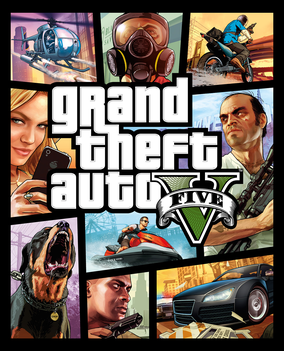
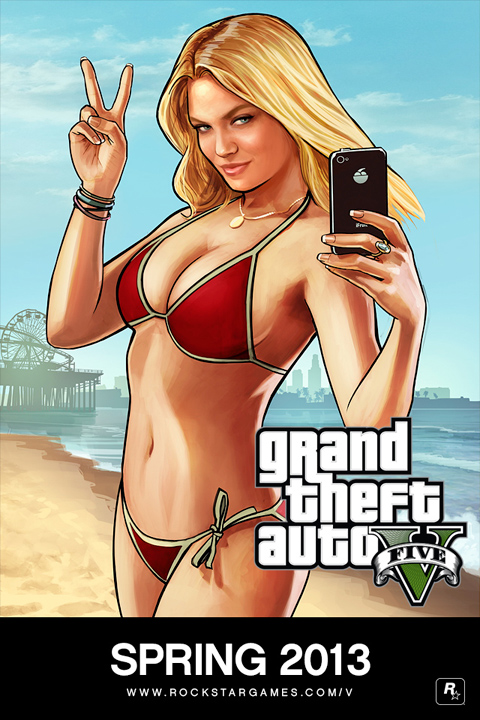
Grand Theft Auto V and its treatment of women


Warning - this essay will contain spoilers for Grand Theft Auto V.

    Grand Theft Auto is a series which is no stranger to accusations of sexism and misogyny. The original "prostitute refund" controversy, where you have sex with one before killing her to retake your money, was one of the early means by which Jack Thompson mischaracterized the series as a "murder simulator." Worse, Grand Theft Auto 3 ended with the possible execution of Maria Latore after she begins discussing her new life with Claude. This is in addition to the games including a bevy of strip clubs, psycho ex-girlfriends, and victimized housewives.

    On my end, I've always felt Grand Theft Auto was a series with slightly progressive attitude to the double X chromosome set. At least compared to the rest of the video game industry. Women are never prevalent in GTA's character roster and are, more often than not, objects of lust. However, Catalina and Asuka were major figures in their respective games. GTA IV lacked female villains but possessed an ample number of upper-class professionals to round out the prostitutes and strippers. I even maintain a special fondness for Mercedes Cortez who has no role in Vice City other than kinda-sorta being Tommy's girlfriend before turning to porn.

Not appearing in this game.
    In short, I've always liked the fact Rockstar has bothered to give the women of their games voices. Accusations of sexism may have a ring of truth but this is in an industry where there are hundreds of games where women wear fetish wear yet have no personalities and the vast majority exist as the hero's girlfriends --Rockstar stands ahead of the curve.

    So, what about Grand Theft Auto V? What is its stance on women? Are they treated well in the game? Are they dismissed as sex objects or shrill harpies? Are they simply as bad as the men in the game (who are boorish at best and psychopaths at worse)? Are there a mix of good and bad elements which need to be taken together? This essay will attempt to answer that objectively, coming from a long time feminist as well as GTA fan.

    Before I begin I should clarify what I am looking for. I'm not looking for positive female characters in the game. Looking for positive characters of either sex in GTA is missing the point of the games. They're a very colorful set of Noir games, where there is no good and everyone is one sort of scumbag or another. Kate McReary is, arguably, the only positive character in the entire series and she's boring compared to the colorful characters who surround her.

It's kind of hard to classify a character feminist or not when she's torturing a man just as much as the men.
    No, instead, I'm going to handle the portrayal of women in the game and ask if they are defined by more than their gender and stereotypes. Likewise, I'm going to examine whether the game is sexist or whether they're portraying a sexist world. The latter is necessary if one is satirizing sexism but not sexist itself. Quite the opposite.

    The world of Los Santos is a hyper-stylized and exaggerated depiction of Los Angeles. Sexism is prevalent throughout the setting but not necessarily supported. When aging movie producer Solomon Richards laments the loss of three secretaries he was having sex with, it's meant to reflect both his fall from grace and the creepy way he merged material success with sexual prowess. Radio personality turned talent show contest host, Lazlow Jones also highlights how the 'perks' of being a celebrity include sex and how it goes away as you grow older and less relevant.

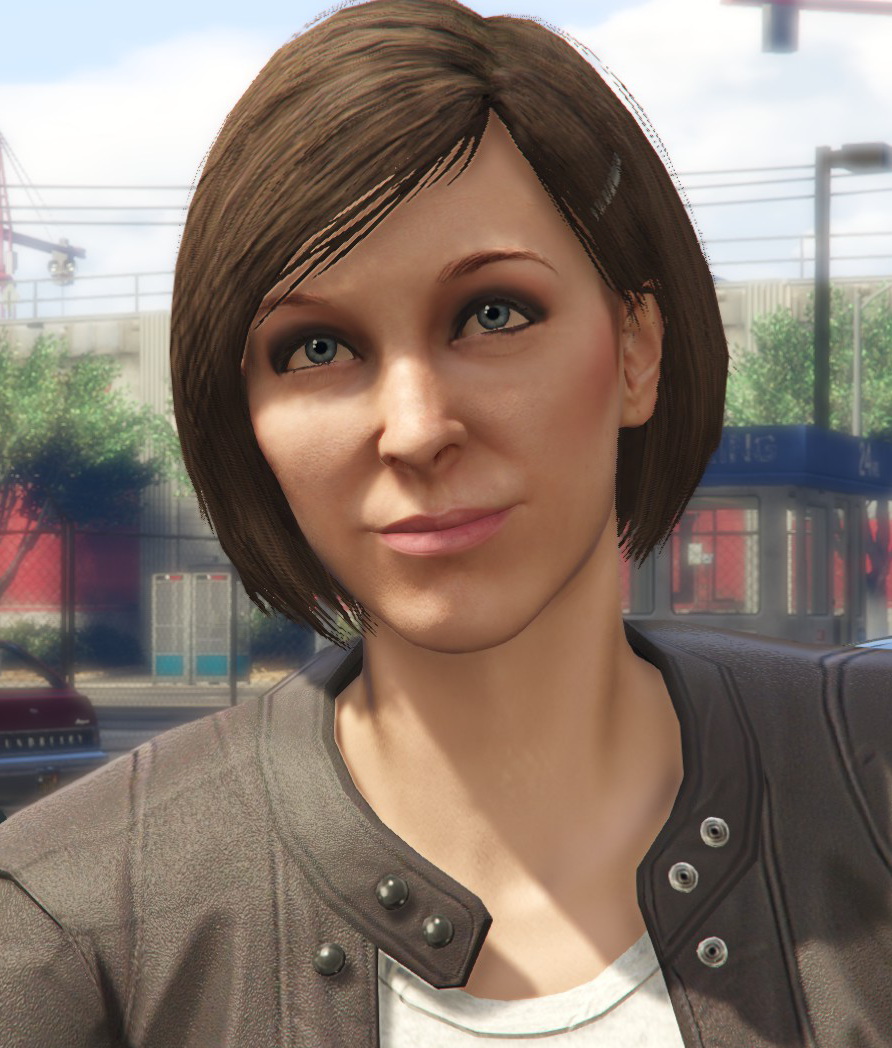
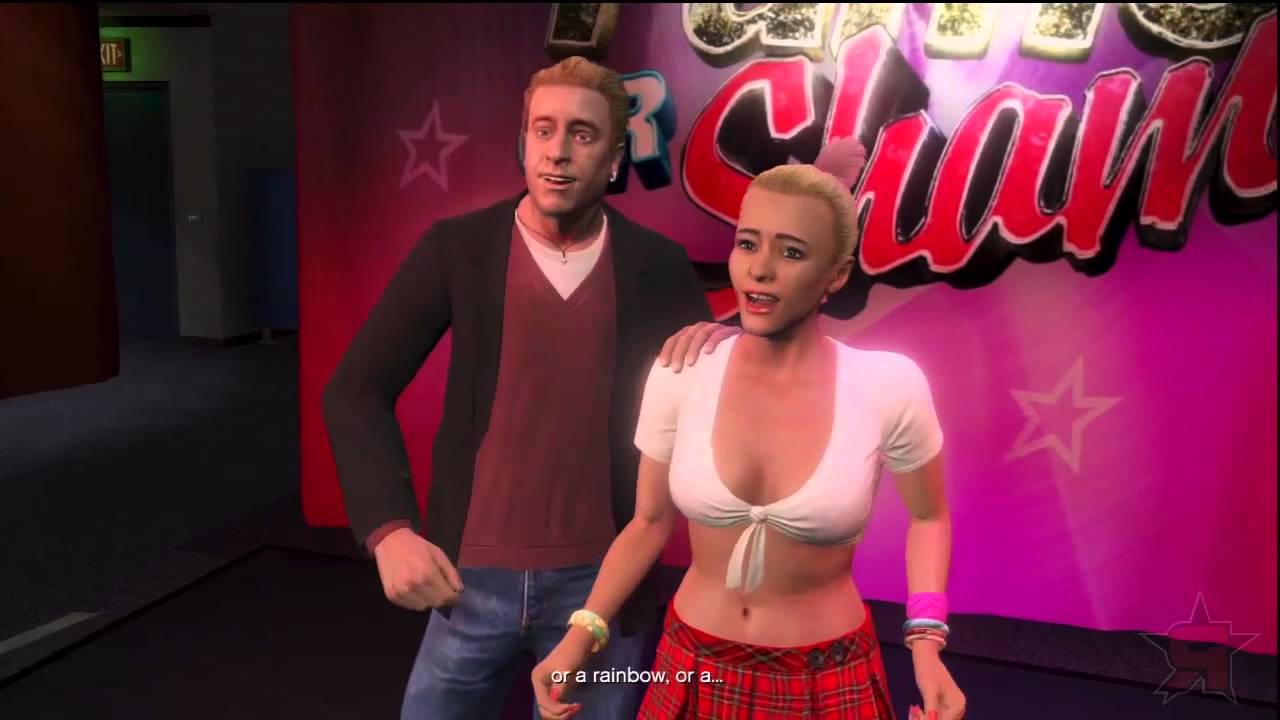
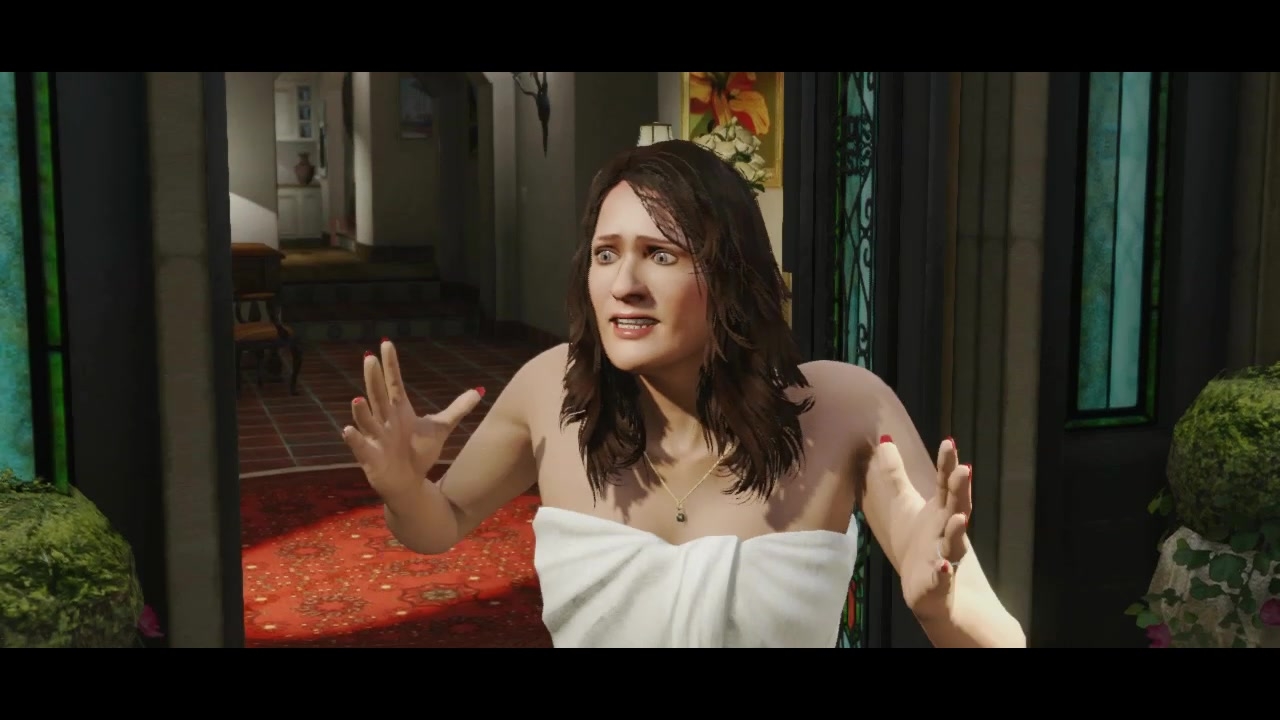
    Yet, curiously, GTA V is one of the few games which doesn't normalize this. Major character Tracey de Santa is both annoying and obnoxious but an examination of her storyline reveals the tragic underpinnings to her life. Tracey was raised in a city where fame is all everyone ever aspires to and the only commodity she has is her body. By making the character a protagonist's daughter, the game lessens her sex appeal while illustrating how degrading the whole thing is.

A peverted middle-aged man with a schoolgirl is treated as creepy. This is actually something new for video games--elsewhere, Lazlow would be the hero.
    Tracey is walking into a life of casting couches, subservience, and pornography with her eyes wide open. One might argue this is her choice but the game shows Tracey is neither mature enough to understand her actions' consequences nor reaching her full potential. It's not that Tracey isn't allowed to enjoy sex or even that pornography is wrong, it's that she's doing both out of a desperate need for attention. So, already, I'm inclined to note Rockstar is better aware of the exploitative nature of the system than most video game developers.

    The next major female character of the game is Amanda de Santa, Michael's wife. Amanda is a character who has compelled many a gamer to want to swear off marriage. As a parody of an over-the-top nagging wife, Amanda makes Michael's life a living hell. Virtually all of Amanda's dialogue is never-ending stream of insults, barely letting up until the end of the game.

Her eyes terrify me.
    The game has a more nuanced depiction of her than it could have been, however, illustrating Amanda's complaints are largely spot-on. She's deeply unhappy with Michael de Santa but he is a murdering thief who neglects his children. Likewise, she cheats on her husband but he does the exact same thing with her.

    GTA5 shows something which almost never happens in fiction involving the "nagging wife" stereotype and that's said woman leaving her husband when things get sufficiently bad. The stereotype is based on the nagging wife being a leech on a male provider and while Michael accuses Amanda of being so, she leaves because of emotional reasons rather than financial. As a character, Amanda's certainly not progressive, but the anger is more justified and her actions are self-driven rather than reflecting her husband.

    Sadly, the other character's relationships with women are not as in-depth as Michael's family. Franklin's relationship with women is, IMHO, the worst in the game. Franklin pines for his ex-girlfriend Tanisha, a character who exists primarily as a voice in the game. Tanisha is a character who is depicted as a gold-digger who has used marriage as a means of escaping the gang-lifestyle. While seemingly the only other sensible person in Strawberry aside from Franklin, her use of her sexuality as the only means of leaving poverty is troubling.

    I have less of a problem with the crack-addicted prostitute Tonya. While a complete mess, Tonya is desperate to survive and reduced by circumstance to doing whatever she needs to do. She attempts to use her sexuality on Franklin but is soundly rebuffed, the latter pitying rather than aroused by her. Much like the character of Big Bear in GTA:SA, she is a illustration of crack cocaine's dangers. She also is a good deal more responsible than her husband, trying to keep things from reaching complete destitution.

No, that's not bad graphics. That's how she's supposed to look.
    Unfortunately, the women in Franklin's life are rounded out by his aunt Denise. Denise is a parody of "Hollywood Feminism" which she uses as a justification for her abuse of Franklin throughout the early part of the game. In a game filled with nuanced characters doing horribly bad things for justifiable reasons, she's just a irritant. I would have much preferred her character to be written out entirely than include this bizarre Peggy Bundy analogue.

    Trevor Philips rounds out the main trio of protagonists by having the most out-there relationships with women. The implied survivor of sexual abuse by his mother, Trevor's Oedipus issues are just one of the several dozen major problem his psyche suffers. At one point, Trevor outright hallucinates his mother's ghost and we're subjected to a sense of how far psychosis goes. Ironically, I don't think any of this is sexist--Trevor is a lunatic and his mommy issues are portrayed as serious once you get past his maniac rampages.

   Indeed, I liked Trevor's relationship with Patricia Madrazo, the long-suffering wife of Martin Madrazo. Much like Solomon Richards, Martin considers beautiful younger women to be a perk of being rich and powerful. Patricia is treated sympathetically, much more so than Amanda de Santa, in how this has affected her emotional stability. Her affair with Trevor Philips is sweet and the fact she is not a cover-model makes the relationship all the more poignant.

The healthiest relationship in Trevor's life.
    Other female characters exist in the game as well, reflecting the position of male antagonists like Molly or underscoring the sexism of Los Santos like Mary Anne and Poppy Mitchell. Molly is a committed professional but her role in the story is undermined by Franklin's implication she's in love with Devin Westin. Mary Anne constantly spouts insecurities about being objectified sexually but, obviously, worried about her fading looks and sexual desirability as she approaches middle-age.

    Poppy Mitchell is enough of a Lindsey Lohan figure that the lawsuit proposed by the latter's lawyers is only 99% completely without merit but the idea of a woman in her 20s forced to act like a wholesome teenager is bizarre enough to not need satirizing. Yes, we catch her literally in the most compromising sexual act possible but it's with someone in the exact same social position. What does it say about society both with and without, we only remember Poppy than him?

    Yes, the fact she tried to run us down is a viable answer.

    Returning GTAIV character Marnie Allen underscores the long-term consequences of sexism while making an interesting point about religion. Stripped of her looks by the sexual abuse and drugs she used as a Liberty City prostitute, the Scientology analog of Epsilon managed to restore some of her dignity. Even if the entire religion is a sham, she found both spiritual fulfillment as well as personal value in its ludicrous teachings. After Michael's betrayal of the cult, she actually sends him a phone call expressing worry for him and his spirit--showing herself to be one of the nicest people in the game.
Kifflom, my brothers.
     Yet, no review of Grand Theft V and the sexism issue would be complete without addressing the Vanilla Unicorn. The game provides the opportunity to receive in-game lap dances from topless strippers you can fondle your way into your bed. There's not that many ways to spin that as anything other than sexist and I'd sincerely recommend gamers don't try the protagonist's behavior in any actual X-rated establishment.

    Even the strippers get a bit more characterization than is strictly necessary, though. In something obviously tossed in to appeal to Grand Theft Auto's massive testosterone-fueled fanbase, not all of the strippers are interested in sleeping with the protagonists. Even better, they're not for sale. While I would have appreciated the dating system from GTAIV and San Andreas making a return, the game highlights each of the strippers as an individual with different lifestyles and personalities. Sadly, their presence doesn't have anything but a cursory contribution to the story and is what it is: a chance for gamers to look at pixelated nudity.

    So, overall, what is the level of sexism in Grand Theft Auto V? Overall, I'm going to give it a C+ and maybe even a B- because I'm a ridiculously generous human being. Yes, it's a game with topless strippers, nagging wives, caricatured feminists, and old men trying to recapture their glory days by buying younger women. It's also a game which shines a light on the nastiness of youth and beauty obsessed culture. Women are objectified and misused in Grand Theft Auto V but so are the majority of people in the game--the game showing its dark side as unglamourous and sad.

    Now, if we could just get a female protagonist outside of Online...

Monday, June 25, 2012

Sexuality and Visual Storytelling in the Witcher series


    This is an essay sparked by a recent discussion of the game Witcher 2: Assassins of Kings over on the Witcher forums. Basically, the heart of the controversy was the fact the Witcher 2 had a lot of attractive female characters who were sexualized at the expense of their believability. The usual response to this sort of thing occurred. Plenty of people said that men were sexualized in video games as well, that complaining about attractive people is silly, and the ever popular "if you don't like it, don't buy it."

    I'll be honest, there's merit to the rebuttal even if I agree with the overall impression there's something slightly off in the games. Sex is a natural part of life and everybody should have it (save children and people I don't like). There's nothing wrong with attractive people and physical beauty is something the world could use more of. Certainly I could stand to look less like Jonah Hill and more like Channing Tatum.

    The Witcher 2: Assassins of Kings is also an odd game to complain about. The Witcher 2 is filled with assertive, intelligent, multi-faceted female characters from all walks of life. It has female villains, heroes, and side-characters working alongside the male protagonist. They routinely interact with each other as well as Geralt, passing the Bechdel Test with flying colors. It even drastically dials down Geralt's James Bond-like habits from the first game, to the point I was disappointed in some places (I really wanted a Saskia and Sile romance option).

    The sexual content was drastically amped up in other areas, admittedly. It's one of the two mainstream games I can think of with nudity (the other being Heavy Rain). There's a four minute sex scene involving Triss Merrigold and Geralt taking a bath together in an elvish underground springs. Triss even made an appearance in Polish Playboy, joining the not-so illustrious ranks of Bloodrayne and the girl from Indigo Prophecy. I don't think nudity is a big deal, personally, but that's not what's bothering me.

    No, I think there's a point to the naysayer's argument. Sex has a tendency to inundate every element of visual storytelling to the point that it actually starts to dilute itself. For example, let's look at what the elven women are wearing in the game versus what they were wearing in the original.

  
This is the elven outfit from the first game. Very practical and woodsy, good for the Witcher's terrorist-like Scoiatael.

    This is the outfits the elves are wearing in the second game. I must say, I'm surprised to find they have tape to keep those outfits on. It must be an invention of the local alchemists. I'm not interested in a bunch of random elves so it doesn't serve any purpose to titillate while it distracts from the realism of the game. In short, their sexualized appearance only hurt the game's immersion.

    Now, I'm not a prude by any stretch of the imagination. I have a healthy interest in the opposite sex, just ask my wife. However, I do think there's a point where sexualization actually undermines the narrative. It offends me not as a red-blooded American male but as an author where the storytelling is undermined.

    Let's take another example from the original Witcher in the opposite direction. The character of Princess Adda who is, not to spoil, a manipulative psychopath.


     Forget the anachronism of the fact she's dressed in fishnets and a mini-skirt, the visual storytelling indicates that Princess Adda is a femme fatale. She overtly uses her sexuality to try and manipulate Geralt and is unafraid to flaunt it in court. This kind of storytelling says a lot about a character without words. Now if we put every woman in court in the attire of someone off to go clubbing, the effect is lost. What is a statement about the character becomes nothing more than the current fashion.

    One of the cool facts about the original Witcher was also the fact that it had a variety of female character models. Plenty of them were reused but they were notable, at least to me, for bothering to include old women. The male character models also included "obese merchant", which I appreciated.

    I think it helps the storytelling to include different sorts of body types and faces in video games. Princess Adda, Triss Merrigold, and Shanni are meant to be breathtakingly lovely compared to the average woman in the game world. We get a better sense of who they are if there's a greater contrast to draw. Unfortunately, that's somewhat diluted in the Witcher 2: Assassins of Kings because almost all of the women you encounter are gorgeous. Let's take Saskia, the Joan of Arc-esque peasant rebel you encounter in the second act.


    Bluntly, Saskia is beautiful and I don't have any problem with her character design. It's a different sort of beauty than Triss and I applaud the game for taking time to show varying kinds of feminine beauty. The problem is that the visual storytelling is slightly incongruous to the character of Saskia. Saskia is a firebrand rebel, a serious knight, and a dragonslayer. The fact she has her upper cleavage exposed is one of those, "something is not right with this picture" moments.

    The irony is that I think the artists are underselling themselves. If Saskia had a proper breastplate capable of defending her bosoms against arrows or whatnot, she wouldn't suddenly become a hideous troll. No offense meant to Mrs. Troll in the Second Act, who is one of my favorite third-tier characters. No, Saskia is lovely and practical clothing wouldn't change that. I'm just saying believability is hurt by an element of her outfit.

    It's ironic because I support the ridiculous outfits that the Lodge of Sorceresses wear in the game series.


    The Lodge of Sorceresses is a collection of vain, scheming, and thoroughly unpleasant women who live in a world where the only method of control a woman could exert was through magic or manipulation. They dress like peacocks and keep themselves magically beautiful as a way to bolster their self-image and exert a subtle form of control over the men around them.

    This would be a form of sexism by itself if not for the fact that it is not the only method for women to exert themselves in the game, it's only their method. The Witcher 2 is kind enough to provide counter-examples of heroic women like Saskia.

    The male form of visual storytelling can be equally important. The character of Geralt could very easily have been a white-haired pretty boy like Sephiroth if not for the fact that the game goes out of its way to illustrate he's scarred and battered by his many experiences. Let's take a look at him, shall we?

    Compare and contrast Geralt to his bard companion, Dandelion.

    A picture is worth a thousand words. You learn a great deal about both men just by looking at them. Geralt is a battered warrior who is still attractive in his own way. Dandelion is a flamboyant ladies man who would be at home in an Errol Flynn movie. The fact the two men are friends despite their widely disparate personalities helps fuel most of the comedy in the game.

    I don't mean to write this article to bash the Witcher 2. Really, I don't think I would complain this much if not for the fact that the Witcher series is head and shoulders above 99% of games out there in its gender policies. Halo is great, but there's like three women in the franchise and one is a naked computer program. The Witcher 2 has a huge number of empowered female supporting characters and that's rare enough in the gaming industry, let alone a genre traditionally dominated by male heroes doing manly things.

    Indeed, I would argue the Witcher series is usually above the curve when it comes to presentation of feminist issues. Women may be sexualized and the portrayal of things from card-hunting to attire is a bit on the immature side but it is a series with countless female characters who are fully realized with roles beyond eye-candy. They are proactive with their own thoughts, feelings, and desires that Geralt does not dominate.

    Yes, there's sex and lots of it but mature subject matter doesn't preclude a proper handling of gender issues. A good place to start would be giving characters appearances appropriate to who they are and what they're supposed to be, not necessarily making them hideous, but acknowledging the characters don't have to be sexy 24-7. I doubt this will change but I hope future editions of the Witcher franchise will fix its mistakes while continuing to have so many strong, intelligent female characters.

    Thanks, everyone.

Sunday, October 30, 2011

Sexism and Gender Politics in Arkham City

I can't see why ANYONE would think this was sexist.
Note: This blog entry contains major spoilers for the game and you should proceed at your own risk if you haven't played Arkham City.

    Film Crit Hulk wrote a couple of interesting articles on the sexism in Batman: Arkham City. I actually think people should check them out.

Article 1#
Article 2#

    I disagree with some of his conclusions but I think it's an important thing to address the objections he and others have raised.

    Likewise, the Game Overthinker has his own podcast on the subject.

Podcast

    I think it's fascinating to address the changing role of women in both comics and video games. The fact we're talking about it as opposed to accepting it at face value makes me think definite progress is being made.

    Others might disagree but since it's my blog, I'll just say they're wrong.

    Let's face it, comic books and video games have never been the most progressive mediums when it comes to women. For the longest time, both have been defined as "boys' entertainment" and it definitely shows in their depiction of women.

    Gail Simone created the "Women in Refrigerators" webpage to talk about how female characters in comics were considered disposal compared to their male colleagues. For example: Barbara Gordon a.k.a Batgirl was shot and crippled by the Joker while Batman had his back broken by Bane. Batman was up and running again by the end of Knightfall but it took Barbara over a decade to start walking again.

    Video games started with Mario and Link saving the Princess. Samus Aran and Lara Croft are the two grand dames of video game heroines but both are sexualized beyond measure. Just look up Samus Aran's Zero Suit. I mean, seriously, would video game developers put Boba Fett in that outfit?

    It's no coincidence that the Final Fantasy games were hugely popular with women because of their comparatively tame sexualization (barring FFX-2) and strong roles for female characters. Lara Croft has recently being rebooted in hopes of re-imagining her as a strong female character instead of a joke. It might be a case of "too little, too late" given her name has become synonymous with fanservice but I wish them luck.

    Now, where what's the deal with sexism in Arkham City? Well, let's start with the female characters.

    Catwoman is actually one of the more interesting characters in the game. She's overtly sexualized but the game points out it's all an act. Catwoman has long been a character who uses her "feminine wiles" to manipulate men, though this has been called sexist in the past well before AA. Wasn't it Alicia Silverstone's Batgirl (ow, I hate remembering that movie) who pointed out that sort of passive-aggressive resistance went out a long time ago?

    However, the game does a nice job in establishing Catwoman is rather ambivalent about sex. She's obviously making use of her "distracting sexiness" to throw off her enemies. Hell, Catwoman steals kisses from enemies during takedowns. It adds an interesting layer to her relationship with Batman. Since before Julie Newmar, Batman has had a flirtatious relationship with Catwoman.

    Batman has never been particularly harsh to her and has even trusted his secret identity to her on occasion. In Earth-2's continuity, Bruce Wayne and Selena Kyle actually married and had a child together. Arkham City is the first game where it's implied Batman may simply be the victim of Selena Kyle screwing with his head. After all, in this game we find out that Selena Kyle flirts with everyone and it's always insincere.

    Yes, she cares for Batman and has moral choices to make regarding helping him but it's obvious she's not desperately in love with Bruce. Selena Kyle is a woman fully in control of her sexuality, even as it's something she uses as a weapon.

    Catwoman also gets to kick ass during the game, occupying a "Lightning Bruiser" role. She can't take quite as much punishment as Batman but her ability to deal with huge numbers of thugs, especially when fully upgraded, is notable.

    The camera does ogle her a bit too much for my taste and Batman rescuing her from Two Face is something I think the game could have done without. However, Catwoman does get the opportunity to return the favor later in the game. That makes up for it, mostly.

    Next up is the behavior of the generic mooks in Batman: Arkham City. Seriously, the male characters in the game are surprisingly foul-mouthed when it comes to women. The word b*** is used to a ridiculous level, usually referring to Catwoman or Harley Quinn.

    The amount of sexist commentary from the thugs also goes into some uncomfortable areas. Specifically, some thugs speculate on Catwoman being bisexual and Harley Quinn being transgendered for their own lewd fantasies and/or because they can't imagine taking orders from a woman born female.

    Here, detractors have a valid point.

    Now, I'm aware that hardened cons are not the most politically correct people on the planet. In real life, sexual violence is going to happen in environments as rife with power/dominance issues as prisons. I don't have any objections to the fact that the thugs are people the game wants us to hate. When a female nurse is rescued in Wonder City, the implications of the thugs' intent is clear and there's an argument that it's no different from rescuing any of the political prisoners being threatened throughout Arkham City.

    Except, it is.

    The first issue is that I don't object to the use of harsh language by thugs, it's just that it's remarkably focused on the women of the game. Yes, thugs would call Catwoman a "b***" and probably would use a lot more harsh language. It's just they never call Batman a "b******" or an "a******" or use any other similarly harsh words towards male characters. We don't see any of the male thugs threatening male characters with rape either, because that's not as socially acceptable to depict in our society.

    Bluntly, it's permissible in a Teen game for Batman to swoop in and rescue a female character from the threat of imminent rape but not the same for him to do so with a male character.

    Here, I think the developers really dropped the ball. They were trying to push the envelope with Batman's edginess but I think they did it in a half-hearted way. The thugs are capable of threatening women with sexual violence and being sexist but they aren't able to do the same towards men. It's because of this I think the game could have definitely dialed it back a notch without sacrificing storytelling integrity.

    Which brings me to Talia.

    I think Batman: Arkham City did a reasonable job in depicting both Talia and the League of Shadows. You know, aside from giving the daughter of the Demon's Head an outfit showing her midriff.

Because I think the world's most dangerous terrorist needs to show her belly button.
    I'm sorry, that just seems rather out of place. Are we really to the point where we need Talia al Ghul of people to show more skin to be sexy? A girl who basically thrives on being sexy due to how dangerous she is?

    Well, with that out of the way I'd like to say that the game mostly gets it right with Talia and her bodyguards. When we first meet one of the League of Shadow ninjas, she's seemingly dead and stuffed in one of the Penguin's display cases. However, it was after she'd killed eight of the Penguin's goons. Honestly, I thought that was probably underselling what one of the League could do but it's still pretty damn impressive.

    Later, we discover she actually faked her death and had entered into a trance of some kind which allowed her to survive a gunshot wound. While she's seemingly dead in her display case, she hears Batman's plans to go after the Demon's Head and breaks free. She then leads Batman on a rooftop to rooftop chase where only exceptional cunning lets Batman track her down.

    Badass.

    Ironically, the way Batman deals with the League's ninjas is less sexist than you'd think. Specifically, Batman fights them the same way he would any other thug just without the bone-snapping maneuvers. Normally, violence against women is a bad thing to depict in games but here Batman is obviously going to die if he doesn't fight back and it's a contest of near-equals.

    You could even argue the reason Batman doesn't break any of his opponent's bones is less because he's worried about hurting women than he doesn't want to unnecessarily **** off the League of Shadows when he's coming to them for a favor.

    There's also a hilarious subversion when Talia is being threatened by the Joker. For the entire time, we're meant to assume Talia is going to die unless we rescue her. Then, when Bruce Wayne is in a spot, Talia just causally spins around and seemingly kills the Joker. The entire time, Talia was playing possum and just testing Bruce to see how far he'd go for her. Had the game ended with her leaving Batman to face the Joker alone, annoyed he wouldn't kill him for her, I would have been pleased.

    Unfortunately, it ends with Talia being killed by the Joker from behind.

    This, honestly, just p***** me off. Talia is one of my favorite characters and I support Batman with her above all other options. The fact that the ending of the game then goes on to mourn the Joker of all people bothers me to no end.

    Yeah, I get it's Mark Hamill's last performance as the Clown Prince of Crime but Talia is lying dead just a few feet away. Don't you think Bruce Wayne would be carrying her body out? Don't give that he can just take her to a Lazarus Pit either. They mentioned that option for Ra's al Ghul but they didn't do that for Talia.

    So definite mixed marks for Talia and the League's depiction.

    Finally, Harley Quinn.

    Harley Quinn is always a difficult character to write in relation to the Joker. If you treat her situation seriously, she's an abused spouse with elements of Patty Hearst crossed one of Charles Manson's female followers.

    I.e. there's nothing particularly funny about it.

    If you treat it for laughs, you run the risk of laughing at some uncomfortable subtext. I love the DC comics stories about when Harley is away from the Joker and becoming her own woman. Words cannot express how p***** off I was by the ending of Gotham City Sirens, which undid all of her positive characterization.

    Really, I like the Harley Quinn in the Arkham Asylum video games because they nicely sidestep the issue. Here, Harley is just a bad person. No, seriously, it removes a lot of the sexism  to treat her as the Joker's number 1# henchwoman and nothing else. She's not remotely sympathetic and is a dangerous psychopath. It makes her villain instead of victim.

    Indeed, in the Joker's dying state, Harley plays the role of a major villainess. She kills people left and right and sends a Doctor to die horribly at the hands of her male followers. Some of them are plotting against her, thinking she'll be easy pickings when the Joker is dead but at least some of the criminals are rightfully afraid of her.

    Then we find out she's pregnant with the Joker's baby.

    Honestly, I'm not sure what to make of that. I can't say it's necessarily sexist or not, given pregnancy is part of the human experience. I think we'll have to wait until Arkham Asylum 3 to find out how that changes things. I actually like Harley's depiction in the AA games. She's tough, dangerous, and as mad as the Joker.

    I think Arkham City isn't nearly the sexist work that people give it credit for. It has a number of strong female characters who are more than just women for Batman to rescue or romantic interests. It even passes the Bechdel Test due to Catwoman and Ivy talking about plants and loot. I would have appreciated a chance for Catwoman and Harley to talk, let alone Catwoman and Talia. Still, I think the game had a surprisingly good grasp of some its female characters.

    Unfortunately, this just makes the areas it does slip up on all the more troublesome. The game just needed a little tweaking to be less troublesome in its gender politics.

    That's my .02 and you're welcome to disagree.