Showing posts with label Cyberpunk Movies. Show all posts

Wednesday, March 26, 2025

Companion (2025) review

     Companion (2025) was a film I was back and forth reviewing due to being a science fiction black comedy. If I had to define its genre, I’d say it’s cyberpunk lite. A story that could basically be summarized as “What if Blade Runner starred the machines and had really stupid people after them?” Despite the comedic elements or perhaps because of them, Companion deals with a lot of incredibly dark subject matter and touches on numerous themes of both technology as well as socialization.

    It’s sort of an interesting comparison to Ex Machina, which had the idea of our machines as wholly inhuman but mankind confuses them for people. This is instead the story of us making our machines human enough that we just use it as an excuse to treat them as how we already treat ourselves (which is like shit). There’s a strong feminist theme to the movie that underscores the comedy and slasher movie vibe as our heroine struggles to understand what her “boyfriend” now wants to murder her.

    The marketing spoiled a lot of this movie in a manner like Captain American: Brave New World as one of the biggest twists comes around the fifteen minute mark but is spoiled by the poster. Indeed, I wasn’t even aware it was meant to be a surprise until I watched this movie with my nieces. They had no familiarity with the movie and thus were completely taken off guard when it happened. If you can watch the movie unspoiled or with people who don’t know anything other than the title, then I recommend it. Otherwise, note, that the rest of the review will treat this initial reveal as a given.

    The premise for Companion is that Irish (Sophie Thatcher) and Josh (Jack Quaid) are a sickeningly happy couple that are visiting their Russian friend’s house for the weekend. It is an incredibly luxurious house in the middle of nowhere and they’ll be joined by several friends. It is in the near future with self-driving cars and a variety of other luxury items that seem to be available only to the super rich, though Jack isn’t one of them. One of the guests, Kat (Megan Suri), is initially very hostile to Iris and she doesn’t know why. Sergey (Rupert Friend) gets aggressive with Iris and events spiral out of control when he’s killed.

    Which turns out to have been the plan all along as Iris discovers that’s what she was programmed to do all along. Iris, much to her shock and horror, is a companion robot for Josh. A sort of sexy Tamagotchi that was given a set of fake memories and a willingness to please that overrides all other considerations. Rather than the superhumans of Blade Runner, companions are deliberately made to be no smarter or stronger than “regular” humans with the ability of their owners to make them even dumber or weaker. Josh is fond of his companion robot but no more so than a pet and arguably even less than that as he’s willing to sacrifice her as part of his plan to murder Sergey then rob him. Unfortunately, he’s careless with his master control and he’s turned up Iris’ survival instincts.

    Much of Companion is, essentially, not so veiled commentary on “nice guy” misogyny. Josh is good looking and willing to put on a pleasant enough face around his girlfriend but only when she’s subservient to him. Ultimately, she’s a convenience and someone that he gets increasingly violent toward as he finds his plans thwarted. We also discover just how fragile Josh’s self-esteem is. The fact Jack Quaid is the kind of actor that would be the dorky but handsome lead in a romantic comedy, makes his transformation even more shocking. Like a slowly boiling kettle, we also see how the escalation grows from dismissiveness to furious rage.

    Companion’s humor comes from the same source as the movie’s terror. The murderers are not particularly competent at their crimes but that doesn’t mean they’re not dangerous. All of them, even the more sympathetic ones, think of Iris as an appliance that needs to be destroyed. The absolute lack of sympathy from everyone around here is surprisingly well realized. Sophie Thatcher beautifully embodies both the idealized retro-girlfriend with her 1950s-esque inspired look as well as the increasingly capable Iris as she realizes her only way out may be blocked by what she was made to be. I had a lot of fun with this movie.

8/10

Thursday, September 29, 2022

Anon (2018) review


    ANON is a 2018 science fiction thriller by Andrew Niccol (Gattaca, Simone, The Host, In Time). Andrew Niccol really loves his science fiction movies that have high concepts and while I think The Host and In Time are two of the worst science fiction programs I've ever watched, I also think Gattaca and Simone are some of my all-time favorites. Anon is a bit grittier and more cyberpunk with its plot, which automatically puts it above many of the others. 

    The premise is in the future, everyone in the world has had cameras installed in their eyes. Either the eyes are artificial, or they've had nanotechnology upgraded to do it. Everyone's lives have been put on eternal record and they can be accessed at will. It's a bit similar to the premise of the Black Mirror episode "The Entire History of You." Indeed, it's arguably a little too similar but if you're going to steal then steal from the best.

    Whereas "The Entire History of You" is about the applications of these cameras in personal relationships, Anon is a straightforward police procedural. Detective Sal Frieland (Clive Owen) has an incredibly boring job as their job is now rote with everyone's memories accessible. This doesn't decrease police corruption as the law is still subject to police whims as Sal lets a thief go just because he despises a snooty victim.

    Sal is a classic depressed character as he broke with his wife over his son dying in a car accident that resembles the opening of the video game Heavy Rain. Unlike "The Entire History of You", this is probably not an inspiration but just a coincidence. He constantly goes over the memories of his dead son and sleepwalks through life. This is until he encounters a girl whose digital information is not available, an Anon (Amanda Seyfried).

    Sal soon finds himself investigating multiple murders carried out by an unknown killer but believed to be by Anon. All of the victims are former lovers of her, both male and female, as well as clients. They have their eyes hacked, then, and are forced to watch from their killer's perspective as he guns them down. Anon is a suspect not just because of her connection to the victims because she turns out to be a hacker who can erase as well as alter memories.

    The plot almost immediately falls apart due to the bizarre and salacious way that the police try to trap Anon. This involves having Clive Owen buy a high-class hooker, sex scene onscreen, and ask to have the memory erased. Which, of course, leads to Anon and he striking up an affair. The plot makes no sense because at no point do they arrest the suspect in multiple murder or bring her in for interrogation. Why? Because we need to have Anon and Sal begin to have an affair.

    It's blindingly obvious that Anon is nothing more than a white-collar criminal from the beginning but none of the police ever entertain the possibility that she's being stalked by someone obsessed with her, which is pretty obvious to anyone who has watched cop shows let alone presumably actually part of the police force. The movie seems to think we won't figure this out ourselves and leaves the reveal much-much too late. 

    Despite this, I generally liked Anon as a film. While the investigation makes no sense and I'm not even covering the other plot holes like why the police don't take Sal at his word that someone is messing with his sight, the scenes where his brain his hacked are genuinely terrifying. Clive is a veteran actor and manages to make the most of the weak material he's given. Sal may be a somewhat archetypal character, but I felt his pain and found him to be charming.

    Amanda Seyfried's Anon is also a character that is written to be a kind of catnip for viewers who are fan of cyberpunk hackers, mysterious femme fatales, and rebellious antiheroes. So, understand that I am completely biased toward her. Much of the movie objectifies her but the character is aware of this and plays into it in an interesting way. On a purely superficial level, I also feel Amanda Seyfried has become more far beautiful in her mid-thirities than she was in her twenties. Either that or she just rocks the Motoko Kusanagi hair.

    In conclusion, the movie is worth watching just for the science fiction elements and strong performances. Some people may not appreciate the romance between Clive Owen and Amanda Seyfried given their twenty-year age difference but YMMV. I do think it's a three-star film rather than four, though, and just barely because it's my genre.

6.5/10

Friday, December 24, 2021

The Matrix Resurrections review

    THE MATRIX was never a movie that needed a sequel and the Wachowski sisters originally wanted to do a prequel that eventually became THE ANIMATRIX "Second Renaissance" shorts. Instead, we got the controversial Matrix Reloaded and Matrix Revolutions. I personally loved the movies more for their world-building than their actual content. I was very excited but somewhat iffy about a fourth movie in the franchise since I wasn't sure where the movie could possibly go.

    Hilariously, the first thirty minutes of THE MATRIX RESURRECTIONS is pretty much an extended commentary on how the Matrix trilogy stands alone and doesn't need a sequel. There's literally a scene where Thomas Anderson (Keanu Reeves), now trapped in the mundane life of a video game designer (Jonathan Groff), meets with his business partner who informs him that they're making a fourth installment with or without him. 

    Thomas is thus forced into dealing with a much younger crew of people who loved The Matrix (here a popular series of video games) in junior high and proceed to lecture him on what made the series work. They talk about trans allegory, crypto-fascism, bullet-time, and armchair philosophy while Thomas just stares blankly forward. This isn't so much subtext as clearly text of Lana Wachowski's feelings on being paid gobs of money to return to a project they feel they've done all they can with. It's hilarious, almost like Galaxy Quest really, but doesn't bode well for the rest of the movie.

    Subtextually, the movie is about retelling and restructuring stories in the same way Scream 2 was about sequels. The Matrix meant a lot of things to a lot of people in RL and Thomas Anderson finds himself surrounded by the descendants of those he freed who want to pull him out of the Matrix again. Bug (Jessica Henwick) and Morpheus II (Yahya Abdul-Mateen II) are actors trying to fill big shoes but give a game performance.

    The real stars are Keanu and Carrie Anne Moss, though, and why we're here in the first place. The lack of Lawrence Fishburne and Hugo Weaving is felt considerably, though. Putting Jade Pinkett Smith in old age makeup also detracted from her own efforts. Priyanka Chopra Jonas made a surprising appearance as Sati (the now-adult little girl program from Revolutions) and while distracting, did a decent job. Note, I keep using somewhat guarded descriptions. No one is terrible but no one is really standing out except for our returning heroes.

    Indeed, the biggest problem of the movie is the fact it plays it safe and feels like a tamer watered down version of the Matrix. None of the action scenes feel like they have any real weight to them and none of the characters feel like they are in any real danger. The original Matrix killed the entirety of the Nebekenezer's crew to let you know how serious the bad guys were. Here, the "Bots" are unable to do any damage whatsoever. I was surprised Zion was destroyed (replaced by Io) because the new villains seemed so lacking in menace.

    I got some serious Star Wars sequel trilogy vibes from the setting as well, which I wouldn't put past Lana having done deliberately. The First Order Suits rise to power and overthrows the New Republic Machine-Human Alliance after blowing up Hosnian Prime Zion to restore the old status quo. Perhaps the worst part of it is that Neil Patrick Harris' Analyst lacks even General Hux's menace and comes across more like his Barney character griefing noobs in online multiplayer than the master of a vast electric fascist empire.

    The movie is not bad, certainly, but the action feels tepid and danger-less while no one has much meat to their performances. It feels less offensive than The Last Jedi but it also doesn't take the sort of risks that actually elevated that material to have a decent commentary on sequels as well as fan expectation. Really, the weirdest thing I can say for the movie is I was most interested in the mundane lives of Thomas Anderson and "Tiffany." Why make Neo rich and famous rather than just miserable all the time? Were Tiffany's kids computer programs or reprogrammed children? Are they children made from her DNA in the real world? Was her husband an Agent? I would have preferred that movie and I love Jessica Henwick.

    In conclusion, I am going to give this movie a 6.5 out of 10 or maybe a 7 because it revives a franchise that didn't need reviving as well as has some decent things to say. I think I might have actually preferred they do it full Galaxy Quest with deranged Matrix fans kidnapping Thomas Anderson for comedy for the first hour. Either that or lean hard into the R-rated action, cursing, anarchist sentiment, and scariness of the machines that made the originals so good. On the other hand, unlike a few other reboots, this is neither a shameless cash crab or something that completely ruins the franchise. It's just kind of there and mostly amusing.

7/10

Friday, December 3, 2021

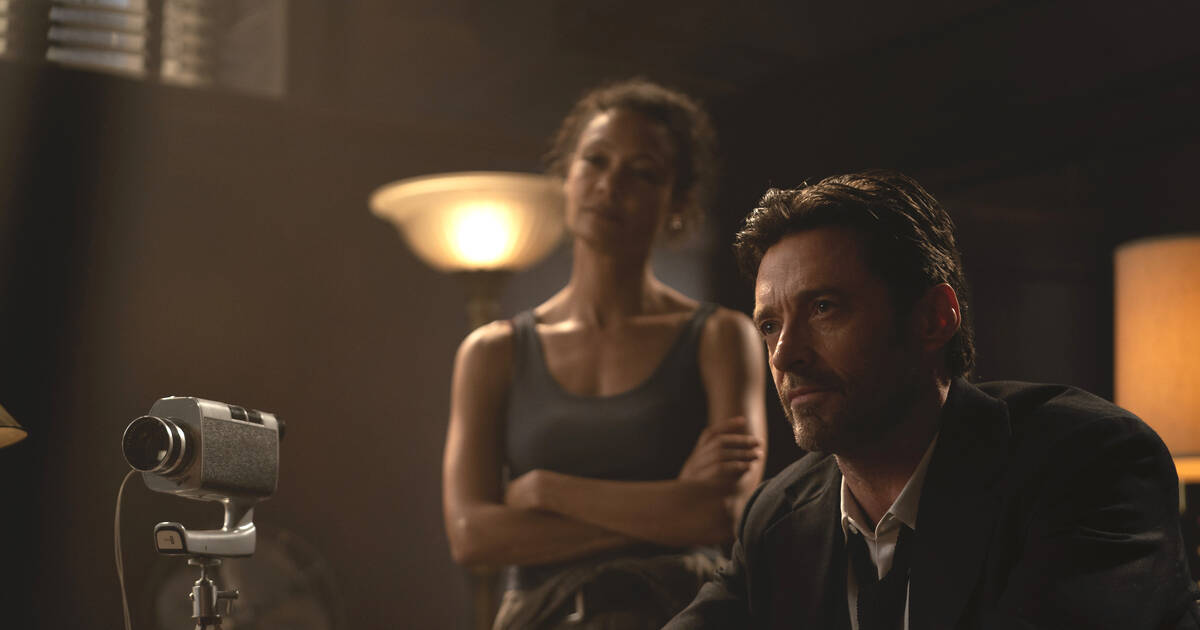
Reminiscence (2021) review

Amazon.com: Reminiscence (Blu-Ray + Digital) : Athena Wickham, Lisa Joy,  Jonathan Nolan, Elishia Holmes, Michael De Luca, D. Scott Lumpkin, Aaron  Ryder, Hugh Jackman, Rebecca Ferguson, Thandiwe Newton, Cliff Curtis,  Marina de    

    Reminiscence is a movie that very strongly reminds me of a forgotten cult-classic called Strange Days starring Ralph Fiennes, Angela Bassett, Juliette Lewis, and Tom Sizemore. It was directed by Kathryn Bigelow and written by James Cameron and Jay Cocks. It takes a lot of the elements of that film about a conspiracy, memory recordings, and civil unrest then adds elements of Chinatown as well as Alfred Hitchcock.

    It also updates the setting from then near-future 1999 to a global-warming ravaged Florida.
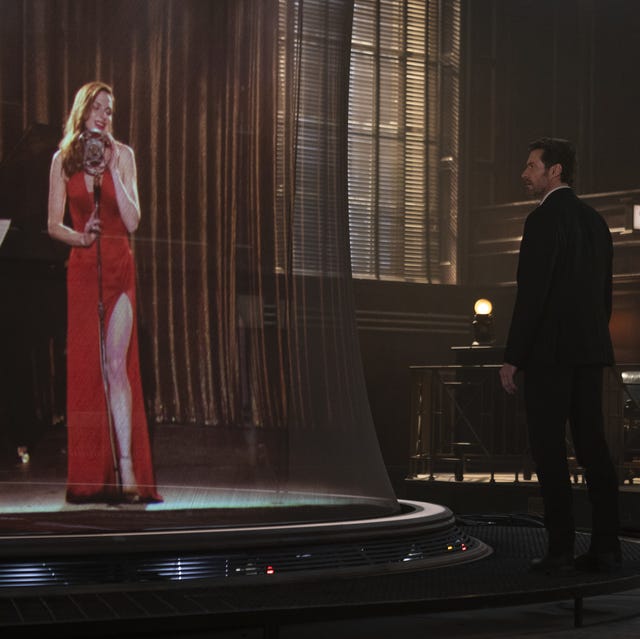
The premise is Nick Bannister (Hugh Jackman) and Watts (Thandiwe Newton) run a memory business. In a future where humans have to stay indoors during the day, most of the coastline is sunk beneath the waves, and the rich live on artificial islands, people love remembering the good times. This isn't quite as advanced as Total Recall's artificial fantasies but you can be made to recall sex, your dead loved ones, and more. Certainly, I'd see a big market for it.


    A seemingly chance encounter with a beautiful lounge singer named Mae (Rebecca Ferguson) results in Nick becoming pathologically obsessed with her. She vanishes about six months into their relationship and he spends most of his time trying to track her down despite the fact it's increasingly clear she was involved in organized crime as well as lying to him. Nick's obsession alienates his business partner, not the least because it's clear she has a thing for him as well.

    What follows is a well-written but somewhat standard film noir with Mae's disappearance tied to a land swindler, a bastard child, adultery, and a series of lies. There's unrequited love, film noir narration, and obsession that mark all of the hallmarks of a classic tale of man going down the mean streets who is not mean. The fact it comes with a cyberpunk setting where the rich thrive while the poor are left to live in half-Venice/half-Mad Max should make the film fantastic. It's not.

    It's not a bad movie by any stretch of the imagination and fans of both cyberpunk as well as noir should probably check this out. Unfortunately, the Huge Yakman is trying to carry this film despite its weak script. He manages to sell it a good 90% of the time but the plot holes are big enough that when they do emerge, they undermine the entirety of the movie.

    Example: Despite the fact the technology is not secret or illegal along with a bunch of legitimate corporate competition, everyone uses Nick Bannister's run-down memory den. Rich, poor, police, criminal, or civilian. This means all of the plot is dependent on all of them being his customers and him getting called in repeatedly to do the job. Its enough that an elaborate conspiracy is made to try to get access to his customer data when there's nothing particularly interesting about his insights.

    An arguably even bigger problem with the story is that Nick's romance with Mae never actually draws the audience in. While we hear his film noir private eye narration talk about love at first sight and some "romance in the fields" style scenes, there's never really any sense that Nick knows that much about her. Indeed, large segments of the movie depend on his being completely ignorant about her double-life.

    Yet, Nick is entirely willing to burn down every part of his life in pursuit of her when his business partner is holding a torch for him. In Strange Days, this was the same plotline but Ralph Fiennes' character eventually wises up to realize his stupidity. Nick continues to put Mae on a pedestal and obsess over her long after the audience has ceased caring. The ending is particularly weird and frankly makes the rest of the movie worse.

    There's some genuinely good elements to the film. Hugh and Thandiwe are fantastic actors that have good chemistry (too good in fact) while the vision of a dystopian peak-Global Warming Florida are extremely well done. Watching people putter around in motorboats to ruined office buildings being used as slums is almost worth the price of admission by itself. It makes no literal sense but the visuals are still fantastic. 


    In conclusion, Reminiscence is an okay film but the emotional core is lacking. It seems to be saying nostalgia is a toxic drug but has its protagonist gleefully overdose on it while pretending this is a happy ending. They could have done a lot more with the memory tech as well, along with the fact that memories are frequently inaccurate and subject to bias. Still, I'll watch just about anything cyberpunk and this is the first modern movie I've seen of it since Hotel Artemis. 

7/10

Available here

Monday, August 5, 2019

Alita: Battle Angel review


    ALITA: BATTLE ANGEL is a movie I missed during its initial run in theaters. This is a shame because I watched the original OVA when I was in highs school. I remember enjoying the fascinating juxtaposition of the flying city of Zalem over the horrible slums of Scrapyard. So, I was pleased when James Cameron stated he wanted to make a movie about the series. Mind you, that was literally decades ago so I was pretty certain I would never see the actual movie. Thankfully, that changed and I have now got my opinions on this seminal adaptation of a classic anime. My opinion? It's pretty good.

"I have the power!"
    If it sounds like I'm not particularly blown away, the truth is I'm not. It's an absolutely gorgeous movie and has a lot going for it but I also feel like it kind of meanders from point to point. It feels like a condensed number of manga volumes and that's really what it is. I almost feel like the story would have benefited from taking a single plot from the manga then making it into one single long original story. On the other hand, it actually does make a number of significant changes that tie things together more coherently.

    The premise is the world is post-post apocalypse. A war between Mars and Earth resulted in most of the planet being devastated with only the city of Zalem remaining. In the comic, it was located in Kansas but here it's located in South America due to having a space elevator. Zalem floats over the city of Scrapyard and is supplied by the poor who live down there. It's a bit like Elysium or, perhaps I should say that Elysium is a bit like Alita: Battle Angel and both are a bit like Metropolis. First World and Third World inter-connectivity.

The monster under the bed should be terrified.

    One of the residents of Scrapyard is Doctor Dyson Ido (Christoph Waltz) and he finds a centuries-old cyborg head in the junk of Zalem. Reassembling her, he soon has a beautiful is strangely anime-looking young woman that he names after his dead daughter. Alita (Rosa Salazar) is initially wide-eyed and innocent but proves to be an accomplished warrior who isn't actually suited for her teenage body.

    Things go from being peaceful to hellish with the fact that Alita is being hunted by the ruler of Zalem, Nova (Ed Norton), using a variety of cyborg soldiers as well as the local crime boss Vector (Mahershala Ali). Thrown into this is the series-only character Chiren (Jennifer Connelly), who is upgraded into being Doctor Ido's wife as well as the mother of their deceased child. We also have Hugo (Keean Johnson), a young boy that wins Alita's heart. Literally.

    I love the world we're presented and the weird earnestness of its premise. That the people of Scrapyard are living in the kind of cyberpunk hellhole where not only do you not have a police force, but you have society rely on bounty hunters that kill all of their psychotic prey. That this is perfectly normal to the populace and they just carry on with their lives in the shadow of such terrible misery. Yet, for the most part, they manage to get along to the point they have teenagers playing Rollerblade games in the streets. The world is nightmarish but because we see it through Alita's eyes, we also see it's beauty.

Jennifer Connolly does well with her small role.
    This is primarily an action movie and we have Transformers-esque battles between Alita and various cyborgs. The highlight of the film's combat, though, is the organized sport of Rollerball that is one part race and another part gladiator arena. It is the circuses that, apparently, compromises the bread and circuses that Nova keeps the populace placated with. It only occupies a small part of the movie but is very entertaining. I don't buy Christoph Waltz, who is significantly older than the comic Ido, being able to murder cyborgs with a rocket-powered sledgehammer but the fact that they incorporated that element from the manga intact is a credit to the creators.

    The story is streamlined and made more emotionally resonant in a lot of ways that I think improves the material. The people of Zalem are left as humans rather than humanoid robots, Doctor Ido's relationship is more fatherly than ambiguous (with implications he may have meant for Alita to be his mistress completely removed). The conflict between Ido's desire for a daughter and Alita to be a warrior is underscored by her scavenging her own body. We also have Hugo's scumminess toned down where he is sincerely in-love with Alita, it's just he may want to escape Scrapyard a bit more.

Waltz is surprisingly good at playing non-bad guys.
    In fact, the movie's emotional strengths may actually be its weakness. I mentioned above that the people of Scrapyard are seemingly getting along pretty well despite its dystopian hellhole nature and there's a wide-eyed feeling of optimism radiating from Alita that infects the rest of the film. Yes, well, that actually robs the movie of some of its stakes. The world of Battle Angel/Gunnm is supposed to be a hellhole. A place where the populace has become machines for survival, poverty is rampant, and people can actually be mugged of their spines in the street.

    Part of what makes the manga interesting is the fact that just about everyone is morally compromised in some way. Doctor Ido is a killer-for-hire to fund his clinic. He's more like Doc Holliday than someone saintly. Alita in the manga and OVA actually thinks he's the local serial killer before the revelation he's a bounty hunter. Hugo is basically the kind of guy that kidnaps people, steals their kidneys, and leaves them to die. Alita just likes him because, cyborg or not, she's thirsty for his body. Alita herself was actually, pre-amnesia, a monster. Grit and darkness are things that are sometimes overplayed but Rosa Salazar plays Alita with such zeal and pep that you sometimes forget this is a monstrously terrible place. This is like if Disney made a version of Neuromancer and that is downright strange once you stop and think about it.

I need to re-watch Rollerball at some point.
    Also, I wouldn't be doing my job if I didn't address the elephant in the room of Alita's anime eyes. The decision to make her have wide-eyed literal manga eyes is something that really does bring you out of the movie and takes about twenty minutes to adjust to. This is twenty minutes that really didn't need to be wasted and is just gratuitously lost. No other cyborgs have Alita's eyes and it's distracting out of universe. It's also unnecessary as Rosa Salazar is endearingly adorable anyway and is robbed of what I'm sure was a lot of impressive emotes. I have a few other nitpicks like the fact they could have thrown in some more Asian characters for such a racially-diverse cyberpunk dystopia but those are minor.

    In conclusion, it's a fun movie and I enjoyed it a great deal but I wonder if they made all the right decisions in adapting it. A few changes here and there could have made it a blockbuster hit despite all the problems in its production. However, unlike a lot of films with bloated budgets and troubled productions, I really do like this film. I want to watch a sequel. I kind of wish I could get a director's cut without the CGI eyes and maybe a bit more darkness but it's still a solid piece of film-making. Also, unlike the dark and edgy film it could be, you can watch this as a family with reasonably small children.

8/10

Tuesday, December 26, 2017

Blade Runner 2049 review


    Famously, Ridley Scott and Phillip K. Dick disagreed on the role of androids in their versions of the same story. In Do Androids Dream of Electric Sheep, they represent imperfect copies of human beings. Soulless mockeries of people who resemble more Robert Chalmer's "philosophical zombie" than actual people. In Ridley Scott's version, they represent the dehumanization of minorities and people by the elite and upper class.

Ryan is a bit TOO handsome for the role.
    There's been a massive number of interpretations of Blade Runner since it's release and it's become one of the most influential films of all time despite being an initial box office bomb. Do Replicants have a soul? Do we?

    In Christian interpretations of the film, Roy Batty kills God to become his own man but then becomes as Jesus to redeem himself. In a Buddhist interpretation of the film, there's no self and Roy realizes he and Deckard are as one. The fact Deckard might be a Replicant himself only highlights this combination. So with a film that has so much baggage, why make a sequel thirty years later? The answer could be money and probably is for the financiers but director Denis Villeneuve seems to have done so for the art instead.

    At two hours and forty minutes long, Blade Runner 2049 gets far more into the world building which was only alluded to in the original film. Whereas Blade Runner was primarily influential for its style, its sequel tries to bring to life the planet in ways we didn't get to observe before. We learn how most people live, eat, breed, and believe in the world of 2049. Villeneuve is clearly in love with the Blade Runner world and I'd argue he's done an excellent job of extrapolating how it might look thirty years from the moment the elevator doors closed on Sean Young and Harrison Ford in The Final Cut.

Joi provides K with his only human connection.
    But is it good? I think it's a masterpiece but this is going to be the kind of movie you have to set down and reserve three hours to enjoy. This is a slow paced movie that, honestly, could have been tightened up by at least forty minutes and would have probably lost very little. Really, it feels like two different movies in the same way The Dark Knight Rises did. Honestly, I wouldn't have minded two films from this movie as while the movie is slow, it's never boring. It just requires you to pay complete attention if you're going to get everything you can out of it.

    The premise is K (Ryan Gosling) is a Blade Runner in the year 2049. The Tyrell Corporation has gone bankrupt and been bought out by the functionally identical Wallace Corporation. During one of his missions, he discovers evidence of a Replicant who gave birth to a child and he is ordered by his Captain (Robin Wright) to eliminate all evidence of her as a mixed human-Replicant child or even a born Replicant could humanize them too much. The Wallace Corporation, who has been unable to produce breedable Replicants, immediately dispatches their agents to find said child. It isn't really a spoiler to state the Replicant who gave birth was Rachel (Sean Young) or the father was Rick Deckard (Harrison Ford).

    K is an interesting character because he's basically the Deckard many people believed the "Deckard is a Replicant" character would be. He's a slave hunter who exists to enjoy the simple pleasures of his 1950s housewife-esque A.I. Joi (Ana de Armas) and doing his job with a stoic professionalism. The existence of the child has a profound effect on him but one that takes a while to manifest. His arc is the central portion of the movie and proceeds in a believable and subtle manner.

There's a decent environmental theme in the movie.
    I'm one of the viewers who actually doesn't believe Joi is any more sentient than Siri or Cortana. I believe she's a program designed to tell him what he wants to here and has as much meaning as a romantic partner as I have with Leliana from Dragon Age or Lara Croft in a self-insert fanfic. Nevertheless, the movie asks us to reflect on what she means to him whether she's a being with no inner life or not.

    I was also fascinated by the character of Luv (Sylvia Hoeks) and found a more intriguing character than K in many ways. The favored slave of Niander Wallace (Jared Leto), she is in the uncertain position of being entirely replacable. I appreciate whenever we get fascinating female villains in movies, especially when their threat doesn't rely on their sexuality. I actually may have found her a bit too fascinating as I was hoping for a much bigger role for her than that of antagonist. Nevertheless, Sylvia Hoeks is mesmerizing every time she's on screen.

Luv is the best one. Indeed.
   Fans of Harrison Ford are going to have mixed feelings on the subject because he doesn't really appear until the third act. Even so, he makes excellent use of his time and I think he had a lot of fun in the film. I actually have a photo of the filming where he accidentally clocks Ryan Gosling during one of their fight scenes and his embarrassment.

    Are there any flaws? I think the movie could have been tighter and I'm not actually all that sold on the "science" of it or the implications. The idea a Replicant being capable of having the children of humans strikes me as less revolutionary than it might be given they seem so human as is and plenty of persecuted minorities have children with their persecutors yet that didn't do them a damn bit of good. Yet, certainly, I understand why it meant a great deal to the Replicants.

Pow! Right in the kisser!
     There's a good number of sub-themes spread throughout the movie I felt were worthy of discussion. These include environmentalism, objectification, and poverty. One of the more seemingly extraneous parts of the film has K visit a massive child labor sweatshop in the middle of America where thousands of children are forced to disassemble electronics for food. These aren't Replicants, who are at least valuable property, but the children of the destitute who are left to fend for themselves. It's a reminder of man's inhumanity to man being every bit as vile in this setting as it is to their creation.

    Some viewers have criticized the movie's handling of female characters and I think that's a really bizarre field to choose as a battleground. This is a movie with more female parts than men and all of them with great variety. Joi and Mariette are sex workers but the movie is in large part about objectification. I do think Robin Wright's character should have ordered K to sleep with her during one scene because the way the scene resolved didn't work for me but, otherwise, this is a society where sex is just another commodity people are forced to traffic in.

An iconic image of the film which went on a bit too long.
    Visually, the film is stunning and there's a lot of long tracking shots of the environment. Oddly, a few of the scenes felt a bit out of place like the fact the planet has a massive solar farm which is bigger than anything in our coal guzzling world. Apparently, humans in this world have learned to get past their oil guzzling ways. There's also little bits of world building which worked well like the fact K has his own apartment in the worst part of town but its still nicely furnished and more than many homeless humans loitering outside his home have.

    Action-wise, there's not much to speak of as the fights are incredibly short but brutal. K is superhuman so he can take a pounding which other, regular, humans can't but he's usually quite brutal in dispatching his foes. This isn't an action movie, though, but a mystery and there's only a few such scenes peppered through the film.  Still, one of the few parts of the film which could have been cut for time is a long fight scene between Deckard and K in the middle of a crumbling casino. While I'm sure Harrison Ford wants to get these in while he can--I think it would have been better just focusing on their words.

    In conclusion, I really enjoyed this movie and think it's a worthy sequel to the original. This movie didn't do great in theaters but I hope it will find itself a new life on DVD and streaming. So, definitely pick it up if you have the chance.

9.5/10

Saturday, December 16, 2017

Ex Machina (2014) review


This review contains spoilers for the ending of Ex Machina.

    Ex Machina is a movie which could make an excellent psychological experiment of itself. It's one I think that functions as something of a Rorshach test for its audience as virtually everyone comes away with a different interpretation of the movie based on what they think of the characters are trying to represent. If anything.

    The premise of the movie is minimalist and effective: Tech billionaire Nathan (Oscar Isaac) selects a young programmer named Caleb (Domhnall Gleeson) to spend the weekend at his isolated high-tech ranch. Once there, the billionaire explains he's developed an A.I. that he wishes to subject to the Turing Test. The A.I. turns out to be an obviously cybernetic but very beautiful gynoid (i.e. a female android) named Ava (Alicia Vikander). Over the course of the weekend, the programmer becomes enamored of the gynoid and must decide whether to go against his boss to help her escape.

Beautiful and inhuman at once.
    If you want to know whether I recommend the movie then the answer is yes. It's a thinking movie which is very much about a variety of issues but also can be applied to other issues. There's been feminist, tech, socio-political, racial, and more interpretations of the movie with all of them being applicable.

    Thankfully, the movie also contains a plot which which works entirely on its own merits without needing to be about anything. If you're in the mood for a cerebral tech-heavy film about A.I. and personification then this is it. If you want to know more about the movie then be warned SPOILERS will follow. Okay? Good.

    A lesser movie would and could have gone with the "White Knight" narrative where the programmer rescues the gynoid and they live happily ever after. This is a much more distressing movie where the motives of everyone are suspect and what is really being said is left the imagination even as the credits roll. Indeed, some people have been upset about the movie because it didn't end in the way they expected it to.  How did it end? Well, as the movie is winding down, we discover Nathan didn't invite Caleb to determine whether Ava could pass the Turning Test or not but to do a variation of the "A.I. Box" experiment to figure out if she could convince Caleb to help her escape.

Can Aya feel anything even for her own kind?
    Caleb is humiliated after this discovery and then witnesses Ava taking matters into her own hands, gutting Nathan with the help of the mute gynoid Kyoko (Sonoya Mizuno). Kyoko is killed in the process and Ava proceeds to cover herself in the skin of discarded prototype androids before locking Caleb in the powerless mansion's monitoring room. Ava goes to fulfill her dreams while Caleb is left to stave to death. It's a very-very dark ending if you have any sympathy for Caleb.

    Feminist interpretations of this ending have been that it either is a positive or negative portrayal as they take it as a matter of fact that Ava is a woman or at least meant to be one. That Ava, sensing Caleb just wants her as his fantasy girlfriend, abandons him to become her own hero. Less charitable readings take the view the director saw Ava as an inherently deceptive and dangerous character with her desire to be free of patriarchal control. It's an easy read to give the movie since Nathan has created his A.I. all in the shape of beautiful woman and is implied to use them for sex. There's allusions to Bluebeard, human trafficking, and the "bro" culture of Silicon Valley. Indeed, long has the gynoid been a symbol of male fantasies of ultimate control ranging from Galatea to Metropolis' infamous fake Maria.

    However, the alternate ending of the movie changed the entire context of "Ava" as it revealed she didn't have human senses at all but simply viewed the world through an ultraviolet interpretative matrix. That she was as far from a human being as a whale or a toaster, possibly not even any more sentient than a machine programmed to escape. Caleb and Nathan both let their guard down because they consider her to be a helpless creature but she's an incredibly intelligent (super-intelligent in fact) quantum computer without feeling or empathy. Its motivations are wholly incomprehensible because it was made from Facebook and code not biology or God.

Is her face her face or just camouflage?
    The feminist interpretation was there but it took on the darker note Nathan and Caleb didn't realize they were not dealing with a woman or even a human being because they were fooled by the doll-like appearance the former had given his machines. They treated a tiger like a house cat simply because its appearance played into their expectations. That changes the metaphor from being about treating people as machines than confusing the nature of a thing because you think you understand it. But is it the right one or is Ava just a person who wants to be free and is willing to kill to do it? Well, that's up to you the viewer isn't it as the director chose not to give us an insight into her thoughts.

    Famously, Phillip K. Dick's Do Androids Dream of Electric Sheep and Blade Runner actually have opposite morals. Blade Runner is about Replicants being the persecuted slaves and dehumanized oppressed peoples of the world. The narrative is squarely on the side of Roy Batty and it's only by abandoning his role as a Blade Runner does Decker achieve any humanity.

Her most real-girl appearance is at her most inhuman.
    Androids in Phillip K. Dick's novel are fundamentally inhuman and a sort of mental Uncanny Valley, created in man's image but with none of their soul. Whether you try to give Ava humanity in your viewing of the film depends a great deal on what kind of person you are. There's also the unsettling call out from the director, "Would you be as inclined to give Ava humanity in your mind if she looked less like Lara Croft as a cyborg and more like a big black Skynet-like box?"

    One element of the movie I enjoyed due to the fact I think it's entirely deliberate is the fact Caleb doesn't really ever think about rescuing Kyoko and more or less ignores her for the entire movie. She's a mute Japanese woman kept imprisoned by Nathan and possibly serves as his sex slave yet he only becomes interested in her struggle when he finds out she's an android too. Even then, he's mostly interested in Ava and only because she's expressed a sexual interest in him.

Is this her soul? Does she have one?
    In Caleb's Conan fantasy, he's only interested in freeing one girl from the warlord's harem, not both of them. Part of this may be racism or sexism but may also be as a geek, he's only interested in the sci-fi extraordinary plight of a android versus the everyday plight of his fellow humans.

    The acting is stupendous with Alicia Vidkander doing an amazing job portraying the innocent and coquettish Ava in just the way to make us wonder if that's just what the machine is simulating. Caleb is an amazing Anti-Hero and that's in the classical sense where he never makes enough choices to be a hero of any kind. He's just a dude who finds himself in an extraordinary situation. With Nathan we never figure out if he is a monster or if he was playing one to help his test along--but it says something about the guy he chooses to live in a completely isolated compound surrounded only by robots.    

    This is a minimalist movie and one which I very much enjoyed. It's very much one you have to pay attention to and what you take from it will be affected by whether or not you think Ava is a person, a machine, or a person who is a machine and wholly alien to us.

9/10

Tuesday, February 7, 2017

Blade Runner review


    It's cyberpunk month here, unofficially or otherwise, here at the United Federation of Charles and I can't help but talk about the classic which helped inspire the genre of cyberpunk. Aside from William Gibson's Neuromancer, the Ridley Scott adaptation of Do Androids Dream of Electric Sheep remains the definitive example of what people think of when they talk about the work. Well, that and Robocop. It is also one of the rare cases where I believe the movie improves on the original, though they're so different it's better to take a "inspired by the events of DADOES" rather than considering it
a straight adaptation.

    Most people know the general story of the film: Deckard (Harrison Ford) is a retired police officer who formerly worked for the Blade Runner unit. It is the job of Blade Runners to hunt down and execute ("retire") all androids ("Replicants") who live on Earth. In the future, despite the Earth's eco-system and economy having collapsed, we've created an entire race of cybernetic humans who exist as a slave labor cast to humanity.

Also known as LA today.
    Worse, we've restricted these androids to a mere four years of existence in what is said to be a control measure but I can't help but wonder was probably a built-in-obsolesce so people would always have to buy more. A group of Replicants led by Roy Batty (Rutger Haur) have escaped the off-world colonies and the police pull Deckard back in to find them. Deckard hates being a Blade Runner but he's supposedly very good at it, we don't actually see much of that to be honest, and sets out to sniff them out before accidentally meeting a beautiful Replicant raised to believe she was a human named Rachel (Sean Young). He must navigate his job as well as his increasing feelings of empathy for the Replicants to figure out where he stands on the issue.

Deckard is an awful human being. Part of the appeal, really.
    Blade Runner could have been a very stupid movie. It would be very easy to side with the Replicants and make it clear they're the good guys fighting against a horribly oppressive system. In fact, in the original DADOES, it's actually the Nazis who inspired the discussion of who and who isn't human. The thing is, both the book and movie are smart enough to make the story more complex. Oppression has not made the renegade Replicants any more noble or good, they're just oppressed and all of them are full of anger which makes them lash out at innocent as well as not so innocent parties.

    This kind of story could never be done without the metaphor of robots because who would want to watch a story about escaped slaves where the slaves were, well, evil? My sympathy is certainly with Roy Batty despite the fact he'd be labeled a terrorist today. However, the genius of Blade Runner is the fact our perspective is with an ambivalent slave overseer and bounty hunter. A man who sees the collateral damage they have to leave behind in order to get even a modicum of freedom as well as those they blame for being treated like animals. It's the perfect kind of noir story because everyone is awful because the system has made them that way.

Too bad she won't live but then again, who does?
    There's a lot of ambivalence and grays in the movie which benefit if you watch the version without narration. Characters' motivations are also a lot murkier and it makes the story better, in my opinion. For example: the character of Rachel is one which Deckard lusts after. She's intelligent, beautiful, and cold but also someone in need of rescue so it appeals to his desire not to feel like a monster for all the Replicants he's retired. He wants to believe she's attracted to him and that she's falling in love with him--but is she? Once revealed as a Replicant, Rachel is a marked woman and has nowhere to go so is Deckard the only port in a storm? Especially when he's a cop who might protect her from retirement?

    The Replicants themselves don't have much screen-time but all of them have little quirks which make their story work well. Roy Batty is a genius super-soldier who, if he'd been born human, probably would have been a Caesar or Washington. However, he's also an emotionally unstable four-year-old who has only a few social connections that are dying all around him. Leon is a dirt stupid construction worker who just wants to live and be with his friends but is capable of killing whoever stands in his way. Zora is a assassin turned stripper, which is the kind of lateral career move which usually only happens in tabletop RPGs but symbolizes the fact she just wants to live as a normal person. Priss, well, Priss is a mystery as a prostitute model is notably the most dangerous Replicant and also the most ingratiating.

Tyrell's office is befitting God. If God had awful taste in suits.
    Even the characters who are part of the awful system have their humanizing qualities. Tyrell is a trafficker in human life and mass murder via their shortened lifespans but one who marvels at his creations. In a horrifying way, he loves them, but business comes first. J.F. Sebastian is a teenage genius who is already well in middle-age due to a medical condition that makes him closer to his creations than his fellow humans. He played a roll in creating the horror of Replicant life but has nothing but sympathy for them once he meets them. Even the Blade Runners have a reason for why they are since the thinking machines routinely kill them out of hand.

    It's the rainy, dull, and neon vision of a multicultural Los Angeles which is remembered from most people's vision, though. A place where humankind has mostly fled from its dying home planet to the stars where life is probably every bit as bad. It's the look of cyberpunk for a reason, basically because everyone can imagine living in a city so technologically advanced but also miserable.

In fact, fashion has really gone to hell in the future.
    Regarding the classic question of whether Deckard is a Replicant or not, I'm squarely on the idea it should be unambiguously he's a human. The entire fan theory stems mostly from production errors and the fact Deckard thinks of the same things Replicants do which Gaff knows. For me, it undermines the point of the movie the Replicants are more vibrant, alive, and passionate about their existence than the humans who exist in a robotic state of depression. It also undermines the movie's ending where the point is a character discovering the value of all life. It's like revealing Hal and Dave are both machines in 2001: A Space Odyssey.

     There's some question which is the best version of Blade Runner but I have to say I prefer the Director's Cut. I think the voice overs, while film noir, kind of overexplain. There's no need to say, for example, that the Blade Runners are racist cops since they embody that with every breath. Likewise, the happy ending is unnecessary and kind of leaves the story in a artificially brighter place than it should be (especially since the environment shouldn't allow a pleasant country drive on Earth).

It's as if Superman and Harley Quinn were a couple.
    What are my favorite moments of this movie? That's a hard question to answer since there's so many which are just perfect and memorable. Zhora's reverse-strip tease and chase sequence, Deckard sitting in front of a photograph as he tries to get into the mind of his foe, the drunken decidedly non-consensual confrontation between Deckard and Rachel, or the final confrontation between Batty and our "hero." Batty confronted by the man who has murdered his loved ones, trying to convey just how much Deckard has cost him.

    In conclusion, everyone who hasn't seen Blade Runner probably should. If you are going in expecting a deep philosophical treatise on A.I. rights then you'll be disappointed. This is an action movie, a very good one, but you'll have to do a lot of the mental heavy lifting. For those who like thinking about that sort of stuff and debate on the internet then it's a classic for a reason.

10/10

Friday, January 27, 2017

Strange Days (1995) review


    Distracting from the tragedies of 2016, I've decided to do a review of a movie about the death of a celebrity, police brutality, racial tension, and the use of social media to record crimes. Yes, I refer to Strange Days by Kathryn Bigelow and James Cameron. It's a movie with such strangeness as Ralph Fiennes as an American drug dealer and a choice between Angela Bassett vs. Juliette Lewis being difficult.

    Oh, it's also about technology exists that can be used to record and share memories. It is one of the quintessential cyberpunk movies and is notable for taking place in the far-off future of 1999. Note: The movie was filmed in 1995 so this was always meant to be something of a joke timeline wise. It was inspired by the Rodney King Riots, though, and it's vision of Los Angeles isn't too far off. Well, except for the inexplicable 70s fashion everyone is wearing.

The first rule of being a drug dealer: Don't sample your own product.
    The premise is Los Angeles has become a racially divided crime ridden hellhole where the police act like an occupying force - you know, complete fiction. Yes, I know I just did that joke. It bears repeating. Lenny Nero (Fiennes) is a ex-cop turned drug dealer who has the unique product of SQUIDs. Squids are literal recorded memories that allow you to experience another person's life for about thirty minutes at a time.

    It's a bit like Being John Malkovich, except you're more likely to do sex with two women or a heist.  I'll be honest, I'd do it along with every other video gamer on the planet. Interestingly, similar technology appeared in both Neuromancer as well as Cyberpunk 2020. Indeed, it will be the focus of the upcoming Cyberpunk 2077 game.

Faith is a mid-list rocker who may never be any higher--so good casting.
    Lenny Nero is running a not-quite-thriving business and addicted to his own product. He spends much of his time reliving his memories of his ex-girlfriend Faith (Lewis). Honestly, I think he could probably make millions off this stuff and just needs a more upscale clientele. Certainly, he doesn't seem as rich as having such technology should make him--stolen from the FBI or not. The fact Lenny is a disgusting low life may have something to do with it. Indeed, Lenny has only a few friends with his primary one being Mace (Bassett) who runs an armored limousine service. Lenny's other friend, and I use the term loosely, is sleazy P.I. Max (Tom Sizemore) who is even more of a waste than Lenny.

    Lenny's life takes a change for the worst when a prostitute friend of his is murdered and he ends up with mental footage of the act. It gets worse as he also finds himself involved in a conspiracy to cover up the death of a popular Black rapper. This may, accent on may, be related to a threat to Faith's life but could well just be the desperation of a man who wants to get back with his ex. The ambiguity of whether or not there is a conspiracy is one of the elements which makes the movie work as it's clear Lenny is not entirely right in the head so he may be seeing things which aren't there. My theory is either SQUIDs have an affect on the brain similar to drugs or he's not rich because he's using hardcore drugs in addition to his own product.

One of these cops eventually becomes Daredevil's Kingpin.
    Strange Days is one of the seminal cyberpunk films even though the only science-fiction element is a relatively modest (albeit well-explored) piece of technology. Really, most of the story could be done just with a camera phone. Nevertheless, I do consider it a perfect example of cyberpunk as it manages a strong social conscience while keeping its protagonists cynical and on the wrong side of the law. High tech and low-life has always been the heart of the genre, so the near-civil war level of unrest of Los Angeles combined with the pseudo-drug culture and rock themes makes it a powerful story.

    The casting is somewhat questionable in this movie as I mentioned. Juliette Lewis is extremely toned and loves to show that quality off in this film's myriad nude scenes but it's difficult to buy her as Lenny's ephemeral Venus. Indeed, aside from his idealized memories, the character of Faith comes off as shrill and obnoxious. Ralph Fiennes does an excellent job of selling himself as a drug dealer who hasn't showered in a few days but still remains inexplicably charming.

Faith's new boyfriend is a bad person. You may be surprised to discover this.
    However, I can't help but think the movie might have done better casting someone who isn't so obviously not from Los Angeles. No complaints about Bassett's performance, though. Mace is a character you wouldn't expect from her but she manages to completely sell. Hell, I'd love to have seen a movie based on her since she's much more interesting than Lenny. Tom Sizemore's performance as Max is delightfully off-kilter and even better when you finally put the pieces together as to why he's acting so strange.

    I think what I like about the movie most is it's thoroughly unromantic in an idealized way. The movie embraces the idea conspiracies are bullshit, your one true love very possibly wasn't, you should move on when dumped, and fantastic new technology will probably be used to either kill people or have sex. The movie starts with the idea of a hyper-competent serial killer ala Hannibal and a group which may be untouchable that has influence over the city.

It's a crime this movie didn't have Prince's "Party like it's 1999."
     There's some really great scenes in the film from the initial 1st person tracking shot of a robbery gone wrong, to the execution of rapper Jeriko One, to the escape from a sinking limousine, to the massive 1999 New Year's Eve party where everyone has inexplicably failed to realize the new millennium starts in 2001. I can't blame the writers for that one, though, since that happened in real life. I also actually buy the inexplicable romances and attractions because, well, real life is like that sometimes.

    By the end, the killer is revealed as a degenerate pathetic waste of flesh while the "group" is a bunch of idiots digging their own grave. Did our heroes make the world a better place by their actions? Probably not. The world will go on with none of the major issues behind the unrest around them resolved but they're alive and their enemies are (mostly) dead--which is enough, perhaps.

9/10

Friday, January 20, 2017

Johnny Mnemonic review


    As I finish off Agent G: Saboteur, I can't help but think about all the wonderful cyberpunk movies I've watched over the years: Robocop, Strange Days, Cyborg 2 (okay, that's more of a guilty pleasure but so is this). The hands down most cyberpunk of all cyberpunk movies, though, has got to be Johnny Mnemonic. It not only was written by William Gibson but was screwed with by a bunch of soulless corporate suits so it has the cyberpunk pedigree from both sides!

    It's a gonzo sort of movie with laser garrotes, talking dolphins, couriers with flash-drives built into their heads, the Free State of Newark, and cyborgs everywhere. Hell, one of those cyborgs is a transhumanist preacher with a night job as an assassin. This is easily one of the cyberpunk things anyone has ever created and a codifier for many of the concepts to be found inside it. That's not what I love about the movie, though. No, what I love about the movie is the protagonist: Johnny as played by Keanu Reeves. Why? He is a *complete asshole*.

Oh cool, this movie predicted the Oculus Rift!
    How else do you describe this speech being spoken with COMPLETE SINCERITY? "Listen. You listen to me. You see that city over there? THAT'S where I'm supposed to be. Not down here with the dogs, and the garbage, and last month's newspapers blowing *back* and *forth*. I've had it with them, I've had it with you, I've had it with ALL THIS - *I want ROOM SERVICE*! I want the club sandwich, I want the cold Mexican beer, I want a $10,000-a-night hooker! I want my shirts laundered... like they do... at the Imperial Hotel... in Tokyo. "

    Too many movies feel the need to dumb down their content or provide something like, oh, a softening of a character so we root for him. A softening like, say, a conscience or likability or a tragic backstory. No, Johnny is a selfish high-end criminal who is, at one point, perfectly willing to abandon the woman who saved his life in the garbage as she's dying from a neurological disorder. Johnny is motivated by money and saving his own ass all the way to the end where he's only willing to do the right thing because it's probably literally the last thing he'll ever do on the planet so why not?

Yes, that's Ice-T.
    The premise is Johnny is a courier who transports data in a cybernetic implant in his head in order to avoid all the viruses and spyware (though that term hadn't been invented yet) on the net. Johnny had to remove his childhood in order to get this device installed and is eager to get it back. However, he needs to do the proverbial one last job in order to get the money to do it. This leads him to Hong Kong where a group of scientists install a whopping 300+ gigabytes inside his head, which is more than twice his available capacity. Amusingly, that's a fairly decent-sized chunk for a digital flash drive and we almost are to the movie's then-far distant future of 2020.

Eighties fashion craze did not favor Dina Meyer.
    It's not a spoiler to reveal Johnny is carrying the cure for a neurological disease which is ravaging the world. PharmaCon, who made the cure, has decided they'd rather treat the disease than cure it. Which would be a sound business strategy if not for the fact numerous executives in their service have family members dying from it and it's probably going to kill off most of the world. I dare say, under those circumstances, the Umbrella Corporation is a model of forward thinking. PharmaCon, unlike the Umbrella Corporation, doesn't have it's own military and instead has to employ the Yakuza to be their goon squad.

    Johnny is accompanied on his quest by Jane (Dina Meyer), who is supposed to be a badass augmented cyborg but manages to spend much of the movie helpless due to being infected with NAS (the aforementioned neurological disease). I am stupidly in love with Dina Meyer and love the character of Molly Millions (who Jane is supposed to be). However, her portrayal in this movie is average at best. The movie makes Johnny a lot tougher than his literary counterpart and lessens the need for Molly/Jane save as a love interest. Which is a shame because she seems like a cool character, albeit one with terrible taste in men.

I stand corrected.
    The movie has plot holes you can drive a truck through like the random appearance of an artificial intelligence who may or may not be Johnny's mom as well as the fact there's always a bunch of high tech tribals there to rescue Johnny's ass. Why does PharmaCon want the research for the cure back if they don't intend to ever use it? Why don't the bad guys ever just offer to pay Johnny? Why don't the scientists just broadcast the cure for NAS from the beginning? These are questions you will ask, right up until you just accept the movie for the illogical set piece for what it is: a sci-fi B-movie guilty pleasure.

    The special effects are charming at best, laughable at worse, with the action being less than inspiring. However, the sheer weirdness of this movie is what saves it. Johnny may be an asshole but he's an understandable one since we all wish we were an ultra-rich douchebag who cares only about himself (or is that just me?). Dina Meyer is sincere with her character and I liked Jane despite her flaws. The other characters are all memorable and there's not a single one which I didn't come to like before the end--even the despicable ones. This is cyberpunk at its most shameless and that goes a long way with me.

I'm intrigued by this man's ministry.
    The vision of the world is an enormous trash heap which isn't so much a post-apocalypse vision of the future as a past-its-expiration-date. The United States has fallen, Japan has taken over the world, and everyone has failed to notice because they're too busy wrapped up in their own greed. It's a delightfully Dark Age vision of a technological dystopia and probably this movie's strongest suit. Well, that and a man actually wields a laser garrote in his thumb that he also uses as a whip.

    I recommend for those who want to see a film where Keanu Reeves gives the best performance. So, ready your VCRs to record sensitive data, folks, and enjoy an utterly crazy film. Available on Amazon Prime and recently released on a no-frills Blue Ray.

8/10